
Basilica of St Amelberga
Netherlands·Susteren
The Basilica of St Amelberga, formerly the abbey church of Susteren Abbey, is a significant example of Romanesque architecture in the Netherlands. Founded in the 8th century, the Benedictine abbey played a crucial role as a refuge for missionaries. The current church, built in the 11th century, was dedicated to Saint Amelberga in 1886 and later elevated to the status of a basilica minor in 2007.
Key Facts
- ›The abbey was first recorded in 711 and served as a refuge for missionaries in the region.
- ›It was destroyed by Vikings in 882 and subsequently refounded as a house for secular canonesses.
- ›The current church, a major example of Romanesque architecture, was constructed in the 11th century.
- ›The church was dedicated to Saint Amelberga in 1886 after the authentication of relics.
- ›It was declared a basilica minor on September 6, 2007.
- ›The church was influenced by the Ottonian minster church of Essen Abbey.

Romanesque
Amelberga of Susteren
Benedictines, Secular Canonesses
About Basilica of St Amelberga
The Basilica of St Amelberga is a significant historical church located in Susteren, Netherlands. It was formerly the abbey church of Susteren Abbey, a Benedictine monastery founded in the 8th century. The abbey served as a vital refuge for missionaries working in Frisia and the Netherlands. The current structure is a prime example of Romanesque architecture in the Netherlands, though its appearance has been affected by a restoration in the late 19th century. The church was built in the 11th century and shows influences from the Ottonian architectural style, particularly the minster church of Essen Abbey.
History and Significance
The abbey's recorded history begins in 711. Early in 714, Pepin of Herstal and his wife Plectrude granted letters of conveyance and protection for the monastery, allowing for the free election of abbots. The abbey was tragically destroyed by the Vikings in 882. It was later refounded as a house for secular canonesses, with Saint Amelberga of Susteren serving as its first abbess around the turn of the 10th century. Historical tradition also places the burial of Lotharingian King Zwentibold at the abbey around 900. Other notable figures buried there include Saint Wastrada and Saint Gregory of Utrecht, a companion of Saint Boniface.
The abbey's monastic life concluded at the end of the 18th century when the French Revolution impacted the Low Countries. Following this period, the church structure alone remained.
Basilica Designation
The former abbey church was dedicated to Saint Amelberga in 1886, a significant event that occurred after the relics housed within the church were authenticated. In recognition of its historical and religious importance, the church was officially declared a basilica minor on September 6, 2007, by papal decree.
Source: Wikipedia ↗
Frequently Asked Questions
When was Susteren Abbey founded?
Susteren Abbey is first recorded in the year 711. It was founded as a Benedictine monastery and later refounded as a house of secular canonesses.
What is the architectural style of the Basilica of St Amelberga?
The Basilica of St Amelberga is considered a major example of Romanesque architecture in the Netherlands. Its design shows influence from the Ottonian minster church of Essen Abbey.
When was the church dedicated to Saint Amelberga?
The church was dedicated to Saint Amelberga in 1886. This dedication followed the authentication of relics that were kept within the church.
What is the current status of the Basilica of St Amelberga?
The former abbey church is now known as St. Amelberga's Basilica. It was declared a basilica minor on September 6, 2007, indicating its elevated religious status.
What historical events affected Susteren Abbey?
The abbey was destroyed by Vikings in 882. It was later suppressed at the end of the 18th century due to the French Revolution spilling over into the Low Countries.
Related Basilicas

Basilica of St Nicholas
The Co-cathedral Basilica of Saint Nicholas in Amsterdam is the city's principal Roman Catholic church, dedicated to its patron saint. Originally constructed in the Neo-Baroque and neo-Renaissance styles, it was elevated to the status of a basilica minor in 2012 and later designated as a co-cathedral for the Diocese of Haarlem-Amsterdam in 2025. The basilica is significant for its prominent location near the main railway station and its role in the city's religious and musical life.
Basilica of St Willibrord
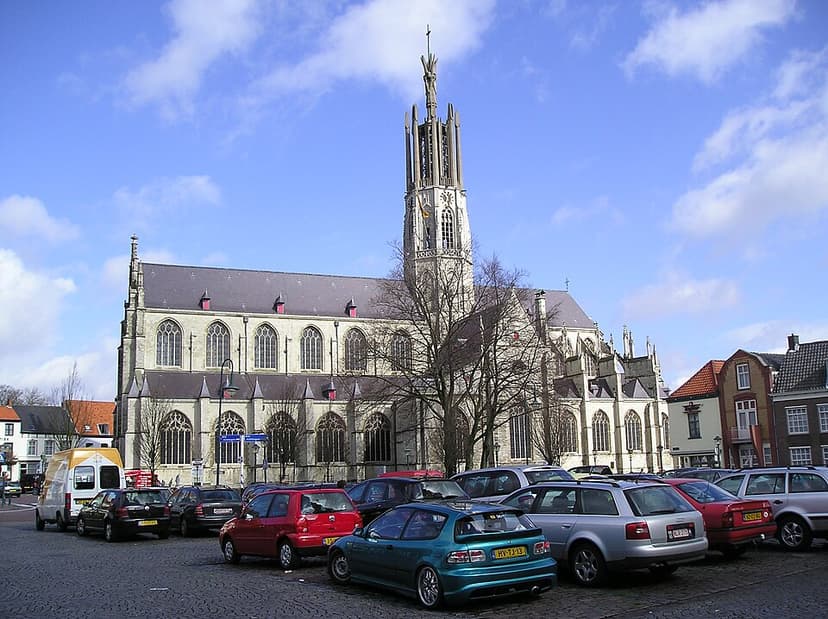
The Basilica of St. Willibrord is a historic Roman Catholic church located in Hulst, Netherlands. Dedicated to St. Willibrord, the apostle of the Benelux countries, the basilica showcases a significant architectural evolution from Romanesque to Brabantine Gothic styles. It holds religious importance as a place of worship and houses notable artistic works, including paintings and a historic organ.

Basilica of St Servatius
The Basilica of Saint Servatius is a significant Roman Catholic church located in the heart of Maastricht, Netherlands. It is a hybrid architectural masterpiece, predominantly Romanesque, built over the tomb of Saint Servatius, an Armenian missionary and bishop. The basilica has been a major pilgrimage site for centuries, drawing visitors to its relics and the saint's grave, and remains a central hub for Catholicism in the region.