
Basilica of SS Agatha and Barbara, Oudenbosch
Netherlands·Oudenbosch
The Basilica of SS Agatha and Barbara in Oudenbosch is a Roman Catholic church noted for its significant scale and classical Italianate architecture, which is unusual for its location in the Netherlands. Conceived by parish priest Willem Hellemons, its design draws heavily from St. Peter's Basilica and the Basilica of St. John Lateran in Rome. It was designated a minor basilica in 1912 and holds a relic associated with Pope John Paul II.
Key Facts
- ›Construction began in 1865 and was completed in 1892.
- ›The nave and interior are modeled after St. Peter's Basilica in Rome.
- ›The facade is a replica of the Basilica of St. John Lateran, also in Rome.
- ›Designed by architect Pierre Cuypers.
- ›Designated a minor basilica in 1912.
- ›Houses a relic of Pope John Paul II's cloak.

Classical Italian
Agatha of Sicily, Barbara of Nicomedia
Cloak of Pope John Paul Ii
Pierre Cuypers
About Basilica of SS Agatha and Barbara, Oudenbosch
The Basilica of SS Agatha and Barbara, located in the Dutch village of Oudenbosch, is a significant Roman Catholic church recognized for its grand scale and distinctive classical Italianate architecture. This style is notably atypical for northern Europe, particularly for a smaller town in North Brabant, setting it apart from the region's prevailing architectural trends.
Historical Context and Construction
The basilica's construction was initiated by Willem Hellemons, who served as the parish priest between 1842 and 1884. Construction commenced in 1865 and continued until its full completion in 1892. The design, overseen by architect Pierre Cuypers, was ambitious, with the nave and interior specifically modeled after St. Peter's Basilica in Rome. Furthermore, the facade is a direct replica of the Basilica of St. John Lateran, another prominent Roman landmark.
The impetus for building such a substantial basilica in a small village was partly linked to historical events. In 1868, Dutch Papal Zouaves and local Catholics from Oudenbosch departed for Rome to defend the Papal State. In recognition of this, Pope Pius IX reportedly agreed to the construction of a relatively large basilica in the locale.
Architectural Significance and Designation
The basilica's classical Italian appearance, inspired by Roman counterparts, includes elements reminiscent of Michelangelo's Pietà and Bernini's baldachin and the Chair of Saint Peter. Originally functioning as a parish church, it was officially designated as a minor basilica by Pope Pius IX in 1912.
Notable Features and Relics
Beyond its architectural grandeur, the Basilica of SS Agatha and Barbara is notable for housing a significant religious relic: a piece of the cloak worn by Pope John Paul II during the assassination attempt in 1981. This relic adds a layer of modern religious importance to the historical and architectural significance of the basilica.
Source: Wikipedia ↗
Frequently Asked Questions
What is the Basilica of SS Agatha and Barbara in Oudenbosch known for?
It is known for its impressive size and distinctive classical Italian appearance, which stands out in the Dutch landscape. Its design is inspired by major Roman basilicas, making it a unique architectural landmark in the region.
Who was responsible for the construction of the basilica?
The basilica was built at the initiative of Willem Hellemons, who served as the parish priest from 1842 to 1884. The architectural design was the work of Pierre Cuypers.
What historical event led to the approval of a large basilica in Oudenbosch?
Pope Pius IX agreed to the construction of a relatively large basilica in the small village after Dutch Papal Zouaves and local Catholics departed from Oudenbosch in 1868 to defend the Papal State.
What notable relics are housed in the basilica?
The basilica is home to a fragment of the cloak worn by Pope John Paul II during the assassination attempt in 1981, which is considered a significant relic.
What are the architectural inspirations for the basilica?
The nave and interior are modeled after St. Peter's Basilica, while the facade is a replica of the Basilica of St. John Lateran. Elements such as Michelangelo's Pietà and Bernini's baldachin are also referenced.
Related Basilicas

Basilica of St Nicholas
The Co-cathedral Basilica of Saint Nicholas in Amsterdam is the city's principal Roman Catholic church, dedicated to its patron saint. Originally constructed in the Neo-Baroque and neo-Renaissance styles, it was elevated to the status of a basilica minor in 2012 and later designated as a co-cathedral for the Diocese of Haarlem-Amsterdam in 2025. The basilica is significant for its prominent location near the main railway station and its role in the city's religious and musical life.
Basilica of St Willibrord
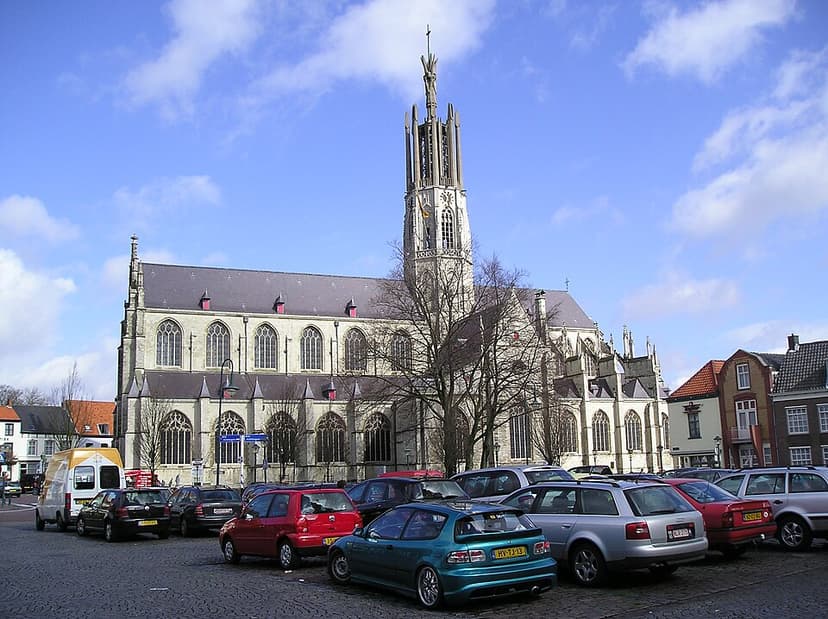
The Basilica of St. Willibrord is a historic Roman Catholic church located in Hulst, Netherlands. Dedicated to St. Willibrord, the apostle of the Benelux countries, the basilica showcases a significant architectural evolution from Romanesque to Brabantine Gothic styles. It holds religious importance as a place of worship and houses notable artistic works, including paintings and a historic organ.

Basilica of St Servatius
The Basilica of Saint Servatius is a significant Roman Catholic church located in the heart of Maastricht, Netherlands. It is a hybrid architectural masterpiece, predominantly Romanesque, built over the tomb of Saint Servatius, an Armenian missionary and bishop. The basilica has been a major pilgrimage site for centuries, drawing visitors to its relics and the saint's grave, and remains a central hub for Catholicism in the region.