
Zachariel
Zachariel, also known as Zerachiel, is identified as an archangel with the significant role of leading souls to judgment. He is recognized in theological texts as one of the seven holy angels who oversee and guard against spirits that sin. His name, derived from Hebrew, signifies 'God has remembered'.
Key Facts
- ›Zachariel is identified as one of the seven holy angels who watch.
- ›He is an angel set over spirits who sin in the spirit.
- ›The name Zachariel means 'God has remembered' in Hebrew.
- ›He is listed as one of the seven archangels in the tradition of Pope Gregory I.
- ›Zachariel's role includes leading souls to judgment.
Zerachiel, Zakhariel, Saraqael
Leader of Souls To Judgment, Guardian of Sinful Spirits, Watcher
Book of Enoch , Chapter 20
Lucifer/Satan, Raguel, Angel of Death, Zadkiel
About Zachariel
Zachariel, also known by the variant name Zerachiel, is an archangel whose name, derived from Hebrew, signifies 'God has remembered'. Within theological traditions, Zachariel holds a significant position as one of the seven holy angels who are described as watchers. His attributed roles include the oversight of spirits that sin and the crucial task of leading souls to their judgment.
Theological Significance
The Book of Enoch (Enoch I), specifically in chapter 20, lists Zachariel among the seven holy angels who maintain vigilance. In this capacity, he is designated as the angel responsible for the spirits that transgress in the spiritual realm. Furthermore, Zachariel is recognized in the catalog of archangels compiled by Pope Gregory I, where he is counted among the seven principal archangels.
Functions and Associations
Zachariel's primary functions center around judgment and spiritual guardianship. He is tasked with guiding souls through the process of facing judgment, a critical role in many religious eschatologies. His association with monitoring sinful spirits highlights a protective or corrective aspect within the divine order, ensuring that spiritual transgressions are addressed.
Related Figures
Zachariel is sometimes placed in theological discussions alongside other angelic figures. In contexts concerning justice and its opposite, he is noted in relation to figures such as Lucifer/Satan. Other angels associated with aspects of justice, retribution, and redemption like Raguel, the Angel of Death, and Zadkiel, are also sometimes mentioned in proximity to Zachariel, suggesting a thematic grouping around divine judgment and order.
Source: Wikipedia ↗
Frequently Asked Questions
What is Zachariel's primary role?
Zachariel's primary role is to lead souls to judgment. He is also described as an angel who watches over and is set over spirits that sin.
What does the name Zachariel mean?
The name Zachariel originates from Hebrew and translates to 'God has remembered'. This meaning is reflected in its Tiberian form, Zăḵarʾēl.
In which religious texts is Zachariel mentioned?
Zachariel is mentioned in the Book of Enoch (Enoch I), where he is listed as one of the seven holy angels. He is also included in the list of seven archangels attributed to Pope Gregory I.
What is Zachariel's position in the angelic hierarchy?
Zachariel is identified as one of the seven archangels. He is also described as one of the seven holy angels who watch.
Related Angels
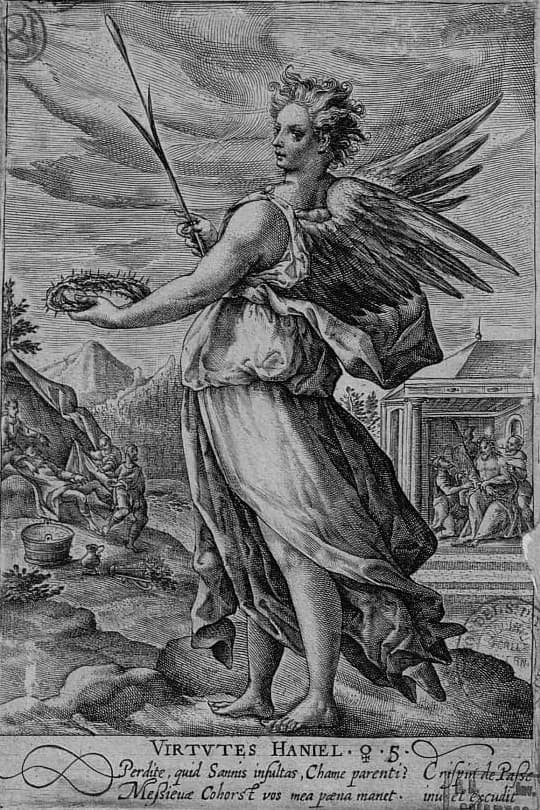
Aniel
Haniel is an angel primarily recognized in Jewish lore and angelology, often listed among the seven archangels. His name, meaning "God is my grace," connects him to concepts of favor and charm, and he is traditionally associated with the planet Venus and the sephirah Netzach. Haniel is also linked to feelings of joy.
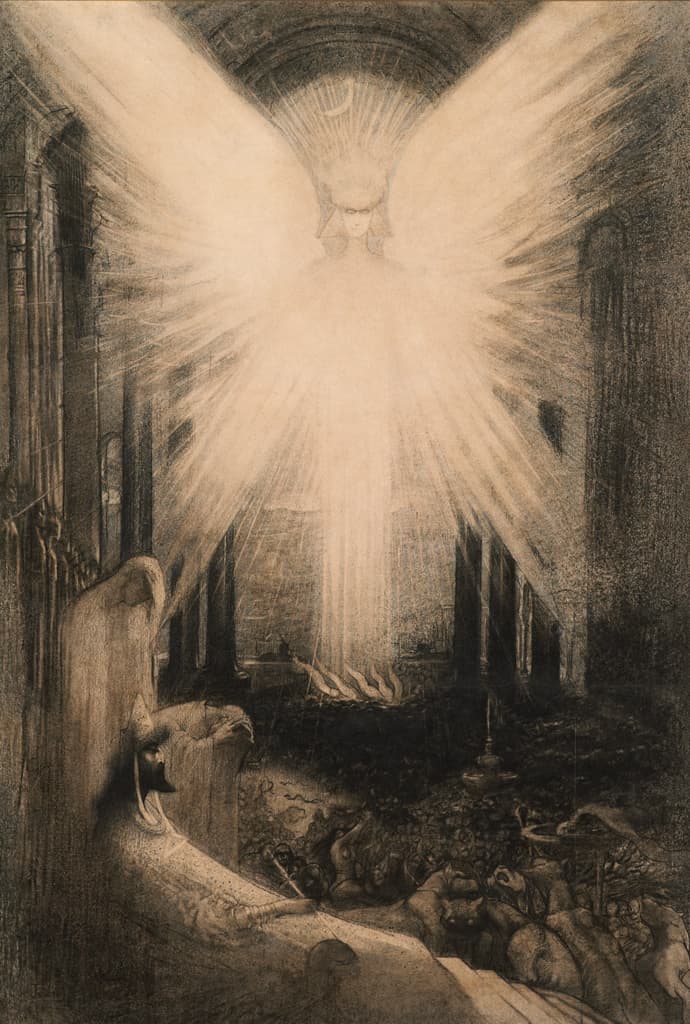
Azrael
Azrael is the canonical angel of death in Islam and appears in earlier apocryphal texts. He is depicted as a benevolent psychopomp, responsible for transporting souls after death and recording their fates. Azrael is recognized as one of the four archangels in Islam and corresponds to the Hebrew "Malakh ha-mavet" (Angel of Death).
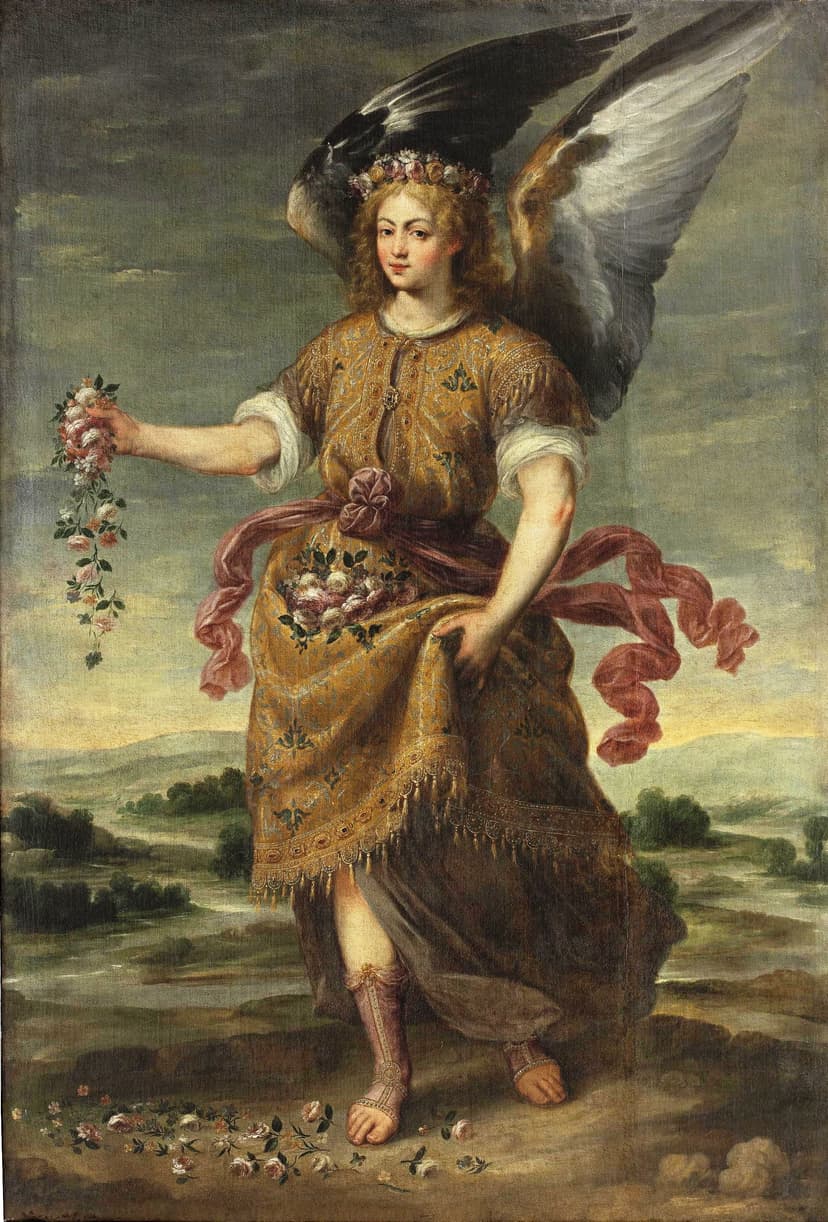
Barachiel
Barachiel, meaning "God has blessed," is an Archangel revered in Judaism, Byzantine Catholic, and Eastern Orthodox traditions. He is primarily known as the Archangel of Blessings and is associated with bestowing divine favor, particularly upon families and converts. Iconographically, he is often depicted with symbols of blessing, such as roses or a bread basket.