
Raguel
Raguel is a name with Hebrew origins, meaning "God shall pasture" or "El shall pasture." It is associated with several biblical figures, including a son of Esau and Moses' father-in-law, who is also known as Jethro or Hobab. In later traditions, Raguel is recognized as one of the seven archangels.
Key Facts
- ›The name Raguel has Hebrew origins, meaning "God shall pasture."
- ›Raguel is identified as a son of Esau and the father of Nahath, Zerah, Shammah, and Mizzah.
- ›Raguel is also recognized as Moses' father-in-law, a figure also named Jethro and Hobab.
- ›The name is also associated with a Gadite prince, Eliasaph, and a Benjamite figure.
- ›In rabbinic tradition and Kabbalah, Raguel is counted among the seven archangels.
Reuel, Jethro, Hobab, Deuel
Genesis 36:4, 10, 1 Chronicles 1:35, Exodus 2:18, Numbers 10:29, Numbers 1:14, Numbers 2:14, Numbers 7:42, 1 Chronicles 9:7–8, Tobit 7:1–15
Esau, Mahalath, Nahath, Zerah, Shammah, Mizzah, Moses, Eliasaph, Tobias
About Raguel
Raguel: Biblical Figure and Archangel
The name Raguel, also transliterated as Reuel, holds significance in biblical and religious traditions, most notably as a Hebrew name meaning "God shall pasture" or "El shall pasture." This appellation reflects a sense of divine care and guidance, akin to a shepherd tending to a flock.
Biblical Connections
Raguel appears in the Hebrew Bible in several contexts. He is identified as a son of Esau and the father of Nahath, Zerah, Shammah, and Mizzah, as noted in the Book of Genesis and Chronicles. Additionally, Raguel is recognized as Moses' father-in-law, a figure also known by the names Jethro and Hobab. The name is further associated with a Gadite prince named Eliasaph, and a Benjamite figure.
Angelic Tradition
Beyond these biblical genealogies and relationships, Raguel gained prominence in later Jewish mystical traditions. Within rabbinic lore and the Kabbalah, Raguel is enumerated as one of the seven archangels. This designation places him among a select group of high-ranking celestial beings.
Etymology
The name's linguistic roots are firmly in Hebrew, with an Edomite variant also documented. The meaning "God shall pasture" suggests a role related to divine provision and protection, a concept that resonates with the imagery of shepherding.
Source: Wikipedia ↗
Frequently Asked Questions
What does the name Raguel mean?
The name Raguel has Hebrew origins. It translates to "God shall pasture" or more specifically, "El shall pasture," likening God's care to that of a shepherd for his flock.
Which biblical figures are named Raguel?
Several biblical figures bear the name Raguel. These include a son of Esau who fathered Nahath, Zerah, Shammah, and Mizzah, and Moses' father-in-law, who is also identified as Jethro and Hobab.
Is Raguel considered an angel?
Yes, in rabbinic tradition and Kabbalah, Raguel is recognized as one of the seven archangels.
What is the origin of the name Raguel?
The name Raguel originates from Hebrew. An Edomite form, 'rʿʾl', is also documented.
Related Angels
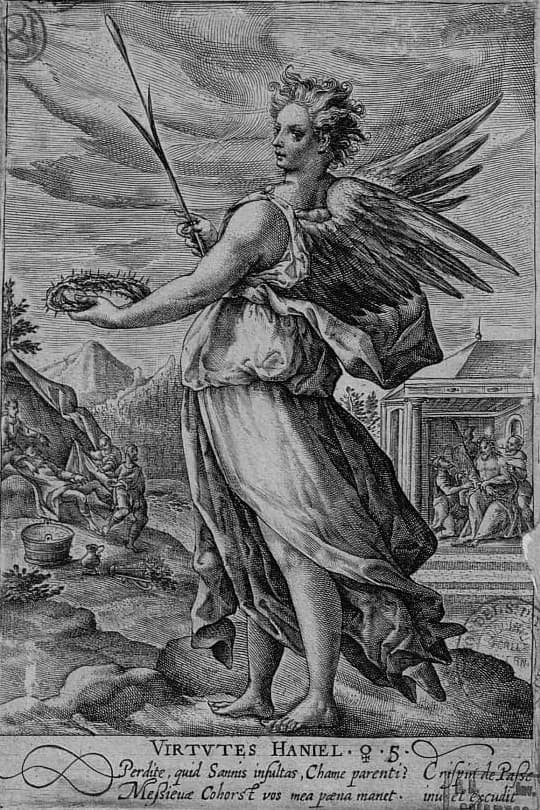
Aniel
Haniel is an angel primarily recognized in Jewish lore and angelology, often listed among the seven archangels. His name, meaning "God is my grace," connects him to concepts of favor and charm, and he is traditionally associated with the planet Venus and the sephirah Netzach. Haniel is also linked to feelings of joy.
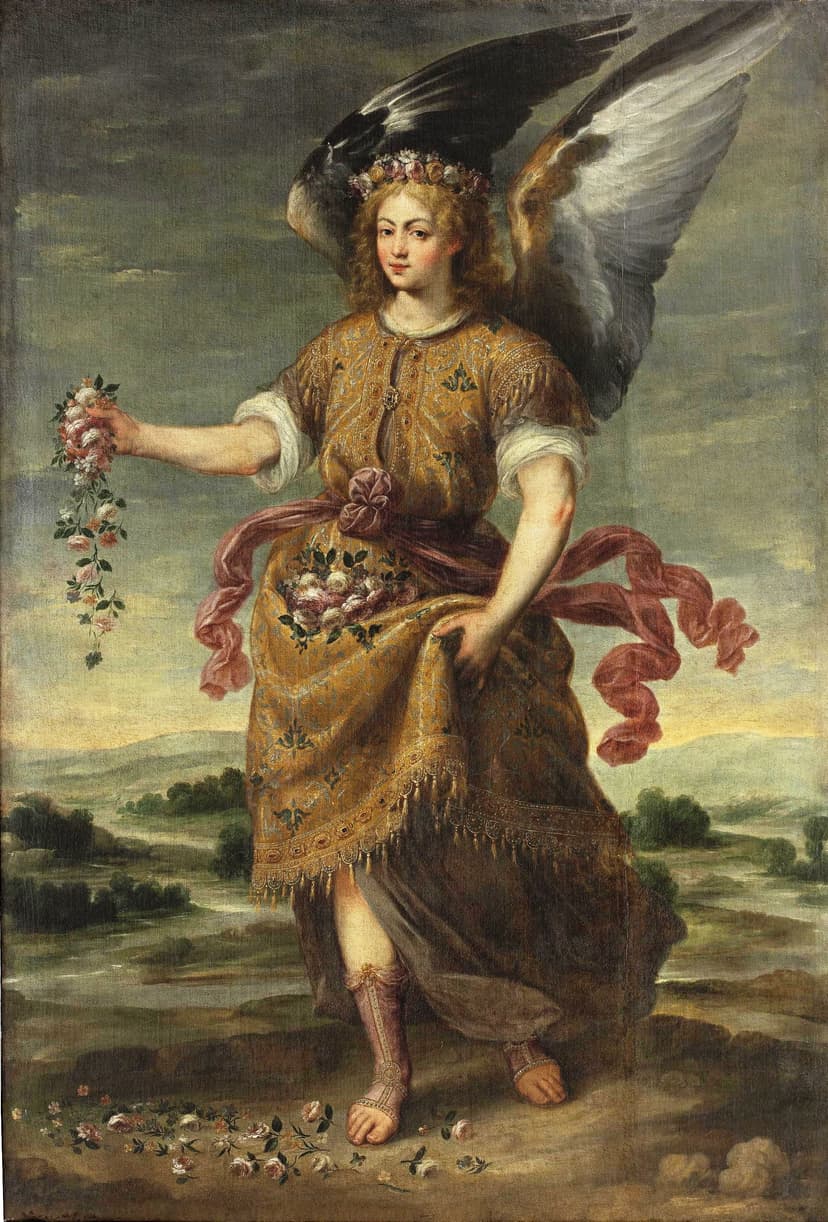
Barachiel
Barachiel, meaning "God has blessed," is an Archangel revered in Judaism, Byzantine Catholic, and Eastern Orthodox traditions. He is primarily known as the Archangel of Blessings and is associated with bestowing divine favor, particularly upon families and converts. Iconographically, he is often depicted with symbols of blessing, such as roses or a bread basket.
Cassiel
Cassiel is an angel venerated in extracanonical Jewish, Christian, and Islamic mystical traditions. He is often identified as one of the Seven Archangels and is associated with the planet Saturn. Cassiel's roles include guardian, angel of death, and presider over the deaths of young men, wielding powerful weapons against those unfit to behold the divine.