
Kiraman Katibin
The Kiraman Katibin are a pair of angels in Islamic tradition, known as the 'noble writers,' tasked with meticulously recording human actions. One angel documents good deeds, while the other records evil deeds. Their function is detailed in the Quran and further elaborated in hadith, highlighting divine mercy and the consequences of repentance.
Key Facts
- ›They are a pair of angels assigned to each person.
- ›One angel records good deeds, the other records evil deeds.
- ›Their recordings are based on actual actions, not just thoughts.
- ›A good deed is recorded ten times.
- ›The recording of a sin is suspended for six hours, allowing for repentance.
- ›They are absent only during specific personal moments like defecation, bathing, or in a state of impurity.
Noble Writers
Record Keeper
Quran 6:61, Quran 13:11, Quran 50:17-18, Quran 82:10-12
About Kiraman Katibin
The Kiraman Katibin, an Arabic term translating to 'noble writers,' are a pair of angels central to Islamic belief, tasked with the solemn duty of recording every human action. Their existence and function are acknowledged in the Quran and further elaborated upon through hadith and Islamic tafsir (commentary).
Description and Function
According to tradition, one angel is figuratively positioned on the right side of an individual, meticulously noting down all their good deeds. Concurrently, another angel, seated on the left, records all their bad deeds. This constant, dual surveillance ensures a comprehensive account of a person's life. The Quran references these recording angels in several surahs, including 6:61, 13:11, 50:17-18, and 82:10-12, with further details emerging from commentaries.
Divine Mercy and Repentance
Islamic teachings surrounding the Kiraman Katibin often highlight God's profound mercy. Hadith traditions explain that a single good deed is written down tenfold, underscoring the divine reward for righteousness. Crucially, the recording of a sin is not immediate. Angels are said to suspend their recording of a transgression for a period of six hours. If the individual repents and seeks forgiveness from God within this timeframe, the sin is erased from their record. However, if no repentance occurs, the deed is then documented. Importantly, these angels are instructed to record only actual actions, not mere thoughts or intentions, reflecting a divine understanding of human frailty and the potential for good.
Periods of Absence
While the Kiraman Katibin are perpetual companions, Islamic tradition specifies three brief periods during which they are absent from an individual's side. These moments are when a person is performing a bodily function such as defecation, when they are bathing, or when they are in a state of ritual impurity (Najis). These exceptions are understood within the broader context of maintaining reverence and acknowledging the sacredness of certain personal moments.
Source: Wikipedia ↗
Frequently Asked Questions
Who are the Kiraman Katibin?
The Kiraman Katibin, meaning 'noble writers,' are angels in Islamic tradition. They are tasked with recording all of a person's actions throughout their life.
What is the specific role of each Kiraman Katibin?
One angel is designated to record all good deeds performed by a person, while the second angel records all evil deeds. They are often depicted as being seated on the right and left sides of the individual.
Do the Kiraman Katibin record thoughts?
No, the Kiraman Katibin are tasked only with writing down the actual actions a person performs. They do not record deeds that are merely contemplated or thought about but not acted upon.
How are good deeds treated by the Kiraman Katibin?
According to hadith, a good action is written down ten times. This emphasizes the magnified reward for positive deeds in Islamic theology.
What happens if a person commits a sin?
The Kiraman Katibin are instructed to suspend the recording of a sin for six hours. If the person repents during this time, the deed is not recorded. However, if they do not repent, the sin is then documented.
When are the Kiraman Katibin not present with a person?
These angels are believed to accompany a person at all times except for three specific instances: when the person is defecating, when they are bathing, or when they are in a state of ritual impurity (Najis).
Related Angels
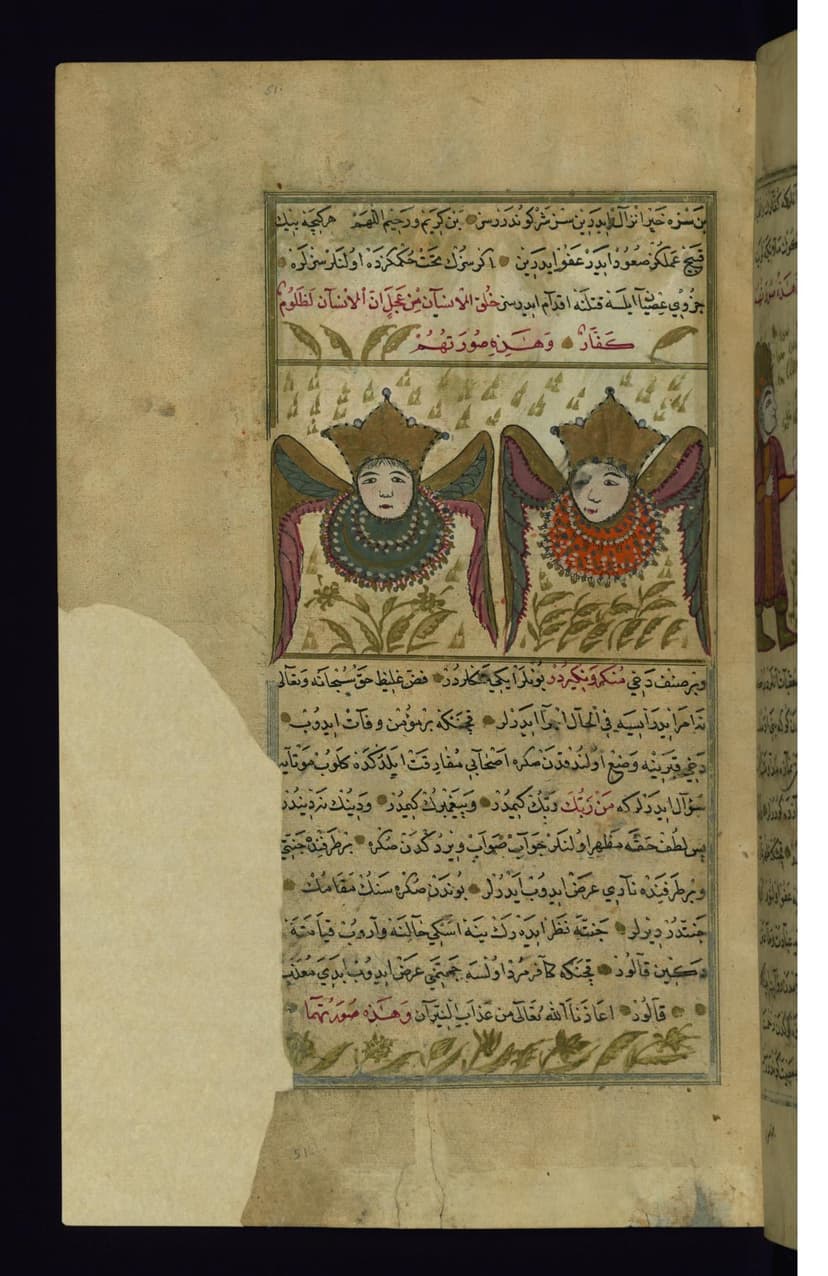
Mu’aqqibat
The Mu'aqqibat are a class of guardian angels mentioned in the Quran, tasked with protecting humans from evil jinn and devils. They are also known as "those who follow one upon another" due to their continuous vigil, watching over individuals by God's command. Their role aligns with the broader Islamic concept of guardian angels, who maintain beings in various states of life, sleep, death, and resurrection.
Artiya'il
Artiya'il is an angel recognized in Islamic lore, primarily known for his role in alleviating human sorrow and anxiety. He is described as an angel who removes the memories of distress and is depicted in Islamic tradition as appearing in various forms, such as a bird, to offer comfort.
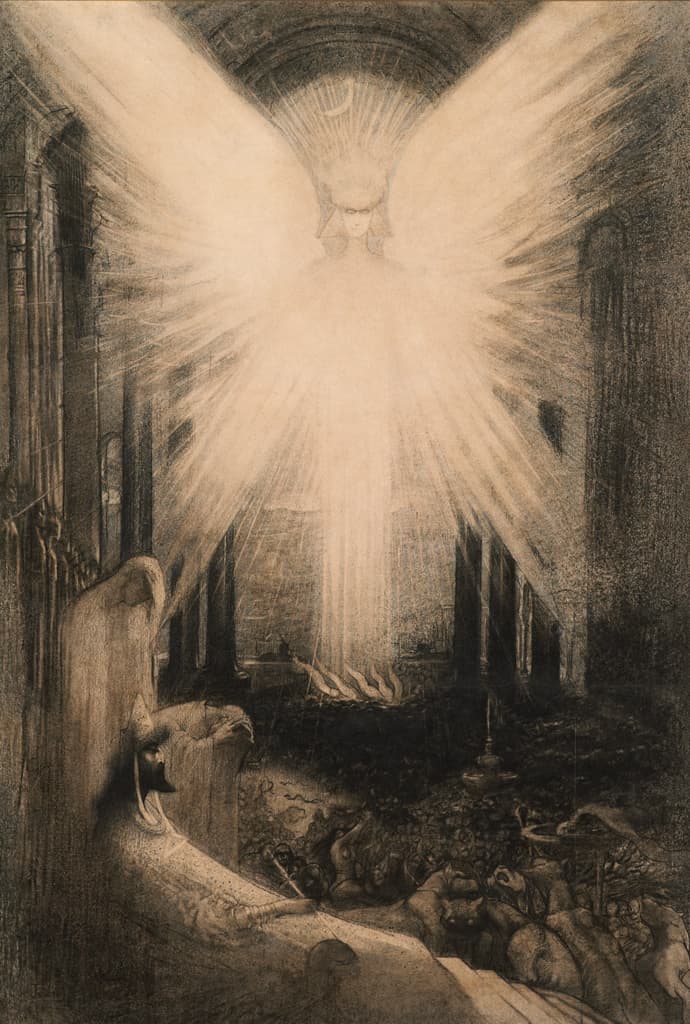
Azrael
Azrael is the canonical angel of death in Islam and appears in earlier apocryphal texts. He is depicted as a benevolent psychopomp, responsible for transporting souls after death and recording their fates. Azrael is recognized as one of the four archangels in Islam and corresponds to the Hebrew "Malakh ha-mavet" (Angel of Death).