
Hadraniel
Hadraniel is an angel in Jewish angelology, known as the gatekeeper of the second gate in heaven. He is described as a colossal and awe-inspiring figure, whose voice is said to penetrate numerous firmaments and whose pronouncements are accompanied by flashes of lightning. Hadraniel plays a role in the narrative of Moses receiving the Torah, initially presenting an obstacle before acting as a guide.
Key Facts
- ›Hadraniel serves as the gatekeeper of the second gate in the heavenly realms.
- ›He is depicted as an immensely tall angel, measuring over sixty myriads of parasangs.
- ›His voice is described as powerful, capable of penetrating 200,000 firmaments.
- ›When Hadraniel speaks, thousands of flashes of lightning are said to emanate from his mouth.
- ›In Gnostic traditions, he is a subordinate to Jehuel, the prince of fire.
- ›Hadraniel is associated with the transmission of divine will and secret knowledge.
Gatekeeper, Guide
Lightning
Zohar, Revelation of Moses
Moses, Jehuel, Adam
About Hadraniel
Hadraniel is an angelic figure prominent in Jewish angelology, distinguished by his role as the gatekeeper of the second gate in heaven. His name, derived from Hebrew, signifies 'Majesty of God' or 'Greatness of God,' reflecting his awe-inspiring nature.
Description and Power
He is described as a being of colossal proportions, reportedly exceeding sixty myriads of parasangs in height, a measure translating to millions of miles. This immense stature contributes to his daunting presence. Hadraniel's voice is also a significant attribute, said to possess the power to penetrate through an astonishing 200,000 firmaments. Each utterance from his mouth is accompanied by 12,000 flashes of lightning, underscoring the immense power and divine force he embodies.
Role in Sacred Narratives
Hadraniel features in the narrative of Moses' ascent to heaven to receive the Torah. Upon encountering the angel, Moses was overcome with awe and fear. Hadraniel initially expressed a reluctance for Moses to possess the Torah, which caused Moses to weep. This interaction prompted God to intervene, reprimanding Hadraniel for causing distress. Following God's admonition, Hadraniel shifted his role from an obstacle to a guide, assisting Moses on his celestial journey. His pronouncements are considered authoritative in conveying the will of the Lord.
Associations in Later Traditions
Later traditions expand upon Hadraniel's significance. In the Zohar, he is depicted as conversing with Adam regarding the Book of the Angel Raziel, a text believed to hold profound, even angelic, secrets. Within Gnostic traditions, Hadraniel is recognized as one of seven subordinates to Jehuel, who holds the title of prince of fire.
Source: Wikipedia ↗
Frequently Asked Questions
What is Hadraniel's role in Jewish angelology?
Hadraniel's primary role in Jewish angelology is that of a gatekeeper. He is stationed at the second gate in heaven, overseeing passage.
How is Hadraniel described in terms of his appearance and stature?
Hadraniel is depicted as a figure of immense stature, said to be more than sixty myriads of parasangs tall, which translates to approximately 2.1 million miles or 3.4 million kilometers. He is described as a daunting figure to behold.
What happened when Moses encountered Hadraniel on his way to receive the Torah?
When Moses ascended to heaven to receive the Torah, he was awestruck by Hadraniel. Initially, Hadraniel opposed Moses having the Torah, causing Moses to weep. God intervened, reprimanded Hadraniel, who then helped guide Moses.
What is notable about Hadraniel's voice?
Hadraniel's voice is described as incredibly powerful. According to Zoharic legend, when he proclaims the will of the Lord, his voice penetrates through 200,000 firmaments. Furthermore, with every word he speaks, 12,000 flashes of lightning are said to go forth.
What is Hadraniel's connection to the Book of the Angel Raziel?
In the Zohar, Hadraniel is mentioned as speaking to Adam about Adam's possession of the Book of the Angel Raziel. This book was believed to contain secret information unknown even to the angels.
What is Hadraniel's position in Gnostic traditions?
In Gnosticism, Hadraniel is identified as one of seven subordinates to Jehuel, who is recognized as the prince of fire.
Related Angels
Gadreel
The Book of Enoch details the fall of the Watchers, angels who fathered the Nephilim, and describes Enoch's heavenly journeys and revelations. It provides unique insights into the origins of demons, the moral necessity of the Genesis flood, and the future reign of the Messiah. While not canonical in most Jewish and Christian traditions, it holds significance for the Beta Israel and Ethiopian Orthodox Tewahedo Church.
Jerahmeel
Jerahmeel is a name appearing in the Hebrew Bible (Tanakh), meaning "He will obtain mercy of God" or "God pities." The name is associated with at least three distinct individuals: a descendant of Judah, a Levite appointed by King David, and a royal official under King Jehoiakim. Additionally, the name Jerahmeel is linked to a people inhabiting the Negev region, and in some apocryphal texts, it refers to an archangel.
Mashḥit
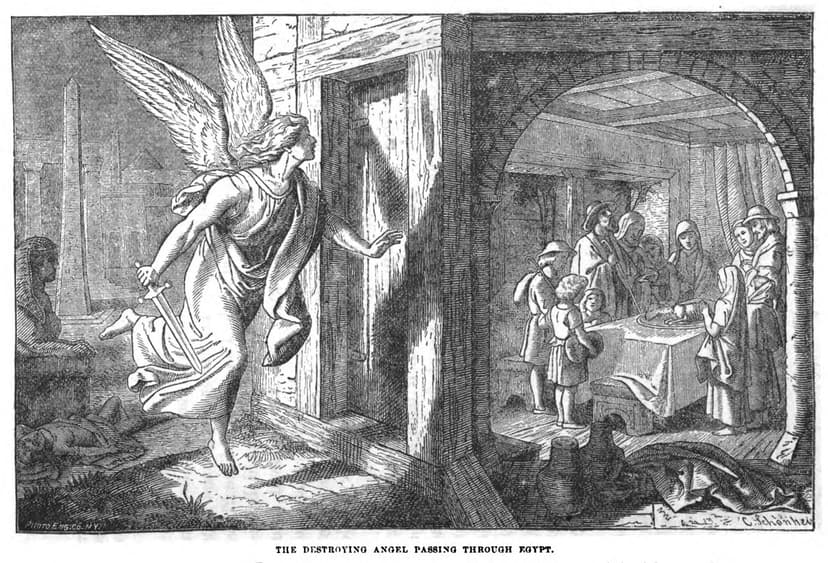
Mashḥit, also known as the destroying angel or destroyer, is an entity in Hebrew scriptures sent by God to enact judgment on peoples. These angels are described as executioners or messengers of death, tasked with punishing the wicked, and are sometimes equated with demons in Jewish tradition. Their actions range from nearly destroying Jerusalem to eliminating enemy forces, and they play a role in the judgment of souls after death.