
Vadakkunnathan Temple
The Vadakkumnathan Temple is an ancient Hindu temple dedicated to Shiva, located in Thrissur, Kerala, India. It is renowned for its unique Kerala-style architecture, featuring monumental towers and a Koothambalam, and is adorned with mural paintings depicting scenes from the Mahabharata. The temple is considered the first of the 108 Shiva Temples established by Parashurama and holds immense religious and cultural significance.
Key Facts
- ›Dedicated to Lord Shiva, it is considered the first of the 108 Shiva Temples in Kerala.
- ›Features traditional Kerala architectural style with four monumental towers and a Koothambalam.
- ›Adorned with ancient mural paintings depicting scenes from the Mahabharata.
- ›The main deity is a 16-foot-high lingam covered in ghee, representing Mount Kailash.
- ›It is the venue for the famous Thrissur Pooram festival.
- ›Declared a National Monument by India under the AMASR Act.

Shiva, Parvati, Ganesha, Subrahmanya, Rama, Shankaranarayana, Krishna, Ayyappa, Vettekkaran, Kashi Vishwanatha, Nataraja, Ramanathaswamy, Bhadrakali, Bharata, Durga
Religious Pilgrimage Site, Architectural Heritage, Historical Monument, Cultural Significance, Venue For Thrissur Pooram Festival
Kingdom of Cochin
Maha Shivaratri, Aanayoottu, Thrissur Pooram, Thaipooyam, Shashti Days, Vinayaka Chathurthi, Gajapooja
Granite, Wood, Ghee, Gold
Parashurama, Perumthachan, Yogiatiripppads, Maharaja of Cochin, Sakthan Thampuran, Zamorin of Calicut, T. Sankunni Menon, Velanezhy Nambudiri
- Vasukisayana
- Nrithanatha
- Mural Paintings Depicting Scenes From the Mahabharata
- Vignettes Carved In Wood
About Vadakkunnathan Temple
The Vadakkunnathan Temple, situated in Thrissur, Kerala, India, is an ancient and significant Hindu temple dedicated to Lord Shiva. It stands as a prime example of traditional Kerala architecture, characterized by its monumental towers and the presence of a Koothambalam, a traditional temple theatre. The temple walls are adorned with intricate mural paintings that vividly depict various episodes from the epic Mahabharata, and its shrines and Koothambalam feature detailed wood carvings.
Legends and Origins
According to popular local lore and texts like the Brahmanda Purana, the Vadakkunnathan Temple is believed to be the first temple built by Parashurama, the sixth avatar of Vishnu. The legend states that Parashurama invited Lord Shiva to reside in the newly formed land of Kerala. Shiva, accompanied by his consort Parvati and sons Ganesha and Subrahmanya, manifested as a lingam under a large banyan tree at a spot that is now Thrissur. This sacred lingam was later consecrated in its present location, and a temple was constructed around it.
Historical and Religious Significance
The temple is recognized as the first among the 108 Shiva Temples established by Parashurama in ancient Kerala, and is referred to in the Shiva Temple Stotra as 'Shrimad-Dakshina Kailasam', meaning 'Mt. Kailash of the South'. Historical accounts suggest construction around the 2nd century, with the Koothambalam potentially being over 1,600 years old. It is also believed that Adi Shankara, the renowned philosopher, was born due to prayers offered at this temple and attained his final liberation here. The temple was under the patronage of various rulers, including the Cochin Kingdom and the Zamorin of Calicut.
Architecture and Deities
Perched on an elevated hillock, the temple complex is enclosed by a stone wall spanning nearly 9 acres. It features four imposing gopurams (gateway towers) facing the cardinal directions. The main sanctum houses a unique 16-foot-high lingam of Shiva, which is entirely covered by a mound of ghee, symbolizing the snow-clad Mount Kailash. The ghee, from daily ablutions over centuries, is said to possess no foul odor and does not melt even in summer. Other deities enshrined within the complex include Parvati, Ganesha, Subrahmanya, Rama, Shankaranarayana (a combined form of Shiva and Vishnu), Krishna, Ayyappa, and Adi Shankara, among others.
Festivals and Conservation
The Vadakkunnathan Temple is a vibrant center of religious activity, with Maha Shivaratri being its primary festival, marked by cultural programs and the lighting of numerous lamps. The temple also hosts Aanayoottu, a feeding ceremony for elephants, and is the central venue for the spectacular Thrissur Pooram festival, which attracts vast crowds. The temple has undergone significant conservation and restoration efforts, adhering to traditional Kerala architectural principles and indigenous knowledge systems. These efforts were recognized with the UNESCO Asia Pacific Award of Excellence for Cultural Heritage Conservation in 2015, highlighting its importance as a protected monument and an active place of worship.
Source: Wikipedia ↗
Frequently Asked Questions
What is the legend behind the origin of the Vadakkunnathan Temple?
According to local lore, the temple was founded by Parashurama, the sixth avatar of Vishnu. After consecrating the land of Kerala, he invited Lord Shiva to reside there. Shiva manifested as a lingam under a banyan tree, which was later consecrated in its current location and a temple built around it.
What is the architectural style of the Vadakkumnathan Temple?
The temple is a classical example of Kerala's architectural style. It features a monumental tower on each of the four sides and a Koothambalam (temple theatre). The shrines and Koothambalam display intricate wood carvings.
What significant murals are found within the temple?
The temple is adorned with mural paintings that depict various scenes from the Mahabharata. Two important murals, Vasukisayana (reclining Shiva) and Nrithanatha (20-armed Nataraja), are over 350 years old and are worshipped daily.
What is the significance of the ghee-covered lingam?
The main deity of Shiva is worshipped as a 16-foot-high lingam that is entirely covered by a mound of ghee, formed by centuries of abhishekam (ablution). This ghee-covered lingam is believed to represent the snow-clad Mount Kailash and is unique as the lingam itself is not visible.
What is Thrissur Pooram and its connection to the temple?
Thrissur Pooram is a grand festival celebrated in the Malayalam month of Medam, often referred to as the 'mother of all Poorams'. The Thekkinkadu Maidan, which encircles the Vadakkumnathan Temple, is the main venue for this spectacular event, attracting thousands of devotees and tourists.
Is the Vadakkunnathan Temple a UNESCO World Heritage Site?
In 2012, the Archaeological Survey of India recommended Vadakkumnathan Temple, along with other sites from Kerala, for inclusion in the list of UNESCO World Heritage Sites. The temple received the UNESCO Asia Pacific Award of Excellence for Cultural Heritage Conservation in 2015 for its restoration.
What role did Adi Shankara play in relation to the temple?
Adi Shankara, the renowned philosopher, is believed to have been born as an avatar of Shiva due to prayers offered at this temple by his parents. Legend also states that he attained videha mukti (freedom from embodiment) at the Vadakkumnathan Temple.
Related Temples (Hindu)

Perur Pateeswarar Temple, Coimbatore
The Perur Pateeswarar Temple, located in Perur near Coimbatore, Tamil Nadu, is a Hindu temple dedicated to Lord Shiva. Originally built by the Chola emperor Karikala in the 2nd century CE, it has seen further contributions from the Imperial Cholas. The temple is renowned for its intricate architecture, including the Kanaka Sabha with its golden Nataraja statue, and its cultural significance, hosting a classical dance week and celebrating festivals like Panguni Uthiram.

Mallikarjuna Temple, Srisailam
The Mallikarjuna Temple, also known as Srisailam Temple, is a significant Hindu shrine in Andhra Pradesh, India, dedicated to Lord Shiva as Mallikarjuna and Goddess Parvati as Bhramaramba. It holds dual importance as one of the twelve Jyotirlingas, representing Shiva's divine light, and one of the fifty-two Shakta Pithas, centers dedicated to the Hindu goddess.
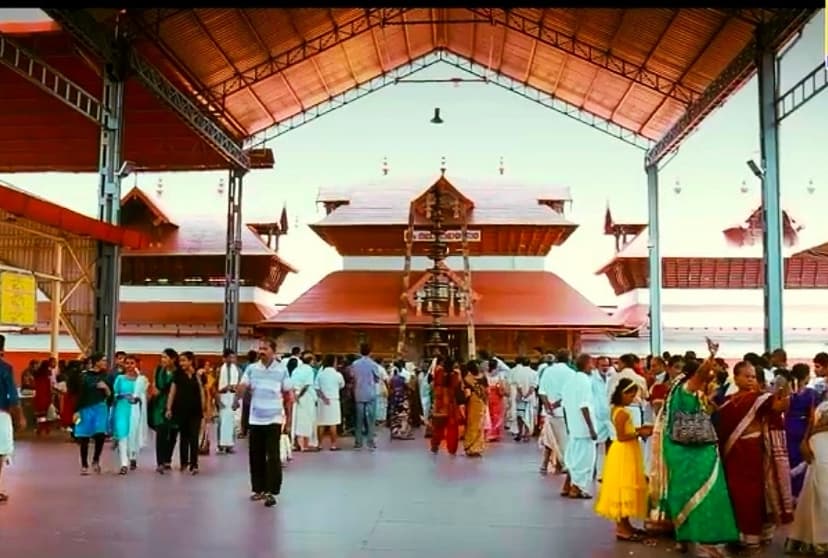
Guruvayur Temple
The Guruvayur Sri Krishna Temple, located in Kerala, India, is a highly revered and actively visited Hindu pilgrimage site dedicated to Guruvayurappan, a form of Vishnu. Known as Bhuloka Vaikunta (the Holy Abode of Vishnu on Earth), it is one of the busiest Vaishnava shrines and holds a significant place among the 108 Abhimana Kshethram.