
Guruvayur Temple
The Guruvayur Sri Krishna Temple, located in Kerala, India, is a highly revered and actively visited Hindu pilgrimage site dedicated to Guruvayurappan, a form of Vishnu. Known as Bhuloka Vaikunta (the Holy Abode of Vishnu on Earth), it is one of the busiest Vaishnava shrines and holds a significant place among the 108 Abhimana Kshethram.
Key Facts
- ›Dedicated to Guruvayurappan, a form of Vishnu, worshipped as Baby Krishna by devotees.
- ›The idol is believed to have been created by Vishnu himself and entrusted to Brahma.
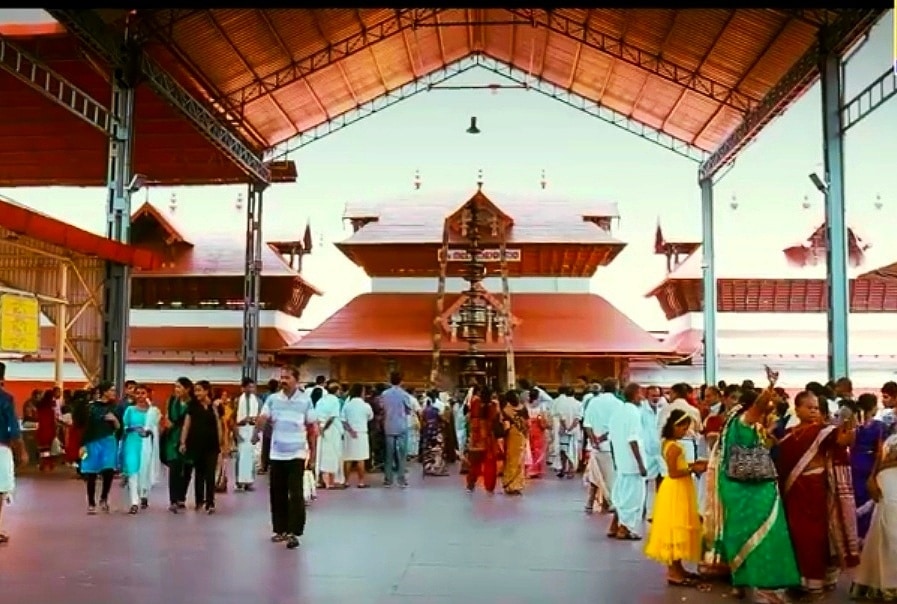
- ›The temple is a prime example of traditional Kerala architecture with sloped roofs and copper sheeting.
- ›It is a major center for Hindu marriages in Kerala, known for its simple customs.
- ›The temple gained prominence for miraculous healing, particularly after King Janamejaya was cured of leprosy.
- ›It was the site of the Guruvayur Satyagraha, a non-violent protest for temple entry rights.
Vishnu, Krishna
- Major Hindu Pilgrimage Site
- Center For Miraculous Healing
- Significant Venue For Hindu Marriages
- Historical Importance Due To the Guruvayur Satyagraha
Kumbham Festival, Krishna Janmashtami, Ekadasi, Vishu
Laterite Stone, Wood, Copper, Granite, Shaligram Stone, Panchaloha
Brihaspati, Vayu, King Sutapas, Queen Prishni
Murals In the Sreekovil, Ananthashayanam Painting
Rudratheertham
About Guruvayur Temple
Guruvayur Sri Krishna Temple
The Guruvayur Sri Krishna Temple, located in the Thrissur district of Kerala, India, stands as one of the most venerated and frequented Hindu pilgrimage sites globally. Dedicated to Guruvayurappan, a manifestation of Lord Vishnu, the temple is affectionately known by devotees as Bhuloka Vaikunta, signifying its status as the earthly abode of Vishnu. Its profound spiritual significance is recognized within the Vaishnavate tradition as one of the 108 Abhimana Kshethram.
Legend and Origins
The sanctity of the Guruvayur Temple is deeply rooted in its legendary origin. The central idol is believed to have been divinely created by Vishnu himself and later entrusted to Brahma. According to tradition, Brahma gifted the idol to King Sutapas and his queen Prishni, who, through their intense devotion, were blessed by Vishnu to worship the idol through three successive births. Their final birth was as Krishna, the deity's son, during the Dwapara Yuga.
Following the ascension of Krishna to heaven and the submergence of Dwarka, the idol was rescued by Krishna's disciple, Uddhava. Uddhava then entrusted the idol to Brihaspati, the preceptor of the gods, and Vayu, the wind god. They installed the idol at the current location, which was designated as the most auspicious spot by Lord Shiva. The town's name, Guruvayur, is a compound derived from 'Guru' (Brihaspati) and 'Vayu,' combined with 'Oor' (place). Lord Shiva subsequently relocated to the nearby Mammiyoor Temple.
Beyond its foundational narrative, Guruvayur is renowned for its reputation as a center for miraculous healing. This fame is largely attributed to the legend of King Janamejaya, who was cured of leprosy after a year of devoted worship at the temple.
Architectural Style and Layout
The Guruvayur Temple is a quintessential example of traditional Kerala architecture. Its design features characteristic sloped roofs, copper sheeting, and liberal use of wood and laterite stone. The entire complex is oriented eastward, with the main sanctum, the Sreekovil, facing the rising sun.
The Sreekovil is a rectangular, two-storied structure with a roof plated with gold. The inner sanctum, the Garbhagriha, houses the Moolavigraha (main idol) carved from a rare shaligram stone. This standing, four-armed manifestation of Vishnu, approximately 1.2 meters tall, holds the conch, discus, mace, and a lotus, representing the Janardana form. Alongside the main idol are two processional idols: one of gold for daily processions and an 18th-century Panchaloha idol used for the holy bath ceremony. Behind the main idol, a large shaligram stone is said to amplify the shrine's Vaishnava energy.
The temple complex is organized with the Nalambalam (inner courtyard) enclosing the Sreekovil and housing auxiliary shrines for Ganapathi and Ayyappan. Surrounding this is the Chuttambalam (outer enclosure), which includes the temple kitchen and storage rooms. A notable feature is the Vilakkumatam (lamp house), designed to hold thousands of oil lamps for special occasions.
Prominent external structures include the towering, gold-plated Deepastambham (lamp pillar) and the gold-plated Dwajasthambham (flagmast) crucial for festivals. The entire complex is enclosed by a massive boundary wall, with entry facilitated through two main Gopurams, the Eastern Gopuram being the primary entrance. Adjacent to the northern side lies the Rudratheertham, a sacred temple tank associated with Lord Shiva.
Historical Context
Historical records mention the location as 'Kuruvayur' in a 14th-century Tamil text. The name was later Sanskritized to 'Guruvayur,' a practice often attributed to Melpathur Narayana Bhattathiri in the 16th century. By the end of the 16th century, Guruvayur had established itself as a principal pilgrimage center in Kerala.
The temple has endured periods of conflict. In 1716, a Dutch raid resulted in looting and the burning of the Western Gopuram. Invasions by Hyder Ali and Tipu Sultan in the late 18th century posed significant threats, with the main idol being secretly relocated during Tipu's invasion in 1789. The idol was re-installed in 1792 after the temple was saved from destruction.
A pivotal moment in the temple's history was the Guruvayur Satyagraha (1931–1947), a non-violent protest led by prominent figures demanding temple entry for 'Avarna' communities. Following a public mandate and government proclamation, the temple was officially opened to all Hindus on June 2, 1947.
A catastrophic fire in 1970 severely damaged parts of the temple, including the Chuttambalam and Vilakkumatam, though the Sreekovil and the main idol were preserved. Extensive public restoration efforts followed. The temple also experienced a notable theft in 1985.
Administration and Worship
The Guruvayur Devaswom Board, a statutory authority under the Government of Kerala, oversees the temple's administration. The temple's ritualistic framework, established by Adi Shankara, is maintained by the Puzhakara Chennas Namboothirippad family, who hold the hereditary position of Thantri (Head Priest).
The Melshanthi (Chief Priest) serves a six-month term, adhering to strict celibacy and remaining within the temple premises. Othikkans, ritual assistants from four specific families, serve as deputies to the Tantri and Melshanthi.
The main festivals celebrated at the temple include the 10-day festival in Kumbham, Krishna Janmashtami, Ekadasi (popularly known as Guruvayur Ekadasi), and Vishu.
Marriages and Devotees
The Guruvayur Temple is a highly sought-after venue for Hindu marriages in Kerala, characterized by simplicity and adherence to temple customs. Weddings are typically held at the Kalyana Mandapam outside the Eastern gateway, with no rigidly fixed auspicious times required. The use of Tulsi garlands is traditional.
Notable devotees include Kururamma, a revered old woman devotee whose immense devotion is said to have led the Lord to live with her as a foster son. Melpathur Narayana Bhattathiri, author of Narayaneeyam, and Poonthanam Namboothiri, known for 'Jnanappana,' are also celebrated figures associated with the temple.
Access and Regulations
Entry to the Guruvayur Temple is strictly restricted to Hindus. A specific dress code is enforced: men must wear a Dhoti (Mundu), and women can wear a Saree, Churidar, or Half Saree. Men are prohibited from covering their chest.
Punnathurkotta Elephant Sanctuary
Located three kilometers from the main shrine, the Punnathurkotta, also known as Anakotta, is an elephant yard maintained by the temple. It houses approximately 35 captive Asian elephants, primarily offerings from devotees. The sanctuary has faced scrutiny regarding the treatment and living conditions of its animals.
Source: Wikipedia ↗
Frequently Asked Questions
What is the origin of the Guruvayur Temple idol?
According to legend, the idol was created by Vishnu himself in Vaikuntha and later entrusted to Brahma. It was then gifted to King Sutapas and his consort Prishni, who were granted three births to worship it. Their final birth was as Krishna, the deity's son.
What is the meaning of the name Guruvayur?
The name 'Guruvayur' is a portmanteau derived from the founders, Brihaspati (Guru, the preceptor of the gods) and Vayu (the wind god), who installed the idol at the location. 'Oor' means place in Tamil.
What architectural style is characteristic of the Guruvayur Temple?
The Guruvayur Temple exemplifies the traditional Kerala architectural style, featuring sloped roofs covered with copper sheeting, and extensive use of wood and laterite stone. The main sanctum, the Sreekovil, is a rectangular, two-storied structure.
What significant historical events have impacted the Guruvayur Temple?
The temple has faced foreign invasions, including raids by the Dutch and invasions by Hyder Ali and Tipu Sultan, which necessitated the relocation of the idol for safekeeping. A devastating fire in 1970 also caused significant damage, leading to extensive restoration efforts.
What is the significance of the Rudratheertham temple tank?
The Rudratheertham is a sacred pond associated with Lord Shiva, located adjacent to the temple complex. Devotees often bathe in its waters before entering the main shrine as part of their purification ritual.
What are the regulations for entering the Guruvayur Temple?
Entry to the Guruvayur Temple premises is strictly prohibited for non-Hindus. A specific dress code is mandatory for Hindu devotees: men must wear a Dhoti (Mundu) and are prohibited from covering their chest, while women can wear a Saree, Churidar, or Half Saree.
Related Temples (Hindu)
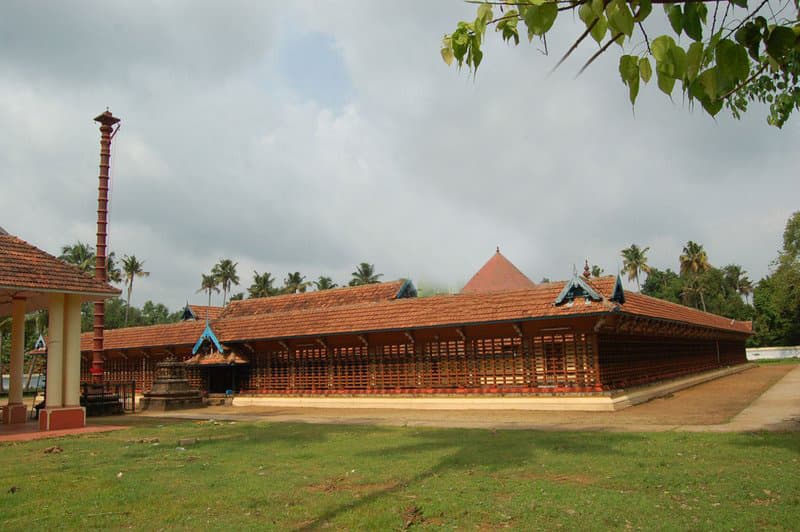
Thirumoozhikkulam Lakshmana Perumal Temple
The Thirumoozhikkulam Lakshmana Perumal Temple, situated in Kerala, India, is a significant Hindu temple revered in the Sri Vaishnava canon. It is dedicated to Lakshmana Perumal and is part of the 108 Divya Desams, holding particular importance for its association with the Ramayana legend and the Nalambalam Yatra pilgrimage.

Thirunakkara Mahadevar Temple
Thirunakkara Mahadevar Temple is a significant Hindu temple located in Kottayam, Kerala, India, dedicated to Lord Shiva. It is recognized as one of the 108 revered Shivalayas in Kerala and is believed to have been built by the Maharaja of Thekkumkur approximately 500 years ago. The temple is known for its traditional Kerala-style architecture, preserving numerous sculptures and murals of various Hindu deities.

Thrikodithanam Mahavishnu Temple
The Thrikodithanam Mahavishnu Temple is a Hindu temple in Kerala, South India, dedicated to Vishnu, specifically as Mahavishnu. It is renowned for its Kerala-style architecture and its mention in the early medieval Tamil canon, the Nalayira Divya Prabandham, recognizing it as one of the 108 Divya Desams dedicated to Krishna. Legend also connects it to the Pandavas of the Mahabharata, with Sahadeva believed to have built the shrine.