
Uttara Swami Malai Temple
Chola and Pandya styles of Tamil Architecture·20th century·India
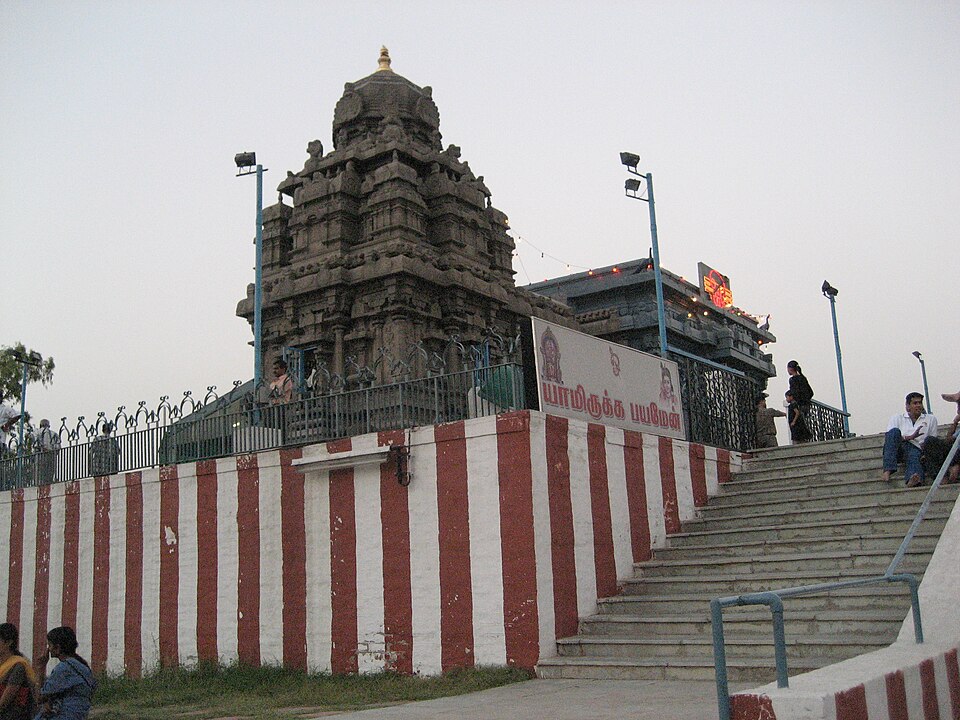
The Uttara Swami Malai Temple, popularly known as Malai Mandir, is a Hindu temple complex in New Delhi, India. Primarily dedicated to Lord Swaminatha (Lord Murugan), it is a significant spiritual center for the Tamil and other South Indian communities in the city. The temple complex features multiple shrines and is built in traditional South Indian architectural styles.
Key Facts
- ›Dedicated primarily to Lord Swaminatha, also known as Lord Murugan.
- ›Located in New Delhi, India, on a small hillock in Sector-7 R.K. Puram.
- ›The main temple is built entirely of granite in the Chola style of Tamil Architecture.
- ›Subsidiary temples are dedicated to Lord Swaminatha's family: Karpaga Vinayagar, Sundareswarar, and Devi Meenakshi, drawing inspiration from Pandya architecture.
- ›The temple complex also includes a Navagraha temple and a shrine to Idumban Swami.
- ›The nearest metro station is Vasant Vihar, approximately 2 km away.
Lord Swaminatha, Lord Karpaga Vinayagar, Lord Sundareswarar, Devi Meenakshi
- Spiritual Center For Tamil and South Indian Communities In Delhi
- Example of Traditional South Indian Temple Architecture In North India
Granite
- M. Bhakthavatsalam
- Sri Lal Bahadur Shastri
- H.H. Kanchi Kamakoti Peethadhipati Sri Jayendra Saraswati Swamigal
- H.H. Sri Vijayendra Saraswati Swamigal
About Uttara Swami Malai Temple
The Uttara Swami Malai Temple, widely recognized as Malai Mandir, is a significant Hindu temple complex situated in New Delhi, India. Located on Palam Marg, it is primarily dedicated to Lord Swaminatha, who is more commonly known as Lord Murugan. This temple holds particular reverence for the religious Hindu population of Tamil and other South Indian communities residing in the capital city.
Architecture and Layout
The main shrine within the complex, formally named Sree Swaminatha Swami Temple, houses the sanctum sanctorum for Lord Swaminatha. This structure is positioned atop a small hillock in Sector-7 R.K. Puram, offering views of Vasant Vihar in South West Delhi, a placement that adheres to the tradition of situating Murugan temples on elevated grounds. The temple's exterior bears a Tamil inscription proclaiming Lord Swaminatha's motto, "Yaamirukka Bayamain," meaning "Why fear when I am there?" The construction of the main temple is entirely from granite, exhibiting architectural elements reminiscent of the Chola style of Tamil Architecture. Complementing the main shrine are subsidiary temples dedicated to Sree Karpaga Vinayagar (Lord Swaminatha's elder brother), Sree Sundareswarar (Lord Swaminatha's father), and Devi Meenakshi (Lord Swaminatha's mother). These smaller temples draw architectural inspiration from the Pandya style, akin to the historic Meenakshi Amman Temple in Madurai.
History and Consecration
The foundation stone for the Uttara Swami Malai Temple was laid on September 8, 1965, by M. Bhakthavatsalam, the then Chief Minister of Tamil Nadu, under the presidency of Prime Minister Sri Lal Bahadur Shastri. The main temple for Lord Swaminatha was consecrated on June 7, 1973, with a Mahakumbhabhishekham ceremony. Further expansions and consecrations took place on June 13, 1990, with the establishment of temples for Sree Karpaga Vinayakar, Sree Sundareswarar, and Devi Meenakshi, alongside a Jeeranoddharana Kumbhabhishekham for the Lord Swaminatha temple. A Navagraha temple (dedicated to the nine planets) and a small temple for Idumban Swami were consecrated on July 7, 1995. The Adi Sankara Hall was inaugurated on November 9, 1997. Significant renovations and consecrations, including Ashtabandhana and Swarna-Rajatha Bandhana Mahakumbhabhishekhams, were performed by H.H. Kanchi Kamakoti Peethadhipati Sri Jayendra Saraswati Swamigal on June 27, 2001.
Source: Wikipedia ↗
Frequently Asked Questions
What is the significance of the Uttara Swami Malai Temple?
The Uttara Swami Malai Temple is a prominent Hindu temple complex in New Delhi, especially revered by the Tamil and other South Indian communities residing in the city. It serves as a spiritual hub and is dedicated to Lord Swaminatha (Lord Murugan).
What is the architectural style of the Uttara Swami Malai Temple?
The main Swaminatha Swami Temple is built entirely of granite and reflects the Chola style of Tamil Architecture. The subsidiary temples dedicated to Karpaga Vinayagar, Sundareswarar, and Devi Meenakshi are inspired by the Pandya style of Tamil Architecture.
When was the Uttara Swami Malai Temple constructed?
The foundation stone for the temple was laid on September 8, 1965. The main temple for Lord Swaminatha was consecrated on June 7, 1973, with further consecrations for subsidiary temples occurring on June 13, 1990.
What deities are worshipped at the Uttara Swami Malai Temple?
The primary deity is Lord Swaminatha (Lord Murugan). The complex also houses temples dedicated to Sree Karpaga Vinayagar (elder brother), Sree Sundareswarar (father), and Devi Meenakshi (mother) of Lord Swaminatha.
Is the Uttara Swami Malai Temple easily accessible?
Yes, the temple is easily accessible by metro. The nearest metro station is Vasant Vihar, which is located approximately 2 kilometers away from the temple complex.
Related Temples (Hindu)

EME Temple
The Dakshinamoorthy and Navgraha EME Temple in Vadodara, Gujarat, is a unique Hindu temple dedicated to Lord Shiva, built in 1966 by the Indian Army's EME School. Its distinctive geodesic dome design, inspired by Buckminster Fuller, incorporates architectural elements from major world religions, symbolizing secularism.

Swaminarayan Akshardham (Gandhinagar)
Swaminarayan Akshardham in Gandhinagar, Gujarat, India, is a vast Hindu temple complex dedicated to Swaminarayan and his teachings, inspired by prominent spiritual successors of the Swaminarayan faith. Completed in 1992, the 23-acre complex features a central mandir crafted from pink sandstone, along with exhibition halls, a water show, and gardens that explore Hindu philosophy and history.

Maa Dewri Temple
Maa Dewri Temple is an ancient Hindu temple located in Diuri village, near Ranchi, Jharkhand, India. It is primarily dedicated to Maa Dewri Devi, a tribal deity, and is renowned for its 700-year-old idol of the 16-armed goddess. The temple is constructed using interlocking stones without any binding material and holds significant religious and cultural importance for local tribal communities.