
Tali Shiva Temple
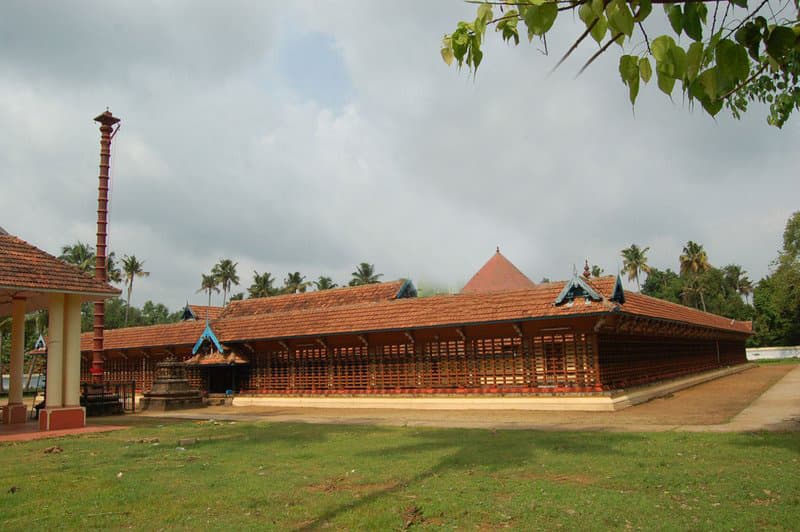
The Tali Shiva Temple, also known as Tali Mahakshetram, is an ancient Hindu temple located in Kozhikode, Kerala, dedicated to Lord Shiva. Constructed in the 14th century by the Zamorin of Calicut, it served as the family temple for the ruling dynasty and is renowned for its traditional Kerala architectural style, featuring a two-storied, chariot-shaped sanctum adorned with murals and granite sculptures.
Key Facts
- ›The temple is dedicated to Lord Shiva, with a Jyotirlingam believed to have been installed by Parashurama.
- ›It was built in the 14th century by the Zamorin of Calicut, who also held the title Sailabdheswara.
- ›The architecture is in the traditional Kerala style, with the sanctum designed in the shape of a chariot.
- ›The temple complex houses several other deities, including various forms of Ganapathy, Bhagavathy, Ayyappa, Vishnu, and Nagam.
- ›It was renovated in 1964 after being damaged during Tipu Sultan's invasion in the 18th century.
- ›The temple hosts the annual Revathi Pattathanam cultural and philosophical gathering.

Shiva
- Historical importance as the family temple of the Zamorins
- Architectural example of traditional Kerala style
- Center for philosophical discussions during Revathi Pattathanam
Zamorin of Calicut
Maha Shivratri, Revathi Pattathanam, Malayalam New Year
Granite
Zamorin of Calicut, Swamy Thirumulapad
Murals of Shiva’S Retinue, Granite Sculptures of Shiva’S Retinue, Bird Sculptures, Animal Sculptures, Intricate Carvings On Gopurams
About Tali Shiva Temple
Tali Shiva Temple, also known as Tali Mahakshetram, is a significant Hindu temple situated in the heart of Kozhikode city in Kerala. Dedicated to Lord Shiva, the temple is believed to possess a Jyotirlingam installed by the sage Parashurama. Historically, it served as the family temple for the Zamorins of Calicut, the rulers of the region.
History and Construction
The Tali Shiva Temple was constructed in the 14th century by the Zamorin of Calicut. Some historical accounts suggest the temple might predate the city itself. The temple's prosperity and the founding of Kozhikode city are closely intertwined. It is believed that the lingam in the sanctum was installed towards the end of the Dvapara Yuga by Sri Parashurama. The temple faced damage during Tipu Sultan's invasion in the 18th century and was subsequently renovated in 1964. The temple complex is protected by large walls that resemble an elephant's belly.
Architecture and Deities
The temple is a prime example of traditional Kerala architecture. Its notable feature is the two-storied sanctum-sanctorum, designed in the shape of a chariot. This structure is adorned with intricate murals and granite sculptures depicting Lord Shiva and his retinue, as well as various birds and animals illustrating stories from the Puranas. Within the main temple complex, various sub-deities are housed, including Tali Ganapathy, Thevarathil Ganapathy, Thrumandhakunnu Bhagavathy, Sree Krishna, Thevarathil Bhagavathy, Ayyappa, Vishnu, and Naga. A separate Vishnu temple within the complex contains the idol of Sree Valayanad Bhagavati, and a small Narasimha Moorthy temple is located on its southern side.
Significance and Festivals
The Tali Shiva Temple holds considerable historical and religious importance. It is a treasure trove of numerous deities and exquisite craftsmanship. The temple is the venue for the annual Revathi Pattathanam, a seven-day cultural and philosophical festival held in October or November, which attracts eminent scholars and philosophers to discuss various schools of Indian philosophy. Other major festivals celebrated include Maha Shivratri and the Malayalam New Year.
Access and Practices
The temple is accessible from Kozhikode International Airport and the Kozhikode railway station. A strict dress code is enforced, requiring visitors to wear traditional attire; Western clothing is not permitted. Previously, under the caste system, access was restricted, but it is now open to all Hindus. The temple has specific timings for worship, with morning prayers from 4:30 AM to 11:00 AM and evening prayers from 5:00 PM to 8:30 PM.
Source: Wikipedia ↗
Frequently Asked Questions
Where is the Tali Shiva Temple located?
The Tali Shiva Temple is situated in the heart of Kozhikode city, Kerala, one kilometer east of the Kozhikode railway station and surrounded by the Palayam market.
Who built the Tali Shiva Temple and when?
The temple was built in the 14th century by the Zamorin of Calicut. Some historians believe it may have existed even before the city was established.
What is the architectural style of the Tali Shiva Temple?
The temple is built in the traditional Kerala architectural style. Its two-storied sanctum-sanctorum is uniquely shaped like a chariot and is decorated with murals and granite sculptures.
Which deities are worshipped at the Tali Shiva Temple?
The presiding deity is Lord Shiva, whose Jyotirlingam is in the Sanctum Sanctorum. The complex also houses deities of Tali Ganapathy, Thevarathil Ganapathy, Thrumandhakunnu Bhagavathy, Sree Krishna, Thevarathil Bhagavathy, Ayyappa, Sri Vishnu, Nagam, Sree Valayanad Bhagavati, and Narasimha Moorthy.
What is the historical significance of the Tali Shiva Temple?
The Tali Shiva Temple is historically important as one of the oldest temples in Kozhikode and was the family temple of the Zamorins. Its founding is closely linked to the prosperity of the city, and it has been a center for philosophical discussions during the Revathi Pattathanam festival.
Are there any specific dress codes for visiting the Tali Shiva Temple?
Yes, visitors wearing jeans and Western attire are not permitted to enter the temple. Traditional dress, such as a veshti or mundu, is required and can be rented from the temple counter.
Related Temples (Hindu)
Thirumoozhikkulam Lakshmana Perumal Temple
The Thirumoozhikkulam Lakshmana Perumal Temple, situated in Kerala, India, is a significant Hindu temple revered in the Sri Vaishnava canon. It is dedicated to Lakshmana Perumal and is part of the 108 Divya Desams, holding particular importance for its association with the Ramayana legend and the Nalambalam Yatra pilgrimage.

Thirunakkara Mahadevar Temple
Thirunakkara Mahadevar Temple is a significant Hindu temple located in Kottayam, Kerala, India, dedicated to Lord Shiva. It is recognized as one of the 108 revered Shivalayas in Kerala and is believed to have been built by the Maharaja of Thekkumkur approximately 500 years ago. The temple is known for its traditional Kerala-style architecture, preserving numerous sculptures and murals of various Hindu deities.

Thrikodithanam Mahavishnu Temple
The Thrikodithanam Mahavishnu Temple is a Hindu temple in Kerala, South India, dedicated to Vishnu, specifically as Mahavishnu. It is renowned for its Kerala-style architecture and its mention in the early medieval Tamil canon, the Nalayira Divya Prabandham, recognizing it as one of the 108 Divya Desams dedicated to Krishna. Legend also connects it to the Pandavas of the Mahabharata, with Sahadeva believed to have built the shrine.