
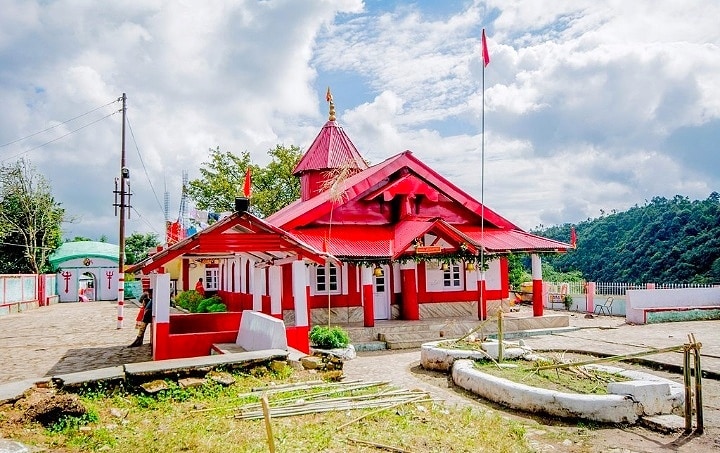
Nartiang Durga Temple
The Nartiang Durga Temple, located in the West Jaintia Hills of Meghalaya, India, is a significant Hindu shrine and one of the 51 Shakta pithas. Believed to be the permanent abode of Goddess Durga, it attracts numerous pilgrims, particularly during the Durga Puja festival. The temple combines Hindu traditions with ancient Khasi customs in its worship practices.
Key Facts
- ›It is one of the 51 Shakta pithas, considered holy abodes of Parashakti.
- ›The temple is approximately 600 years old.
- ›The Shakti is worshipped here as Jayanti and the Bhairava as Kamadishwar.
- ›It is believed that the left thigh of Sati Devi fell at this site.
- ›Worship practices blend Hindu traditions with ancient Khasi customs, notably using a plantain trunk adorned with flowers to represent Durga.
- ›The local chieftain (Syiem) is considered the chief patron of the temple.
Durga, Jayanti, Kamadishwar
- One of the 51 Shakta Pithas
- Holist Site For Devotees of Shaktism
- Permanent Abode of Goddess Durga
- Combines Hindu and Ancient Khasi Traditions In Worship
Jaintia Kingdom
Durga Puja
King Dhan Manik, King Jaso Manik, Lakshmi Narayana, Syiem
Myntdu River
About Nartiang Durga Temple
The Nartiang Durga Temple is a significant Hindu place of worship located in the West Jaintia Hills district of Meghalaya, northeastern India. It holds a prominent position as one of the 51 Shakta pithas, which are considered exceptionally holy sites for adherents of the Shaktism sect of Hinduism. The temple is approximately 600 years old and is deeply revered by the local Hindu population, who believe it to be the eternal dwelling place of Goddess Durga.
Religious Significance and Mythology
As a Shakta pitha, the Nartiang Devi shrine is regarded as a sacred abode of Parashakti. The origin of Shakta pithas is rooted in the mythology of Daksha yagna and Sati's self-immolation, where 51 body parts of Sati Devi fell across the landscape as Shiva carried her corpse. It is believed that Sati Devi's left thigh fell at Nartiang, leading to the Goddess being known as Jainteshwari. The shrine is dedicated to 'Jayanti' as the Shakti and 'Kamadishwar' as the Kalabhairava.
Historical Context
The history of the Nartiang Durga Temple is intertwined with the Jaintia Kingdom. Around 600 years ago, King Dhan Manik established Nartiang as the summer capital of his kingdom. Later, King Jaso Manik married Lakshmi Narayana, the daughter of the Hindu Koch king Nara Narayana. It is believed that Lakshmi Narayana, an ardent devotee of Goddess Durga, influenced the Jaintia royalty and their tribe to embrace Shaktiism. A legend recounts that Goddess Durga appeared in a dream to King Jaso Manik, revealing the significance of the site and instructing him to build a temple in her honor, leading to the establishment of the Jainteshwari temple.
Worship and Traditions
The worship practices at the Nartiang Durga Temple are distinct, blending Hindu rituals with ancient Khasi traditions. In line with the Khasi custom of avoiding anthropomorphic representations of deities, the image of Durga is symbolized by a plantain trunk adorned with marigold flowers. The local chieftain, known as the Syiem, holds the position of the temple's chief patron. The most important festival celebrated is Durga Puja, during which the banana plant representation of the Goddess is worshipped. The festivities culminate in the plant's ceremonial immersion in the Myntdu River, often accompanied by a gun salute. Even today, goat sacrifices are performed during Durga Puja, reflecting the integration of local customs.
Present Day Management and Recognition
Currently, the Nartiang Durga Temple is under the care of the Central Puja Committee, the official representative body of the Hindu community in Meghalaya. This committee finances the temple's daily expenses and undertakes development activities. It also plays a role in promoting the unique Durga Puja celebrations held at the ancient temple, which fuse elements of Bengali and Khasi-Jaintia Hills cultures. In 2017, there were indications that the temple would be declared a heritage site.
Source: Wikipedia ↗
Frequently Asked Questions
Where is the Nartiang Durga Temple located?
The Nartiang Durga Temple is situated in the West Jaintia Hills district of Meghalaya in northeastern India.
What is the religious significance of the Nartiang Durga Temple?
It is recognized as one of the 51 Shakta pithas, highly revered sites within Shaktism. Hindus in the Jaintia Hills believe it to be the permanent dwelling of Goddess Durga.
What is unique about the worship at Nartiang Durga Temple?
The temple's worship incorporates a blend of Hindu and ancient Khasi traditions. Instead of figurines, the image of Durga is represented by a plantain trunk decorated with marigold flowers, adhering to Khasi customs.
What is the most important festival celebrated at this temple?
The most significant festival observed at the Nartiang Durga Temple is Durga Puja. During this time, a banana plant is dressed and worshipped as the Goddess, and the festivities conclude with its ceremonial immersion in the Myntdu River.
What is the historical connection of the temple to the Jaintia Kingdom?
The temple has historical ties to the Jaintia Kingdom, as Nartiang was made the summer capital by King Dhan Manik about 600 years ago. Legend suggests that Goddess Durga appeared in a dream to King Jaso Manik, instructing him to build a temple in her honor.
Who are the deities worshipped at the Nartiang Durga Temple?
The Shakti of the Nartiang Devi shrine is worshipped as Jayanti, and the corresponding Bhairava is worshipped as Kamadishwar.
Related Temples (Hindu)

Trilokpur Temple
The Trilokpur Temple complex in Himachal Pradesh, India, is a significant Hindu pilgrimage site dedicated to Goddess Durga in her form as Mahamaya Bala Sundri. Legend states its origin in 1570 CE when a sacred stone representing the goddess appeared in a salt bag, leading to the construction of the main temple. The site is known for its amalgam of Indo-Persian architectural styles and attracts millions of devotees annually.

Hari Parbat
Hari Parbat is a significant hill overlooking Srinagar, Jammu and Kashmir, India, renowned for its historical fort and religious sites. It features a Hindu temple dedicated to Goddess Sharika (Parvati), identified with the sacred pebble of local mythology, alongside Muslim shrines and Sikh Gurdwaras.

Gavi Gangadhareshwara Temple
The Gavi Gangadhareshwara Temple is a 16th-century rock-cut temple in Bengaluru, India, dedicated to Lord Shiva. It is renowned for its unique architectural planning that allows sunlight to illuminate the lingam during specific times of the year, drawing large numbers of devotees.