
Jeen Mata Temple
The Jeen Mata Temple, located in Rajasthan, India, is an ancient Hindu temple dedicated to the goddess Jeen Mata, believed to be a form of the Shakti deity. Constructed over a thousand years ago, the temple is a significant pilgrimage site, particularly during the Navratri festival, and is known for its unique traditions and legends, including an account of divine intervention against Mughal forces.
Key Facts
- ›The temple is dedicated to Jeen Mata (Jayanti Mata), a form of the Shakti deity.
- ›It is believed to be over a thousand years old, dating back to the 8th century.
- ›The temple is constructed primarily from marble and limestone.
- ›Pilgrims visit in large numbers during the Navratri festival in the months of Chaitra and Ashvin.
- ›A legend recounts divine intervention, involving a swarm of bees, to protect the temple from Mughal forces.
- ›The goddess is popularly known as the "Bhanwaron ki Devi" (Goddess of the Bees) in the region.

Jeen Mata, Jayanti Mata, Shakti
Religious Pilgrimage Site, Ancient Historical Site, Site of Legendary Divine Intervention
Mughal Empire
Navratri
Marble, Limestone
About Jeen Mata Temple
The Jeen Mata Temple is a significant ancient Hindu shrine located in the village of Jeen Mata, within the Sikar district of Rajasthan, India. Dedicated to the goddess Jeen Mata, who is revered as a form of the Shakti deity and also known as Jayanti Mata, the temple is a focal point for religious devotion and pilgrimage.
History and Legend
Local legends trace the origins of Jeen Mata to a woman named Jeevan, who is said to have achieved spiritual eminence through deep meditation in the Aravalli mountains. The temple itself is believed to be over a thousand years old, with its construction attributed to the 8th century. Its historical and mythological significance is further amplified by a legend involving the Mughal Emperor Aurangzeb. According to this account, when Aurangzeb's forces attempted to desecrate the temple, supernatural phenomena, including a dust storm and a swarm of bees, repelled the attackers. This event is said to have deeply impressed Aurangzeb, leading him to pledge imperial support for the temple's eternal flame.
Architectural Features and Traditions
Constructed from marble and limestone, the Jeen Mata Temple is situated atop a hill, surrounded by dense forests. A notable aspect of the temple is that its gates are never closed, and regular prayers are performed continuously, even during lunar eclipses. Within the temple complex, the Harsh Bhairav Nath temple is also present at the peak. A significant tradition observed at Jeen Mata Temple is the "Jadula" ritual, the first hair-cutting ceremony for young boys, which is performed here.
Pilgrimage and Significance
The Jeen Mata Temple attracts a large number of pilgrims, particularly during the Navratri festival, celebrated in the auspicious months of Chaitra and Ashvin. The goddess is popularly known in the Shekhawati region as "Bhanwaron ki Devi" (Goddess of the Bees), a title derived from the legend of the bees that defended the temple. The temple's enduring presence, rich legends, and active worship make it a vital spiritual and cultural landmark in Rajasthan.
Source: Wikipedia ↗
Frequently Asked Questions
Where is the Jeen Mata Temple located?
The Jeen Mata Temple is situated in the village of Jeen Mata, which is in the Sikar district of Rajasthan, India. It is located approximately 29 kilometers south of Sikar city and about 108 kilometers northwest of Jaipur.
What is the history behind the Jeen Mata Temple?
Local legends state that Jeen Mata, originally named Jeevan, meditated in honor of Goddess Jayanthi at a place called "Kajal Shikhar" in the Aravalli mountains and later became revered as Jeen Mata. The temple itself is believed to be over a thousand years old, with construction dating back to the 8th century.
What are some notable features of the Jeen Mata Temple?
The temple is built on a hilltop, surrounded by dense forests, and its gates are said to never close, with prayers continuing even during lunar eclipses. Within the complex, the Harsh Bhairav Nath temple is also located at the peak.
What is the significance of the legend involving Aurangzeb?
According to legend, Mughal Emperor Aurangzeb's forces attempted to destroy the temple. Supernatural events, including a dust storm and a swarm of bees, attacked the soldiers, causing them to flee. Aurangzeb is said to have been awed and pledged to provide oil for the temple's eternal flame.
What traditions are associated with the Jeen Mata Temple?
A significant tradition observed at the temple is the "Jadula" ritual, which is the first hair-cutting ceremony for boys. This ritual is performed for children within the temple premises.
Related Temples (Hindu)
Bathu Temples
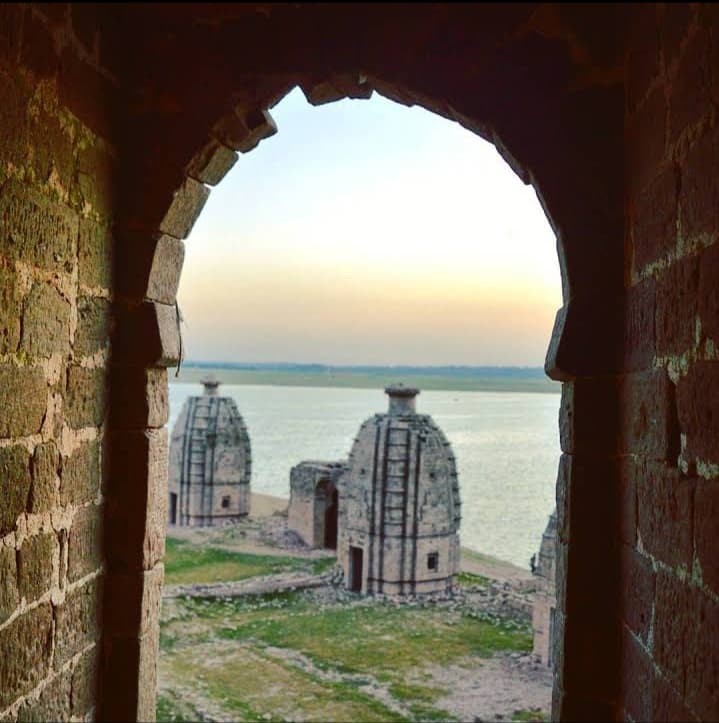
The Bathu Temples, also known as Bathu ki Ladi, are a cluster of ancient Hindu temples located in the Kangra district of Himachal Pradesh, India. Originally submerged by the Pong Dam reservoir in the 1970s, these temples are now only accessible for a few months each year when water levels recede. The main temple is primarily dedicated to Goddess Parvati and Lord Shiva, with some traditions also associating it with Lord Vishnu.

Pataleshwar Caves, Pune
The Pataleshwar Caves are an 8th-century rock-cut Hindu temple complex in Pune, Maharashtra, India, originally excavated during the Rashtrakuta period. Dedicated primarily to Shiva, the temple features a unique monolithic structure with a circular Nandi mandapa and a large pillared mandapa, with its sanctums carved deeper into the ground, giving it the name Pataleshwar, meaning 'Lord of the Underworld'. The site, managed by the Archaeological Survey of India, is a protected monument that has undergone restoration and now includes a surrounding garden and new idols.

Kichakeshwari Temple
The Kichakeshwari Temple in Khiching, Odisha, is a Hindu temple dedicated to Goddess Chamunda, also known as Kali. It served as the family and state deity for the Bhanja rulers of Mayurbhanj, with its original structure dating back to the 7th or 8th century. The temple is renowned for its Kalinga architectural style and intricate carvings, having been significantly reconstructed in 1934.