
Chandi Devi Temple, Haridwar
The Chandi Devi Temple in Haridwar, Uttarakhand, is a significant Hindu temple dedicated to Goddess Chandi Devi. Perched atop the Neel Parvat in the Sivalik Hills, it is believed to be a Siddh Peetha where wishes are fulfilled. The temple's main idol is attributed to Adi Shankaracharya, while the current structure was built in 1929.
Key Facts
- ›Dedicated to Goddess Chandi Devi, also known as Chandika.
- ›Located atop the Neel Parvat on the Sivalik Hills in Haridwar, Uttarakhand, India.
- ›The main idol is believed to have been installed in the 8th century by Adi Shankaracharya.
- ›The present temple structure was built in 1929 by Suchat Singh, King of Kashmir.
- ›Considered a Siddh Peetha, a place where devotees' desires are believed to be fulfilled.
- ›One of the Panch Tirth (five Pilgrimages) within Haridwar.

Chandi Devi, Chandika
Siddh Peetha, Ancient Temple, Pilgrimage Site
Chandi Chaudas, Navratra, Kumbha Mela
Suchat Singh, Adi Shankaracharya
Main Murti of Chandi Devi
Ganges River
About Chandi Devi Temple, Haridwar
The Chandi Devi Temple in Haridwar, Uttarakhand, is a significant Hindu temple dedicated to Goddess Chandi Devi, also known as Chandika. This revered shrine is situated atop the Neel Parvat, on the eastern summit of the Sivalik Hills, which form the southernmost range of the Himalayas. The temple is considered a Siddh Peetha, a sacred site where devotees believe their wishes are fulfilled, and is one of three such Peethas located within the holy city of Haridwar.
History and Legend
Legends trace the origin of Goddess Chandika to the battle against the demon kings Shumbha and Nishumbha, who had usurped the kingdom of Indra. After intense prayers by the gods, a goddess emerged from Parvati and eventually slew the demons. It is believed that Chandika rested on the Neel Parvat after her victory, and a temple was subsequently built there, with the two peaks of the mountain range named after the defeated demons. The Skanda Purana also mentions a legend where the army chief of Shumbha and Nishumbha, Chanda-Munda, were killed by Goddess Chandi at this location, giving the place its name.
The main idol of Goddess Chandi Devi at the temple is traditionally attributed to the renowned Adi Shankaracharya, who is said to have installed it in the 8th century CE. Local legend also suggests that the Mughal emperor Akbar, during a visit to Hardwar, was prompted to grant land ownership to the temple management after a divine message.
Construction and Access
The current structure of the Chandi Devi Temple was built in 1929 by Suchat Singh, during his reign as the King of Kashmir. The temple is located approximately 4 kilometers from Har ki Pauri. Devotees can reach the shrine by undertaking a 3-kilometer trek from Chandighat, which involves climbing a series of steps, or by utilizing the recently introduced rope-way service, known as Chandi Devi Udankhatola. This cable car service provides convenient access for pilgrims and also serves the nearby Mansa Devi shrine, offering scenic views of the Ganges River and Haridwar during its ascent.
Source: Wikipedia ↗
Frequently Asked Questions
What is the significance of the Chandi Devi Temple in Haridwar?
The Chandi Devi Temple is highly revered as a Siddh Peetha, a sacred site where devotees believe their wishes are granted. It is considered one of the ancient temples of India and a must-visit for pilgrims in Haridwar.
Who is the presiding deity of the Chandi Devi Temple?
The presiding deity of the temple is Goddess Chandi Devi, also known as Chandika. She is an exceptionally beautiful goddess who slayed the demon kings Shumbha and Nishumbha.
When was the Chandi Devi Temple built and by whom?
The main idol of Goddess Chandi Devi is said to have been installed in the 8th century by Adi Shankaracharya. The present temple structure was constructed in 1929 by Suchat Singh, who was the King of Kashmir during that period.
How can one reach the Chandi Devi Temple?
Devotees can reach the temple by trekking a 3-kilometer route from Chandighat, involving climbing numerous steps. Alternatively, a rope-way service known as Chandi Devi Udankhatola offers a convenient way to ascend to the shrine.
What is the legend behind the Chandi Devi Temple?
According to legend, Goddess Chandi rested at the top of Neel Parvat after defeating the demon kings Shumbha and Nishumbha. The temple was later built to commemorate this event, and the two nearby peaks are named after the demons.
Is animal sacrifice still practiced at Chandi Devi Temple?
Historically, the temple had an 800-year-old ritual of animal sacrifice. However, this tradition was stopped in 2015 by the head priest due to lowered acceptance by locals.
Related Temples (Hindu)
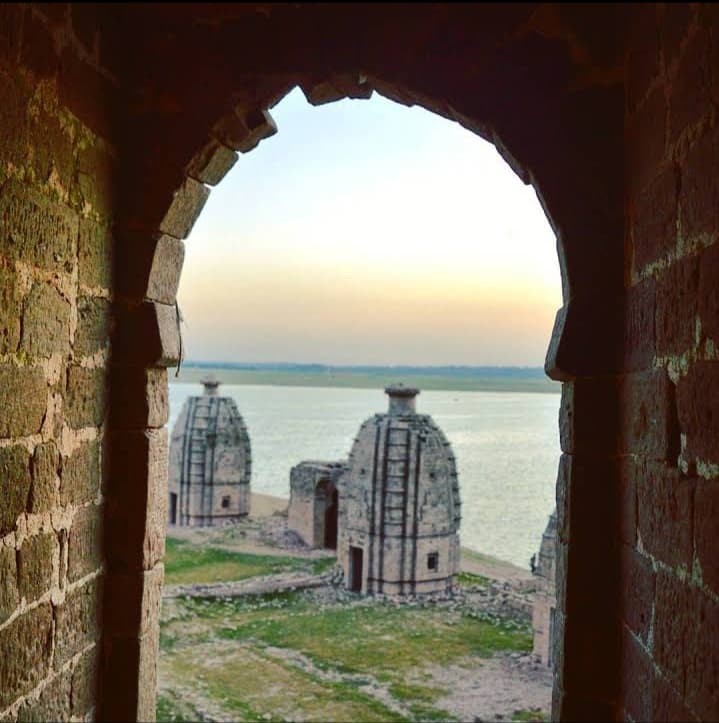
Bathu Temples
The Bathu Temples, also known as Bathu ki Ladi, are a cluster of ancient Hindu temples located in the Kangra district of Himachal Pradesh, India. Originally submerged by the Pong Dam reservoir in the 1970s, these temples are now only accessible for a few months each year when water levels recede. The main temple is primarily dedicated to Goddess Parvati and Lord Shiva, with some traditions also associating it with Lord Vishnu.

Pataleshwar Caves, Pune
The Pataleshwar Caves are an 8th-century rock-cut Hindu temple complex in Pune, Maharashtra, India, originally excavated during the Rashtrakuta period. Dedicated primarily to Shiva, the temple features a unique monolithic structure with a circular Nandi mandapa and a large pillared mandapa, with its sanctums carved deeper into the ground, giving it the name Pataleshwar, meaning 'Lord of the Underworld'. The site, managed by the Archaeological Survey of India, is a protected monument that has undergone restoration and now includes a surrounding garden and new idols.

Kichakeshwari Temple
The Kichakeshwari Temple in Khiching, Odisha, is a Hindu temple dedicated to Goddess Chamunda, also known as Kali. It served as the family and state deity for the Bhanja rulers of Mayurbhanj, with its original structure dating back to the 7th or 8th century. The temple is renowned for its Kalinga architectural style and intricate carvings, having been significantly reconstructed in 1934.