
Bugga Ramalingeswara Swamy Temple
The Bugga Ramalingeswara Swamy Temple is a Shiva shrine located on the southern bank of the Penna River in Tadipatri, Andhra Pradesh, India. Constructed between 1490 and 1509 by Pemmasani Ramalinga Nayudu I during the Vijayanagara Empire, it is renowned for its unique west-facing lingam and a set of seven musical pillars.
Key Facts
- ›Dedicated to Lord Shiva, with a 'swayambhu' (self-originated) lingam.
- ›Built between 1490 and 1509 by Pemmasani Ramalinga Nayudu I.
- ›Located on the southern bank of the Penna River in Tadipatri, Anantapur district.
- ›Features seven independent pillars that produce musical notes when struck.
- ›The presiding Shiva lingam faces west, which is unusual for Hindu temples.
- ›The temple's unfinished gopurams have been described as architectural 'wonders'.
Shiva
Architectural Features, Unique Musical Pillars, West-Facing 'Swayambhu' Lingam, Illustrations From Ramayana and Mahabharata
Vijayanagara Empire
Pemmasani Ramalinga Nayudu I
- Bas Relief Structures Illustrating Episodes From Ramayana and Mahabharata
Penna River
About Bugga Ramalingeswara Swamy Temple
The Bugga Ramalingeswara Swamy Temple is a significant Hindu shrine dedicated to Lord Shiva, located on the southern bank of the Penna River in Tadipatri, Anantapur district, Andhra Pradesh, India.
Construction and Patronage
The temple's construction is attributed to Pemmasani Ramalinga Nayudu I, a chieftain who governed the Gutti-Gandikota region. He commissioned the temple between 1490 and 1509, during the prosperous era of the Vijayanagara Empire. Historical records, such as the Tadipatri kaifiyat collected by Colin Mackenzie in 1802, corroborate this patronage.
Architectural and Religious Uniqueness
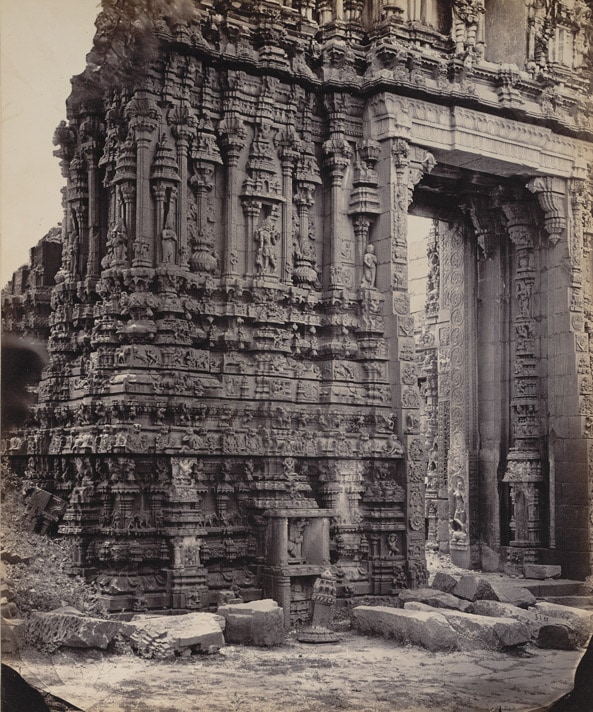
The presiding deity is a Shiva lingam that is revered as 'swayambhu,' meaning it is naturally occurring or self-originated. A distinctive feature of the temple is that the Shiva lingam faces west, which deviates from the common practice of east-facing deities in Hindu temples. The temple complex comprises a sanctum, an ardhmandapa, and a mukhamandapa arranged in an axial line. It also showcases bas-relief structures that depict episodes from the epic tales of the Ramayana and Mahabharata.
Notable Features
A remarkable element of the Bugga Ramalingeswara Swamy Temple is the presence of seven small, independent pillars situated in front of the Vishnu shrine. When struck, these pillars are known to produce 'saptaswara,' the seven musical notes, creating a unique acoustic phenomenon. The temple's gopurams, though unfinished, have been lauded by architectural historian James Anderson, who described them as 'wonders,' highlighting their exceptional design and craftsmanship.
Source: Wikipedia ↗
Frequently Asked Questions
Who built the Bugga Ramalingeswara Swamy Temple?
The temple was built by Pemmasani Ramalinga Nayudu I, a chieftain of the Gutti-Gandikota region. He was a patron of the arts and architecture during the Vijayanagara Empire.
What is significant about the deity at this temple?
The presiding deity is a Shiva lingam that is considered 'swayambhu', meaning it is naturally occurring or self-originated. Unusually, this lingam faces west, contrasting with the typical east-facing orientation of deities in other Hindu temples.
What is special about the pillars in front of the Vishnu shrine?
There are seven small, independent pillars located in front of the Vishnu shrine. When struck, these pillars are said to produce 'saptaswara', the seven musical notes, creating a unique auditory experience.
What is the architectural significance of the temple?
Architectural historian James Anderson described the temple's gopurams (towers) as 'wonders,' despite them being unfinished. The temple complex includes a sanctum, ardhmandapa, and mukhamandapa arranged axially, and features bas-relief structures depicting scenes from the Ramayana and Mahabharata.
Where is the Bugga Ramalingeswara Swamy Temple located?
The temple is situated on the southern bank of the Penna River in Tadipatri, within the Anantapur district of Andhra Pradesh, India. It is approximately 4 km (2.5 miles) from the Tadipatri railway station.
Related Temples (Hindu)

Trilokpur Temple
The Trilokpur Temple complex in Himachal Pradesh, India, is a significant Hindu pilgrimage site dedicated to Goddess Durga in her form as Mahamaya Bala Sundri. Legend states its origin in 1570 CE when a sacred stone representing the goddess appeared in a salt bag, leading to the construction of the main temple. The site is known for its amalgam of Indo-Persian architectural styles and attracts millions of devotees annually.

Hari Parbat
Hari Parbat is a significant hill overlooking Srinagar, Jammu and Kashmir, India, renowned for its historical fort and religious sites. It features a Hindu temple dedicated to Goddess Sharika (Parvati), identified with the sacred pebble of local mythology, alongside Muslim shrines and Sikh Gurdwaras.

Gavi Gangadhareshwara Temple
The Gavi Gangadhareshwara Temple is a 16th-century rock-cut temple in Bengaluru, India, dedicated to Lord Shiva. It is renowned for its unique architectural planning that allows sunlight to illuminate the lingam during specific times of the year, drawing large numbers of devotees.