
Zosimas of Palestine
April 4·6th century·Palestine
Zosimas of Palestine was a Palestinian saint and ascetic monk who lived in the late 5th and early 6th centuries. He is primarily remembered for his encounter with Mary of Egypt, a penitent sinner, in the desert near the Jordan River. Their meeting and his subsequent care for her spiritual needs are detailed in the hagiography of Mary of Egypt.
Key Facts
- ›Zosimas was born in the second half of the fifth century.
- ›He became a monk at a young age in a monastery in Palestine.
- ›At age fifty-three, he moved to a strict monastery near the Jordan River.
- ›He is known for encountering Mary of Egypt in the desert.
- ›Zosimas brought Holy Communion to Mary of Egypt in the desert.
- ›He is reputed to have lived to be almost one hundred years old.
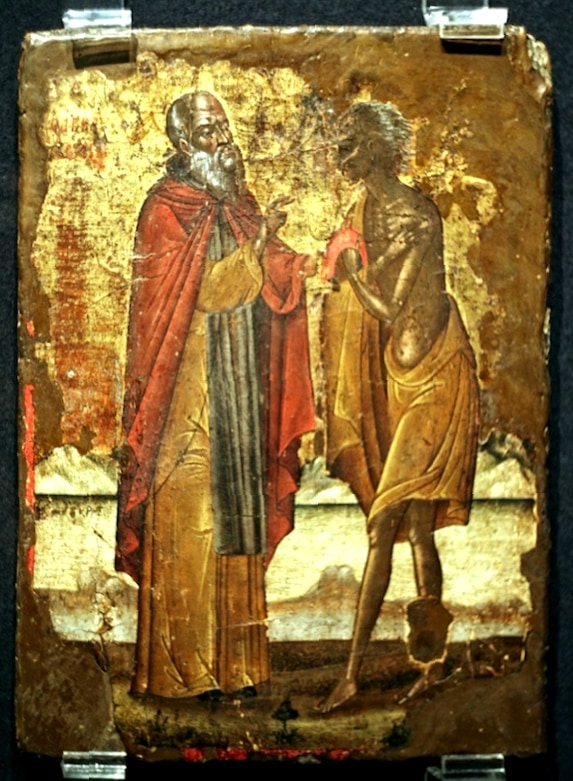
Zosimus, Ζωσιμᾶς, Zōsīmas al-Falesṭīnī
About Zosimas of Palestine
Zosimas of Palestine, also known by his Greek name Ζωσιμᾶς and in Arabic as Zōsīmas al-Falesṭīnī, is a Palestinian saint commemorated on April 4th. He was a monk and ascetic who lived in the late fifth and early sixth centuries.
Life and Historical Context
Born in the latter half of the fifth century, Zosimas entered a monastery in Palestine at a very young age. He gained a reputation as a respected elder and ascetic. At the age of fifty-three, he became a hieromonk and relocated to a highly austere monastery situated in the desert near the Jordan River, where he spent the remainder of his life.
Encounter with Mary of Egypt
Zosimas is most prominently remembered for his pivotal encounter with Mary of Egypt. The custom of his monastery involved all brethren venturing into the desert for the forty days of Great Lent, fasting and praying, and not returning until Palm Sunday. During one such period, Zosimas met Mary, who recounted her life story to him. She requested that he meet her the following year on Holy Thursday by the Jordan River to administer Holy Communion. He fulfilled this request, and upon returning to the same spot in the desert the third year, he found that she had died and subsequently buried her.
Sources and Legacy
Information regarding Zosimas' life is predominantly derived from the Vita of St. Mary of Egypt, a work compiled by Sophronius, who served as the Patriarch of Jerusalem between 634 and 638. Sophronius based his account on oral traditions he heard from monks in Palestine. This narrative is traditionally read as part of the Matins of the Great Canon of Andrew of Crete on the fifth Thursday of Great Lent. The story of Zosimas and Mary of Egypt shares similarities with Western traditions concerning Mary Magdalene, where Zosimas is sometimes identified as Maximin. Zosimas is reputed to have lived to be nearly one hundred years old, and his legacy is intrinsically linked to the spiritual guidance and pastoral care he provided to Mary of Egypt.
Source: Wikipedia ↗
Frequently Asked Questions
When was Zosimas of Palestine born?
Zosimas of Palestine was born in the second half of the fifth century. This places his birth during the reign of Emperor Theodosius II.
What is Zosimas of Palestine best known for?
He is best known for his encounter with Mary of Egypt in the desert near the Jordan River. He met her while wandering during Great Lent and later brought her Holy Communion.
Where did Zosimas of Palestine live?
Zosimas lived in Palestine, where he became a monk at a young age. He later moved to a strict monastery located in the wilderness close to the Jordan River.
How old was Zosimas when he met Mary of Egypt?
Zosimas was fifty-three years old when he moved to the strict monastery near the Jordan River. He met Mary of Egypt while living there.
What is the source of information about Zosimas' life?
All that is known of Zosimas' life comes from the Vita of St. Mary of Egypt, recorded by Sophronius, the Patriarch of Jerusalem from 634 to 638. Sophronius based his work on oral tradition.
Related Saints
Barsanuphius
Barsanuphius was a sixth-century Christian hermit and writer, considered one of the Desert Fathers. He is chiefly remembered for his extensive correspondence, alongside John the Prophet, offering spiritual direction through over 850 preserved letters that significantly influenced Orthodox monasticism. He is venerated as a saint in both the Eastern Orthodox and Roman Catholic Churches.
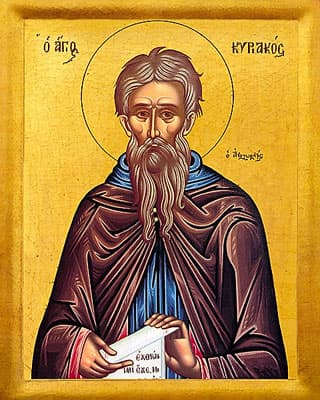
Cyriacus the Anchorite
Kyriakos the Anchorite was a 5th and 6th-century Greek Orthodox monk and saint, known for his ascetic life and fervent opposition to the Origenist heresy. He is remembered for his deep spiritual devotion, his work in strengthening Orthodox faith, and his life of prayer and solitude in the Judean desert.
Sabbas the Sanctified
Sabbas the Sanctified was a Cappadocian Greek monk, priest, and founder of several monasteries, most notably Mar Saba in Palestine. He is remembered for his ascetic life, his role as a church leader, and his staunch opposition to Monophysitism and Origenism. His monastic rule, the Jerusalem Typikon, guided Byzantine monasteries.