
Philip II of Moscow
January 9·16th century·Russia
Saint Philip II of Moscow was the Metropolitan of Moscow and all Rus' from 1566 to 1568, serving as the primate of the Russian Orthodox Church. He is remembered for his courageous defiance of Tsar Ivan the Terrible's tyrannical oprichnina, a stance that ultimately led to his martyrdom. Philip is venerated in the Eastern Orthodox Church as both a saint and a martyr.
Key Facts
- ›Born Fyodor Stepanovich Kolychov into a prominent boyar family, he was a childhood friend of Tsarevich Ivan.
- ›He entered the Solovetsky Monastery around the age of 30, eventually becoming its abbot.
- ›Philip agreed to become Metropolitan of Moscow on the condition that Ivan the Terrible abolish the oprichnina.
- ›He publicly rebuked Ivan the Terrible for the ongoing massacres during Lent in 1568.
- ›Philip was deposed, arrested, and imprisoned, eventually being strangled by Malyuta Skuratov in 1569.
- ›His body was found incorrupt, and he was officially glorified as a saint in 1652.
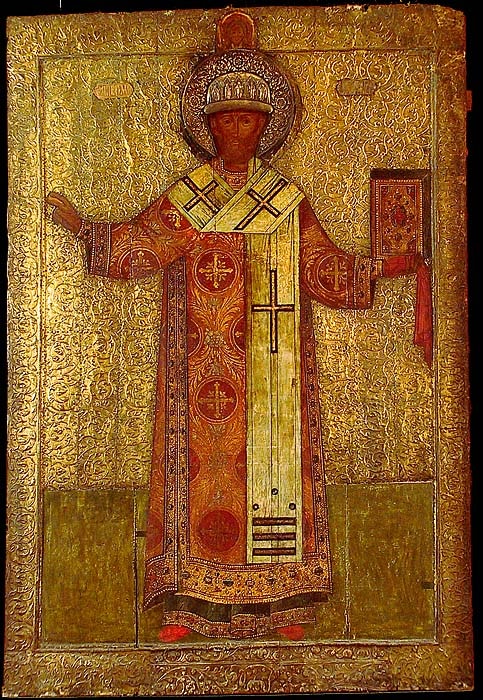
Fyodor Stepanovich Kolychov
Metropolitan's Vestments, Chains, Heavy Collar
About Philip II of Moscow
Saint Philip II of Moscow
Saint Philip II of Moscow, born Fyodor Stepanovich Kolychov on February 11, 1507, was a prominent figure in the Russian Orthodox Church, serving as Metropolitan of Moscow and all Rus' from 1566 to 1568. He is highly venerated in the Eastern Orthodox Church as both a saint and a martyr, primarily remembered for his courageous opposition to the tyranny of Tsar Ivan the Terrible.
Life and Historical Context
Born into the distinguished Kolychev boyar family, Fyodor Kolychov was noted for his early association with Tsarevich Ivan, who would later become Tsar Ivan IV, known as "the Terrible." Accounts suggest that a profound spiritual calling led him to seek refuge from the world in the Solovetsky Monastery on the White Sea around the age of thirty. There, he adopted the monastic name Philip and dedicated himself to a life of asceticism, working tirelessly alongside other monks in various crafts and contributing to the monastery's significant development under his leadership as abbot. His tenure as abbot saw the construction of numerous buildings and infrastructure projects, alongside a notable spiritual revival within the community.
Metropolitan and Martyrdom
Philip's reputation for piety and effectiveness reached Tsar Ivan the Terrible, who summoned him to fill the vacant metropolitan see of Moscow. Philip agreed, but only on the strict condition that the Tsar would abolish the oprichnina, Ivan's brutal and terroristic policy of state security. Despite this agreement, Ivan continued his violent campaigns. On March 2, 1568, during the Great Lent, Philip publicly rebuked the Tsar during Divine Liturgy for his ongoing massacres, an act of profound courage that sealed his fate. Ivan, enraged, had Philip deposed from his office under false charges of sorcery and dissolute living. Philip was arrested, imprisoned in harsh conditions, and eventually transferred to the Otroch Monastery, where he was strangled by the Tsar's henchman, Malyuta Skuratov, on December 23, 1569.
Commemoration and Legacy
Following his death, it was discovered that Philip's body was incorrupt, and numerous healings were reported from his tomb. These events contributed to his veneration. In 1590, his remains were transferred to the Solovetsky Monastery. In 1652, Patriarch Nikon persuaded Tsar Alexis to bring Philip's relics to Moscow, where he was officially glorified as a saint later that same year. His memory is honored on multiple feast days, including January 9 (main feast day), July 3 (translation of relics), and October 5 (as one of the Hierarchs of Moscow). Saint Philip's legacy endures as a powerful symbol of moral integrity and steadfast faith in the face of oppressive power, inspiring generations with his witness.
Source: Wikipedia ↗
Frequently Asked Questions
Who was Saint Philip II of Moscow?
Saint Philip II of Moscow was the Metropolitan of Moscow and all Rus' from 1566 to 1568, serving as the primate of the Russian Orthodox Church. He was born Fyodor Stepanovich Kolychov into a noble boyar family and had a childhood friendship with Ivan the Terrible.
Why is Saint Philip II of Moscow considered a martyr?
Philip is considered a martyr because he openly defied Tsar Ivan the Terrible's brutal oprichnina policy. He rebuked the Tsar for the massacres and was subsequently deposed, imprisoned, and ultimately murdered on Ivan's orders.
What role did the Solovetsky Monastery play in Philip's life?
Philip entered the Solovetsky Monastery in his youth and later became its abbot. During his time there, he led the monks in significant construction projects and fostered a spiritual revival, with many of his endeavors surviving to this day.
How did Philip's conflict with Ivan the Terrible unfold?
Philip agreed to become Metropolitan only if Ivan the Terrible abolished the oprichnina. When the Tsar persisted with his atrocities, Philip publicly denounced him. Ivan then had him deposed, arrested, and imprisoned, leading to his eventual strangulation.
When and where are Saint Philip's relics venerated?
Saint Philip's relics were transferred to Moscow in 1652, where he was glorified as a saint. His relics are venerated in Moscow, and his memory is celebrated on several feast days throughout the year.
Related Saints
Benedict of Szkalka
Benedict of Szkalka was a Benedictine monk and hermit venerated as a saint. He lived an austere life in a cave along the Váh River and is chiefly remembered for his piety and his martyrdom at the hands of robbers.
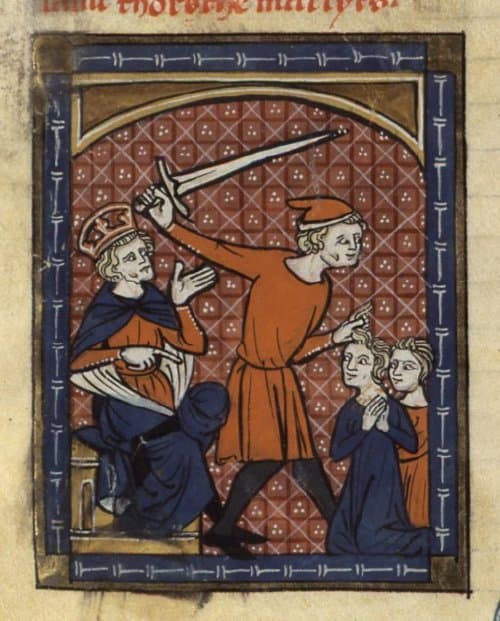
Gorgonius of Nicomedia
Gorgonius of Nicomedia was a Christian martyr who lived during the Diocletianic Persecution in AD 304. He held a high position in the emperor's household and was tortured and strangled for his faith alongside Peter Cubicularius and Dorotheus. He is remembered for his martyrdom and the subsequent veneration of his relics.
Ludmila of Bohemia
Ludmila of Bohemia was a Czech saint and martyr, grandmother of Saint Wenceslaus. She is venerated by Catholic and Orthodox Christians for her role in the conversion of Bohemia to Christianity and her patronage of the region. She is chiefly remembered for her martyrdom and her influence on her grandson, the patron saint of the Czech Republic.