
Gorgonius of Nicomedia
March 12·4th century·Turkey
Gorgonius of Nicomedia was a Christian martyr who lived during the Diocletianic Persecution in AD 304. He held a high position in the emperor's household and was tortured and strangled for his faith alongside Peter Cubicularius and Dorotheus. He is remembered for his martyrdom and the subsequent veneration of his relics.
Key Facts
- ›Gorgonius was a Christian martyr martyred in AD 304 at Nicomedia.
- ›He held a high position in the household of Emperor Diocletian.
- ›He was tortured and strangled for his faith.
- ›His body was initially thrown into the sea but later obtained by Christians and brought to Rome.
- ›His remains were translated to the monastery of Gorze in Lorraine in the 8th century.
- ›His feast day is kept on March 12 by the Roman Catholic Church and September 3 by the Eastern Orthodox Church.
About Gorgonius of Nicomedia
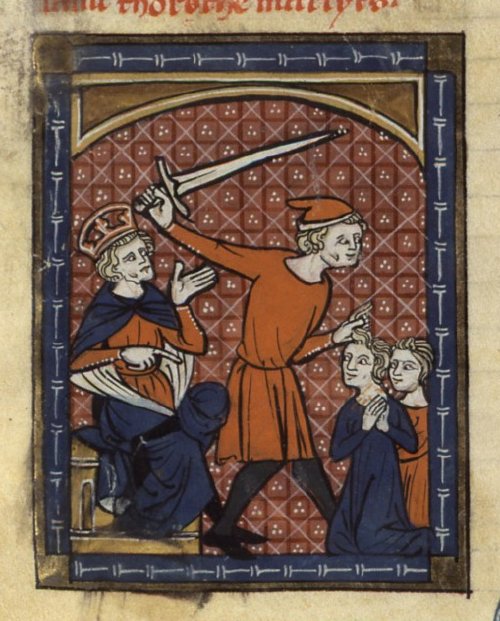
Gorgonius of Nicomedia was a Christian martyr who lived during the early 4th century. His martyrdom occurred in AD 304 in Nicomedia during the intense Diocletianic Persecution, a period when Christians faced severe persecution under Roman rule. Historical accounts from Lactantius and Eusebius indicate that Gorgonius held a prominent position within the imperial household of Emperor Diocletian.
Life and Martyrdom
As a Christian serving in the emperor's household, Gorgonius was among the first to be implicated when the persecution began. According to tradition, Diocletian ordered all members of his court to honor the Roman gods, and refusal meant exposure as a Christian. Gorgonius, along with companions such as Peter Cubicularius and Dorotheus, were subjected to brutal torture. Gorgonius, described as an army officer, protested the mistreatment of Christians and was subsequently martyred. The accounts suggest he was strangled, and his body, along with those of his companions, was ordered to be thrown into the sea to prevent veneration.
Veneration and Relics
Despite the imperial decree, Christians managed to retrieve the bodies. Gorgonius's body was eventually brought to Rome. In the 8th century, his remains were translated by Chrodegang, the Bishop of Metz, to the monastery of Gorze in Lorraine. From Gorze, portions of his relics were distributed to many French churches. However, during the chaos of the French Revolution, most of these relics were lost.
Feast Days
Gorgonius is commemorated jointly with his companions. The Roman Catholic Church observes their feast day on March 12, while the Eastern Orthodox Church keeps it on September 3.
Confusion with Other Saints
There have been instances of confusion between Gorgonius of Nicomedia and other saints named Gorgonius, notably Saint Gorgonius of Rome, an early martyr commemorated on September 9. The Catholic Encyclopedia notes that several individuals named Gorgonius are known, though very little information exists about most of them. One Gorgonius is also mentioned as a member of the Forty Martyrs of Sebaste.
Legacy
The veneration of Saint Gorgonius extended to the naming of places. In Southern California, the Rancho San Gorgonio was established in 1824 by Spanish missionaries and named in his honor. This ranch became a significant outpost of the San Gabriel Mission, and its name was subsequently applied to prominent local landmarks such as San Gorgonio Pass, San Gorgonio Mountain, and the San Gorgonio River.
Source: Wikipedia ↗
Frequently Asked Questions
Who was Gorgonius of Nicomedia?
Gorgonius of Nicomedia was a Christian who lived in the Roman Empire and was martyred in AD 304 during the Diocletianic Persecution. He held a significant position in the emperor's household.
How did Gorgonius die?
Gorgonius was brutally tortured and then strangled to death for his Christian faith. His body was then cast into the sea by order of Emperor Diocletian.
When is Gorgonius's feast day?
Gorgonius's feast day is observed on March 12 by the Roman Catholic Church and on September 3 by the Eastern Orthodox Church, commemorating him and his companions.
Where are Gorgonius's relics located?
After his martyrdom, Gorgonius's body was eventually brought to Rome. In the 8th century, his remains were translated to the monastery of Gorze in Lorraine, and portions were distributed to various French churches.
Is Gorgonius of Nicomedia the same as Saint Gorgonius of Rome?
Saint Gorgonius of Rome is a separate early Roman martyr commemorated on September 9. He is sometimes confused with Gorgonius of Nicomedia due to their shared name, but little is known about him beyond his name and burial place.
Related Saints
Romanus of Caesarea
Romanus of Caesarea was a Christian deacon martyred during the Diocletianic Persecution. He is remembered for his steadfast encouragement of Christians and his brutal martyrdom, which involved having his tongue cut out before being strangled. His feast day is observed on November 18.
Ludmila of Bohemia
Ludmila of Bohemia was a Czech saint and martyr, grandmother of Saint Wenceslaus. She is venerated by Catholic and Orthodox Christians for her role in the conversion of Bohemia to Christianity and her patronage of the region. She is chiefly remembered for her martyrdom and her influence on her grandson, the patron saint of the Czech Republic.
Philip II of Moscow
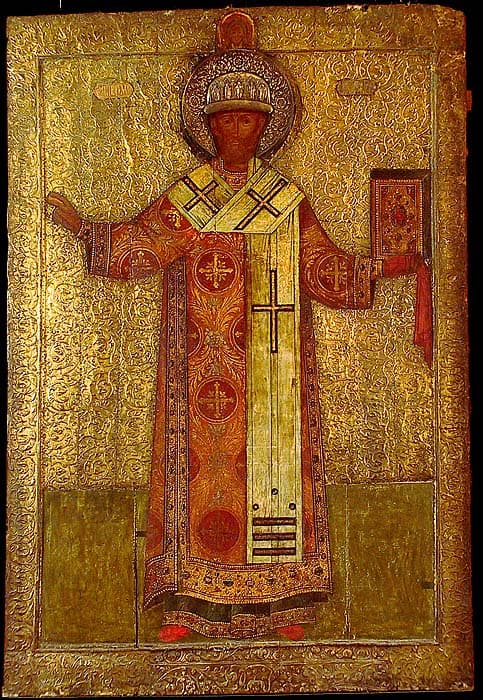
Saint Philip II of Moscow was the Metropolitan of Moscow and all Rus' from 1566 to 1568, serving as the primate of the Russian Orthodox Church. He is remembered for his courageous defiance of Tsar Ivan the Terrible's tyrannical oprichnina, a stance that ultimately led to his martyrdom. Philip is venerated in the Eastern Orthodox Church as both a saint and a martyr.