
Pambo of Nitria
Pambo of Nitria was a Coptic Desert Father and disciple of Anthony the Great in the 4th century. He is remembered for founding numerous monasteries in the Nitrian Desert and for his profound wisdom and spiritual guidance, consulted by prominent figures like Athanasius and Melania the Elder. His most notable penance was a long period of silence, undertaken to internalize a psalm about guarding one's tongue.
Key Facts
- ›He was a disciple of Anthony the Great.
- ›He founded many monasteries in the Nitrian Desert.
- ›He was renowned for his wisdom and consulted by Athanasius and Melania the Elder.
- ›His most striking penance was a commitment to silence, inspired by Psalm 39.
- ›He was the spiritual father of several canonized saints, including Pishoy and John the Dwarf.
- ›His face was said to shine like lightning, indicating his holiness.
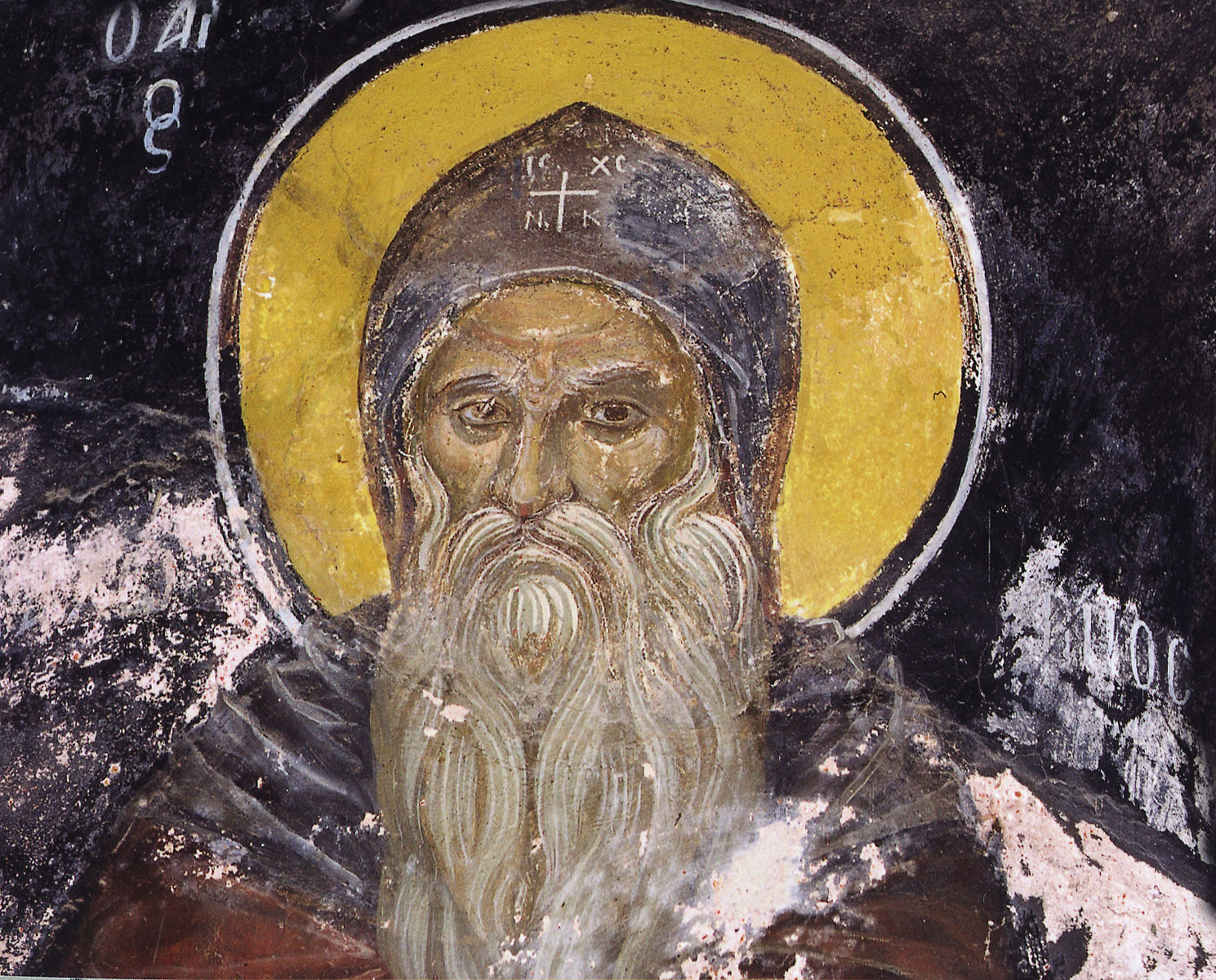
Basket
About Pambo of Nitria
Pambo of Nitria was a significant figure among the Coptic Desert Fathers of the 4th century, known for his profound spiritual wisdom and his foundational role in establishing monastic life in the Nitrian Desert. A disciple of the revered Anthony the Great, Pambo dedicated himself to a life of asceticism and prayer, becoming a spiritual father to many and a beacon of holiness.
Life and Historical Context
Born into a period of intense spiritual fervor and monastic development in Egypt, Pambo followed in the footsteps of earlier ascetics. Little is recorded about his life before he became a monk, but upon joining Anthony the Great's disciples, he embraced a life of severe discipline. His most renowned practice was a prolonged period of silence, undertaken to deeply internalize the biblical admonition to guard his tongue. This commitment to silence, which he felt he had only partially mastered even after eighteen years, exemplifies the rigorous self-examination characteristic of the Desert Fathers.
Pambo's asceticism and wisdom led him to found numerous monasteries in the harsh landscape of the Nitrian Desert. These communities became centers of spiritual life and learning. He was highly respected and sought out for counsel by prominent figures of the era, including the influential Bishop Athanasius of Alexandria, who brought Pambo to support him in Alexandrian courts during the debates over Arianism, later writing of him as "well pleasing to God." Melania the Elder, a wealthy Roman noblewoman who became a leading ascetic in Jerusalem and Rome, also had a close relationship with Pambo, providing support for his monasteries and visiting him.
Major Contributions and Legacy
Pambo's primary contribution was the establishment and guidance of monastic communities. His teachings, often conveyed through brief, impactful sayings, shed light on the early Christian monastic understanding of community and purpose. He is credited with fostering an environment where spiritual growth was paramount, as evidenced by the many disciples who looked to him for guidance, including canonized saints such as Pishoy and John the Dwarf.
His death is described as peaceful; he was weaving a basket, which became his first relic and was received by Melania the Elder. While some scholars have debated his association with Origenism due to the allegiances of some of his pupils, historical accounts emphasize his devotion to contemplative prayer and his commitment to a life of humility. His feast day is observed on July 18th by the Oriental Orthodox, Eastern Orthodox, and Catholic churches, commemorating his enduring spiritual legacy.
Source: Wikipedia ↗
Frequently Asked Questions
Who was Pambo of Nitria?
Pambo of Nitria was a 4th-century Coptic Desert Father and a disciple of Anthony the Great. He is renowned for founding numerous monasteries in the Nitrian Desert and for his spiritual wisdom.
What is Pambo of Nitria known for?
He is known for founding monasteries, his deep spiritual guidance which attracted figures like Athanasius and Melania the Elder, and his rigorous practice of silence as a form of penance. His face was also said to glow with holiness.
When did Pambo of Nitria live and die?
Pambo lived in the 4th century and is believed to have died around 390 AD. Historical accounts vary slightly on the exact year of his death, placing it between 373 and 393 AD.
What was Pambo's most striking penance?
His most striking penance was his commitment to silence, which he began early in his monastic life after meditating on Psalm 39. He worked for years to internalize its message about guarding one's tongue.
Who were some notable people Pambo of Nitria influenced or interacted with?
Pambo was a spiritual father to saints like Pishoy and John the Dwarf. He was also consulted by prominent figures such as Athanasius of Alexandria and Melania the Elder, and he knew other desert fathers like Bessarion and Serapion the Great.
What are Pambo's relics?
His first relic is said to be the basket he was weaving as he died. Melania the Elder, who was present at Nitria upon his death, received this basket.
Related Saints
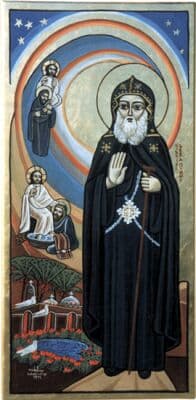
Pishoy
Pishoy, also known as Paisius the Great, was a prominent Coptic Desert Father who lived in Egypt from 320 to 417 AD. He is revered for his asceticism, wisdom, and defense of Orthodox faith against heresies. Copts believe he saw Jesus multiple times and that his body remains incorruptible to this day, preserved at the Monastery of Saint Bishoy.
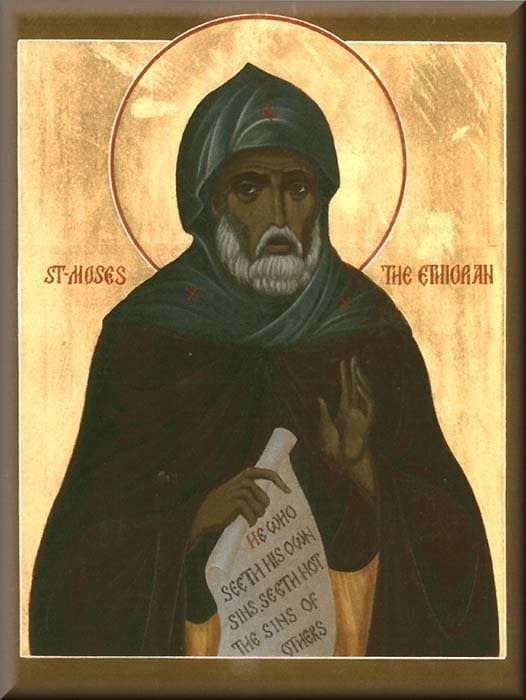
Moses the Black
Moses the Black was a Nubian hermit and hieromonk in fourth-century Egypt, venerated in the Eastern Orthodox and Oriental Orthodox Churches. He is remembered for his dramatic conversion from a life of notorious crime to one of deep asceticism and spiritual leadership.
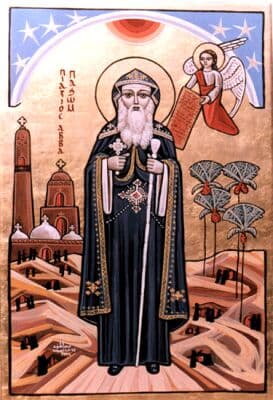
Pachomius the Great
Pachomius the Great is widely recognized as the founder of Christian cenobitic monasticism, establishing communities where monks lived together under a common rule. His organizational innovations and the Rule he established significantly shaped the development of monasticism across various Christian traditions.