
Nectarius of Aegina
Nectarios of Aegina was a Greek bishop and saint, renowned as a wonderworker and for his ascetic life. He is chiefly remembered for establishing the Holy Trinity Monastery on Aegina and for his enduring legacy as a spiritual father and healer, particularly for those suffering from diseases.
Key Facts
- ›Anastasios Kephalas was born on October 1, 1846, in Selymbria.
- ›He became a monk at the Monastery of Nea Moni on Chios in 1876 and was later ordained a deacon, taking the name Nectarios.
- ›Nectarios graduated from the University of Athens and served as a priest in Cairo, Egypt.
- ›He was consecrated Metropolitan bishop of Pentapolis in 1889 but was later suspended from his post.
- ›In 1904, he founded the Holy Trinity Monastery for nuns on the island of Aegina.
- ›Nectarios died on November 8, 1920, from prostate cancer.
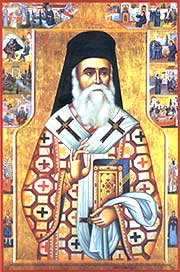
Anastasios Kephalas, Metropolitan of Pentapolis, Wonderworker of Aegina
People Suffering From Diseases
Hymn "Agni Parthene"
About Nectarius of Aegina
Nectarios of Aegina
Saint Nectarios of Aegina (1846–1920), born Anastasios Kephalas, was a highly revered Greek Orthodox bishop, theologian, and wonderworker. He is celebrated for his profound piety, ascetic life, and the establishment of monastic communities. His veneration extends throughout the Eastern Orthodox Church, where he is recognized for his numerous miracles and spiritual guidance.
Life and historical context
Born into a poor but devout family in Selymbria, Anastasios Kephalas later relocated to Constantinople and then to Chios, where he pursued education and eventually embraced the monastic life. He was ordained a monk in 1876, taking the name Nectarios, and later became a deacon and priest. After graduating from the University of Athens, he served in Alexandria, Egypt, where he was consecrated Metropolitan bishop of Pentapolis in 1889. Due to perceived jealousies among his colleagues and a misunderstanding regarding his ambitions, he was suspended from his episcopal duties and returned to Greece.
Major contributions
Nectarios served as the director of the Rizarios Ecclesiastical School in Athens for fifteen years, focusing on the education of priests. In 1904, he founded the Holy Trinity Monastery on the island of Aegina, a significant spiritual center that became his final refuge. There, he lived as a humble monk, writing, preaching, hearing confessions, and actively participating in the monastery's construction and upkeep. He also ordained women as deaconesses, following ancient practices.
Legacy
Nectarios of Aegina died in 1920 and was later glorified as a saint by Patriarch Athenagoras I of Constantinople in 1961. His feast day is observed on November 9. He is widely venerated as a patron saint for those suffering from illnesses, particularly cancer. His relics are housed at the Holy Trinity Convent on Aegina, and his life and miracles continue to inspire faith and devotion among Orthodox Christians globally.
Source: Wikipedia ↗
Frequently Asked Questions
When was Nectarios of Aegina born and where?
Nectarios of Aegina, born Anastasios Kephalas, was born on October 1, 1846, in Selymbria, a town in what is now Turkey.
What was Nectarios's early life like?
He came from a poor but pious family. At age 14, he moved to Constantinople to work and pursue his education, and later moved to Chios at age 20 to take up a teaching post.
When did Nectarios become a monk and a bishop?
He became a monk at age 30 in 1876. Three years later, he was ordained a deacon. He was consecrated Metropolitan bishop of Pentapolis in 1889.
Why did Nectarios establish Holy Trinity Monastery?
In 1904, at the request of several nuns, he established Holy Trinity Monastery for them on the island of Aegina, where he later lived out his final years.
What was Nectarios's cause of death?
Nectarios died on November 8, 1920, at the age of 74, following hospitalization for prostate cancer and two months of treatment.
What is Nectarios of Aegina known for today?
He is venerated as a saint in the Eastern Orthodox Church, celebrated for his miracles and considered a patron saint for those suffering from various diseases.
Related Saints
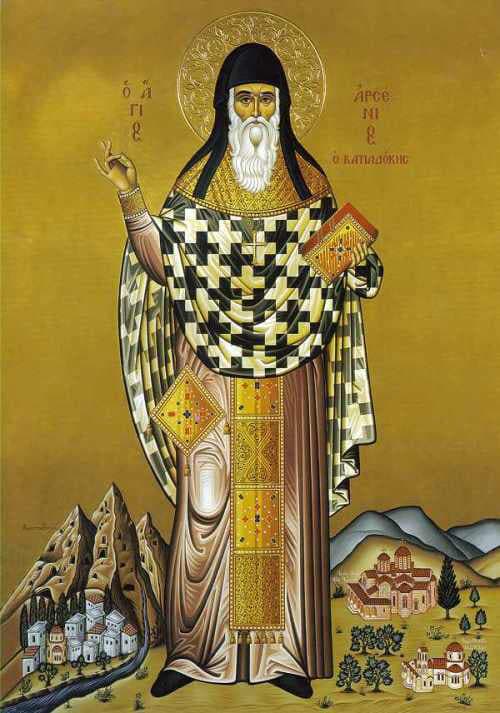
Arsenios the Cappadocian
Saint Arsenios the Cappadocian was a Greek Orthodox dean and priest born in 1840 in Cappadocia, then part of the Ottoman Empire. He is chiefly remembered as the spiritual father and namesake of Saint Paisios of Mount Athos and for his pastoral work in the Cappadocian Greek villages. He is venerated for his healing abilities and his role in preserving Greek language and culture among his flock.
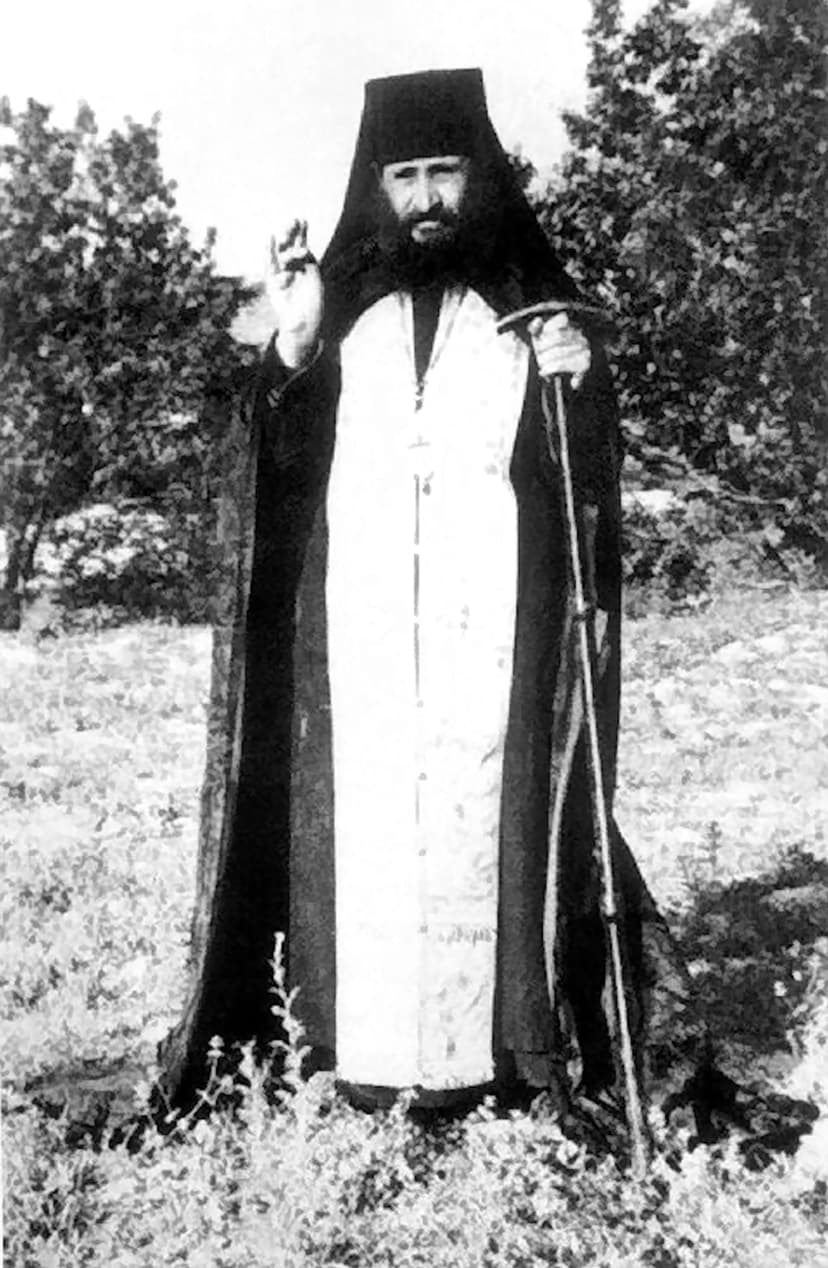
George of Drama
George of Drama, born Athanasios Karslidis, was a Greek Orthodox monk venerated for his spiritual guidance and ascetic lifestyle. He is remembered for founding the Monastery of the Ascension in Drama, Greece, and is associated with both Greek and Georgian Orthodox traditions. His relics are preserved at the Monastery of the Ascension, with reports of a cross-like imprint on his skull.
Amphilochius of Patmos
Amphilochios Makris was a Greek Orthodox hieromonk, missionary, and teacher from Patmos, Greece, greatly revered for his wisdom and experience as an elder. He is remembered for his unwavering dedication to preserving Orthodox faith and Greek identity against Italian occupation, and for his profound love and acceptance of all people. Canonized in 2018, his feast day is celebrated on April 16th.