
Arsenios the Cappadocian
November 10·20th century·Greece
Saint Arsenios the Cappadocian was a Greek Orthodox dean and priest born in 1840 in Cappadocia, then part of the Ottoman Empire. He is chiefly remembered as the spiritual father and namesake of Saint Paisios of Mount Athos and for his pastoral work in the Cappadocian Greek villages. He is venerated for his healing abilities and his role in preserving Greek language and culture among his flock.
Key Facts
- ›Born Theodorus Annitsalichos in Kephalochori, Cappadocia, in 1840.
- ›He was tonsured a monk and given the name Arsenios at the monastery of the Holy Forerunner of Phlavianai in Caesarea.
- ›Arsenios served as a priest in Pharasa and neighboring villages, secretly teaching Greek to children.
- ›He was consecrated an archimandrite in 1870.
- ›He was known as Hadjiephentis after a pilgrimage to the Holy Land and was respected for his spiritual guidance and claimed healing abilities.
- ›Arsenios was recognized as an Orthodox saint by the Ecumenical Patriarchate of Constantinople in 1986.
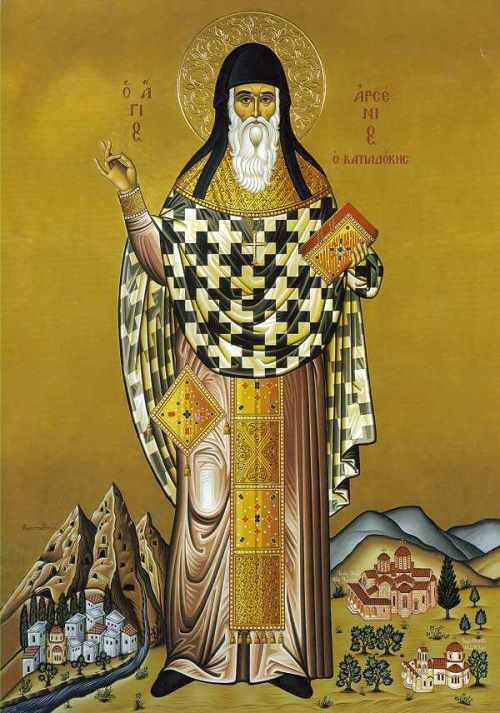
Theodorus Annitsalichos, Hadjiephentis
Cross
About Arsenios the Cappadocian
Saint Arsenios the Cappadocian (born Theodorus Annitsalichos, 1840 – November 10, 1924) was a Greek Orthodox priest and dean who served in the Cappadocian region of the Ottoman Empire. Born in Kephalochori, he was orphaned at a young age and raised by relatives. After pursuing education that included learning Armenian, Turkish, and French, he entered monastic life, taking the name Arsenios.
He was ordained a priest and sent to serve the Greek villages of Pharasa and its surroundings. In addition to his pastoral duties, Arsenios secretly taught the Greek language to the children of the region. He was consecrated an archimandrite in 1870. Following a pilgrimage to the Holy Land, he returned to Pharasa, where he became known as Hadjiephentis. He was widely respected as a spiritual guide, and villagers, both Christian and Muslim, sought his counsel, with accounts claiming he healed the sick.
Arsenios played a crucial role in the spiritual life of Saint Paisios of Mount Athos, acting as his spiritual father and bestowing his name upon him at baptism. After leading his parish to Corfu during the population exchange between Greece and Turkey, he died within three months. Both Arsenios and Paisios were officially recognized as Orthodox saints by the Ecumenical Patriarchate of Constantinople, with Arsenios being canonized in 1986. His relics are venerated at the Greek Orthodox Church of Prophet Elias in Frankfurt, Germany.
Source: Wikipedia ↗
Frequently Asked Questions
Who was Saint Arsenios the Cappadocian?
Saint Arsenios, born Theodorus Annitsalichos, was a Greek Orthodox priest and spiritual father from Cappadocia. He was known for his pastoral work, his secret teaching of the Greek language to children, and his claimed healing abilities.
What is Saint Arsenios the Cappadocian remembered for?
He is primarily remembered as the spiritual father and namesake of Saint Paisios of Mount Athos. He is also venerated for his dedication to his parishioners in Pharasa and surrounding villages, and for his role in preserving Greek culture and language.
When was Saint Arsenios the Cappadocian recognized as a saint?
Saint Arsenios was recognized as an Orthodox saint by the Ecumenical Patriarchate of Constantinople in 1986, under Ecumenical Patriarch Demetrios I.
Where are the relics of Saint Arsenios the Cappadocian?
The relics of Saint Arsenios the Cappadocian can be venerated at the Greek Orthodox Church of Prophet Elias in Frankfurt, Germany.
What was Saint Arsenios's role in the life of Saint Paisios of Mount Athos?
Arsenios was the spiritual father of Paisios of Mount Athos and even gave him his own name at baptism. This close spiritual connection highlights Arsenios's significant influence on Paisios's spiritual journey.
Related Saints
Nectarius of Aegina
Nectarios of Aegina was a Greek bishop and saint, renowned as a wonderworker and for his ascetic life. He is chiefly remembered for establishing the Holy Trinity Monastery on Aegina and for his enduring legacy as a spiritual father and healer, particularly for those suffering from diseases.
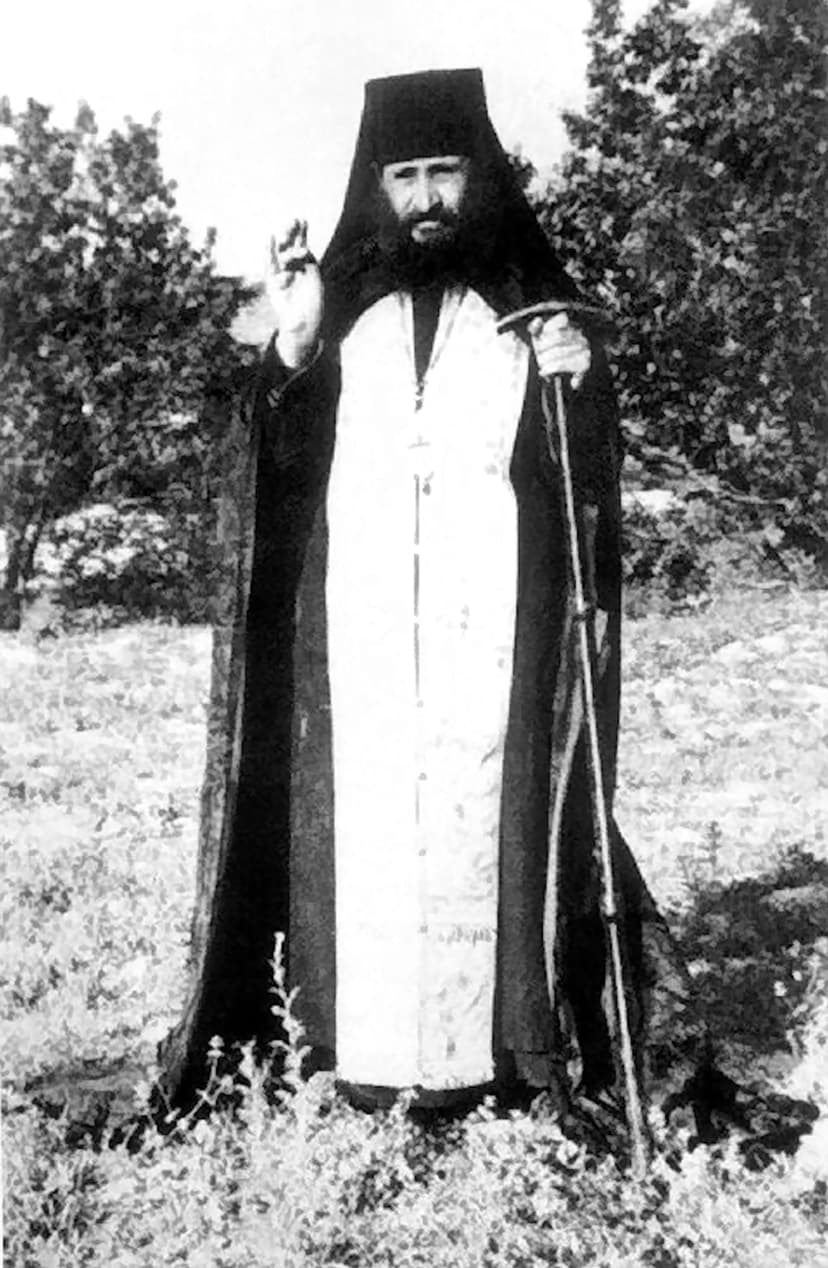
George of Drama
George of Drama, born Athanasios Karslidis, was a Greek Orthodox monk venerated for his spiritual guidance and ascetic lifestyle. He is remembered for founding the Monastery of the Ascension in Drama, Greece, and is associated with both Greek and Georgian Orthodox traditions. His relics are preserved at the Monastery of the Ascension, with reports of a cross-like imprint on his skull.
Amphilochius of Patmos
Amphilochios Makris was a Greek Orthodox hieromonk, missionary, and teacher from Patmos, Greece, greatly revered for his wisdom and experience as an elder. He is remembered for his unwavering dedication to preserving Orthodox faith and Greek identity against Italian occupation, and for his profound love and acceptance of all people. Canonized in 2018, his feast day is celebrated on April 16th.