
Macarius the Great
Macarius the Great was an Egyptian Christian monk and hermit revered for his wisdom and asceticism. He is chiefly remembered for his role in establishing monasticism in the Nitrian Desert and for his spiritual teachings, which influenced later Christian traditions. Macarius is considered a saint in several Christian denominations.
Key Facts
- ›Macarius was born in Lower Egypt around 300 AD and tended cattle as a boy.
- ›He lived as a hermit in the Nitrian Desert and later became a priest, presiding over a semi-eremitical monastic community.
- ›He was falsely accused of defiling a woman but was later vindicated when she confessed his innocence.
- ›Macarius visited Anthony the Great and learned from him the principles of monasticism.
- ›He was briefly exiled to an island in the Nile by Emperor Valens but was recalled after performing a miracle.
- ›His monastery, the Monastery of Saint Macarius the Great, has been continuously inhabited since the fourth century.
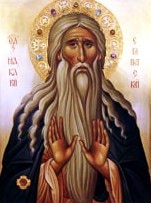
Macarius of Egypt, Macarius the Elder
Glowing Face
About Macarius the Great
Macarius the Great (c. 300 – 391 AD) was a prominent Egyptian Christian monk and hermit, also known as Macarius of Egypt or Macarius the Elder. He is revered for his profound spiritual wisdom and his significant role in the development of monasticism in the Egyptian desert.
Life and Ministry
Born in Lower Egypt, Macarius tended cattle in his youth. A strong inclination towards solitude led him to construct a cell near his home, where he dedicated himself to prayer and weaving mats. Before fully embracing asceticism, he worked as a saltpeter smuggler, a vocation that provided him with survival skills for the desert environment. He was briefly married but soon became a widower, after which he gave away his possessions to the poor. Guided by an experienced elder, Macarius learned the practices of watchfulness, fasting, and prayer.
Macarius faced a false accusation of defilement, which he bore in silence. His innocence was eventually revealed when the accuser's difficult labor ceased only after she confessed the truth. To escape worldly acclaim, Macarius retreated to the Nitrian Desert. He adopted an extremely austere lifestyle, subsisting on minimal food and drink.
During his time in the desert, he visited Anthony the Great, from whom he learned the rules of monastic life. Upon returning to the Scetic Desert at the age of forty, he was ordained a priest. His reputation for sanctity attracted many followers, leading to the establishment of a semi-eremitical monastic community, where monks lived in close proximity and gathered for worship on weekends. He led this community for the remainder of his life.
Macarius was briefly exiled to an island in the Nile by Emperor Valens, alongside Macarius of Alexandria, due to theological disputes. During their exile, they healed the daughter of a pagan priest, leading to the conversion of the island's inhabitants and their eventual recall.
Legacy
Macarius the Great is honored as a saint in the Roman Catholic, Eastern Orthodox, and Oriental Orthodox Churches. He is also regarded highly in Methodist traditions for his writings on entire sanctification. He founded the Monastery of Saint Macarius the Great in Scetes, Egypt, which has remained continuously inhabited by monks since its foundation in the fourth century and is a significant center for the Coptic Orthodox Church. His face was said to glow with divine grace, earning him the epithet "the glowing lantern of the wilderness." The Nitrian Desert itself is sometimes referred to as the Desert of Macarius, acknowledging his pioneering role in the region's monasticism. His image appears in art, such as the "Triumph of Death" fresco in Pisa, where he is depicted as a figure of wisdom teaching about life and death.
Source: Wikipedia ↗
Frequently Asked Questions
What was Macarius the Great known for?
Macarius the Great was known for his profound wisdom, his ascetic lifestyle as a hermit, and his role in establishing monasticism in the Nitrian Desert. His spiritual teachings and writings have been influential.
Where did Macarius the Great live?
Macarius the Great lived primarily in the Nitrian Desert in Egypt. He was born in Lower Egypt and founded a monastery there, which became known as the Monastery of Saint Macarius the Great.
What was Macarius the Great's early life like?
As a boy, Macarius tended cattle. He later married but was soon widowed, after which he distributed his wealth to the poor and devoted himself to asceticism. He also engaged in smuggling saltpeter before becoming a hermit.
Was Macarius the Great ever exiled?
Yes, Macarius the Great was exiled to an island in the Nile along with Macarius of Alexandria by Emperor Valens. They were victims of religious persecution over disputes regarding the Nicene Creed.
What is the significance of the Monastery of Saint Macarius the Great?
The Monastery of Saint Macarius the Great, founded by Macarius himself, is significant because it has been continuously inhabited by monks since the fourth century. It is considered a spiritual center in the Coptic Orthodox Church and is sometimes referred to as the 'glowing lantern of the wilderness.'
Related Saints
Macarius of Egypt
Macarius of Egypt was a prominent Egyptian Christian monk and hermit who lived in the 4th century. He is revered for his wisdom, ascetic practices, and spiritual guidance, drawing many followers to the Nitrian Desert. Macarius is remembered as a foundational figure in early Christian monasticism and a significant spiritual teacher.
Bessarion the Great
Bessarion the Great was an Egyptian Christian monk and Desert Father of the 4th to 5th centuries, known for his extreme asceticism and spiritual wisdom. He is venerated as a saint for his profound humility, miraculous abilities, and dedication to prayer and self-denial in the Nitrian Desert. He is chiefly remembered for his legendary endurance and his role in the Sayings of the Desert Fathers.
Pachomius the Great
Pachomius the Great is widely recognized as the founder of Christian cenobitic monasticism, establishing communities where monks lived together under a common rule. His organizational innovations and the Rule he established significantly shaped the development of monasticism across various Christian traditions.