
Kassia the Hymnographer
September 7·9th century·Byzantine Empire
Kassia the Hymnographer was a Byzantine composer, hymnographer, and poet who lived in the 9th century. She holds a unique place in Byzantine music as the only known woman whose compositions are included in the liturgy. Kassia is remembered for her approximately fifty extant hymns, at least 261 epigrams and gnomic verses, and her outspoken defense of icon veneration.
Key Facts
- ›Kassia was a Byzantine-Greek composer, hymnographer, and poet active in the 9th century.
- ›She is the only known woman whose music appears in the Byzantine liturgy.
- ›Approximately fifty of her hymns are extant, though attribution can be uncertain.
- ›She authored at least 261 epigrams and gnomic verses, demonstrating influence from classical Greek literature.
- ›Kassia founded a convent in Constantinople and served as its first abbess.
- ›She was a defender of icon veneration and faced persecution for her beliefs.
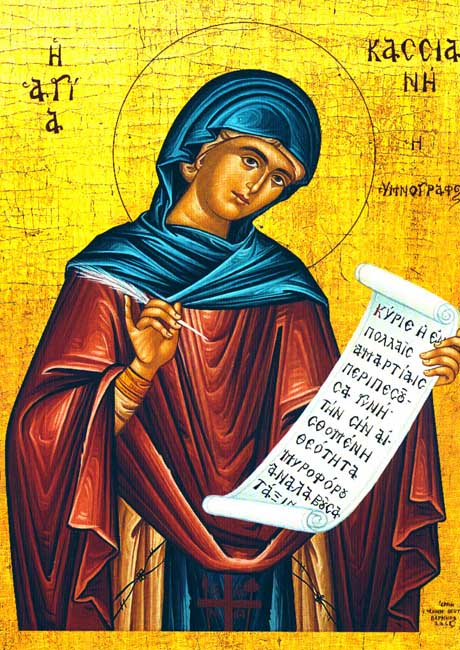
Cassia, Kassiane, Kassiani, Eikasia, Ikasia, Cassiane, Kassiana
About Kassia the Hymnographer
Kassia (c. 810 – c. 865), also known as Cassia, Kassiane, or Kassiani, was a highly accomplished Byzantine composer, hymnographer, and poet of the 9th century. She holds a singular position in the history of Byzantine music as the only woman whose compositions are known to have been incorporated into the Byzantine liturgy. Her surviving oeuvre includes approximately fifty hymns, though the attribution of some is debated, alongside at least 261 epigrams and gnomic verses.
Life and Historical Context
Born into a prominent family in Constantinople, Kassia was noted for her exceptional intellect and beauty. Tradition recounts an episode where she was considered as a bride for the young Emperor Theophilos through a bride show. Their encounter, marked by a theological exchange concerning Eve and the Virgin Mary, reportedly led to Theophilos rejecting her in favor of Theodora. By 843, Kassia had established a convent in western Constantinople, of which she became the first abbess. While some suggest this monastic life was a consequence of her failed imperial marriage prospects, evidence suggests other motivations, potentially including religious zeal.
Kassia lived during a period of theological and political upheaval, including the Iconoclasm controversies. As a defender of icon veneration, she faced imperial persecution, reportedly being scourged. Despite this, she remained vocal in her faith, famously stating, "I hate silence when it is time to speak."
Major Contributions
Kassia's most celebrated work is the "Hymn of Kassia," or "Troparion of Kassiani," a poignant piece chanted annually on Great and Holy Wednesday. Legend attributes a line to Emperor Theophilos himself, added to the hymn when he visited her monastery in his later years. The hymn is known for its slow, sorrowful melody and demanding vocal range, often considered a pinnacle of solo Byzantine chant.
Beyond this famous hymn, Kassia composed numerous other sacred pieces for various liturgical occasions, including Christmas Eve, feasts of saints, and services during Great Lent. Her longest known sacred composition is a Canon for the Departed, comprising 32 strophes.
In the realm of secular literature, Kassia authored 261 epigrams and gnomic verses, demonstrating a deep understanding of classical Greek literature. These works, distinct from her sacred compositions, explored ethical teachings, social structures, femininity, and advocated for women's rights, synthesizing ancient wisdom with monastic truth. Her contributions to these genres, typically dominated by men, were unusual and marked by originality, conciseness, and wit, possibly serving as moral instruction for her nuns.
Religious Commemoration and Legacy
Kassia the Hymnographer is commemorated by the Orthodox Church on September 7, the same date she is recognized in the Episcopal Church's liturgical calendar. She is sometimes depicted in the icon of the Sunday of Orthodoxy due to her steadfast defense of icons. Kassia's enduring legacy lies in her significant musical and literary output, which continues to be studied and appreciated for its artistic merit and historical insight into Byzantine culture and spirituality.
Source: Wikipedia ↗
Frequently Asked Questions
Who was Kassia the Hymnographer?
Kassia the Hymnographer was a Byzantine composer, poet, and hymnographer of the 9th century. She is renowned for her contributions to Byzantine sacred music and is the only woman known to have had her compositions included in the Byzantine liturgy.
What is Kassia the Hymnographer most famous for?
She is most famous for her "Hymn of Kassia," also known as the "Troparion of Kassiani," which is chanted annually on Great and Holy Wednesday. She is also recognized for her approximately fifty extant hymns and over 260 epigrams and gnomic verses.
What was Kassia's connection to Emperor Theophilos?
According to tradition, Kassia was considered as a bride for Emperor Theophilos but was rejected after a sharp exchange of words. Later in his life, Theophilos is said to have visited her monastery and added a line to her famous hymn.
What role did Kassia play in defending icons?
Kassia was a staunch defender of icon veneration during a period of iconoclasm. Her strong stance led to her being persecuted, but she remained outspoken in her defense of the Orthodox Faith.
Where did Kassia live and where is she buried?
Kassia was born in Constantinople and founded a convent there, becoming its first abbess. She later traveled to Italy and eventually settled on the Greek island of Kasos, where she died. Her tomb or reliquary is believed to be in the city of Panaghia on Kasos.
Related Saints
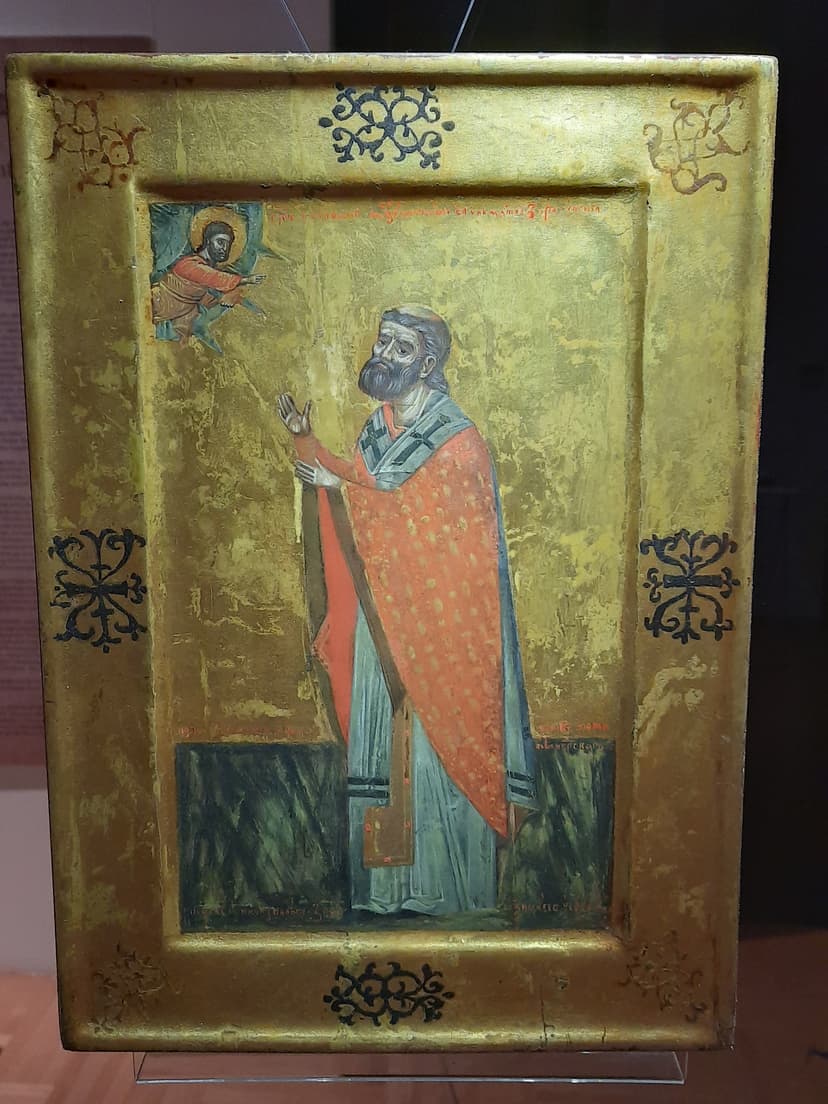
Paisius of Janjevo
Paisius of Janjevo served as the Patriarch of the Serbian Patriarchate of Peć from 1614 to 1647. He is remembered for his significant contributions to Serbian literature and theology, inspiring a revival of hagiographical writing and engaging in theological debates with Roman Catholic popes. Paisius also patronized art and undertook extensive diplomatic travels.

Francis of Assisi
Francis of Assisi was an Italian mystic, poet, and Catholic friar who founded the Order of Friars Minor, commonly known as the Franciscans. Revered for his profound devotion to poverty, animals, and the environment, he is one of Christianity's most venerated figures. Francis is chiefly remembered for his imitation of Christ's life of poverty and his establishment of a religious order dedicated to that ideal.
Alcuin
Alcuin of York was an influential Anglo-Latin scholar, clergyman, poet, and teacher from Northumbria. He is considered one of the most important intellectual architects of the Carolingian Renaissance, significantly shaping education and scholarship at Charlemagne's court. Alcuin is remembered for his theological writings, his role in liturgical reform, and his efforts in standardizing Carolingian minuscule script.