
Justus of Eleutheropolis
July 20·4th century·Palestine
Joseph Barsabbas, also known as Justus of Eleutheropolis or Joseph the Just, was a candidate for the apostolate after Judas Iscariot's betrayal. Though not chosen by lot to replace Judas, he remained a follower of Jesus. Tradition holds that he later became a bishop and martyr at Eleutheropolis.
Key Facts
- ›Joseph Barsabbas was a candidate to replace Judas Iscariot as an apostle.
- ›He was surnamed Justus, a Latin name meaning 'just', likely due to his integrity.
- ›Both Joseph and Matthias had been followers of Jesus from the start of his ministry.
- ›Christian tradition identifies him among the Seventy disciples mentioned in Luke's Gospel.
- ›According to tradition, he became Bishop of Eleutheropolis and died a martyr.
- ›He is commemorated on July 20 in the Roman Martyrology.

Joseph Barsabbas, Joseph the Just, Justus
About Justus of Eleutheropolis
Joseph Barsabbas, also known by the epithets Justus of Eleutheropolis and Joseph the Just, is a figure mentioned in the Acts of the Apostles. He is presented as one of two candidates considered for the apostolic office after Judas Iscariot's defection and death. The biblical account details how the early disciples prayed and cast lots to determine who would join the eleven remaining apostles. While Matthias was ultimately chosen, Joseph Barsabbas remained a faithful follower of Jesus.
Life and Ministry
Both Joseph Barsabbas and Matthias had accompanied Jesus throughout his public ministry, from his baptism by John the Baptist until his ascension. The Gospel of Luke mentions a group of seventy disciples, and Christian tradition identifies Joseph Barsabbas within this number, although the biblical text does not name them individually. The name 'Justus' is a Latin cognomen meaning 'just,' and it is suggested that he was given this name due to his notable integrity. Some scholars have speculated that he may have been related to Jesus' family, possibly a brother of James the Less, suggesting his selection might have been influenced by familial ties.
Later Tradition and Veneration
Later Christian tradition associates Joseph Barsabbas with Eleutheropolis, a city in Palestine, where he is said to have served as bishop. It is also within this tradition that he is venerated as a martyr. The historical context of Eleutheropolis as a significant city dates to around AD 200, with its first historical bishop appearing in the 4th century, which aligns with the period in which this tradition likely developed. The Roman Martyrology commemorates Joseph Barsabbas and Justus on July 20, referencing the facts presented in the Acts of the Apostles. The Eastern Orthodox Church offers veneration on October 30, also under the name Justus, and on January 4 among the other disciples.
Source: Wikipedia ↗
Frequently Asked Questions
Who was Joseph Barsabbas?
Joseph Barsabbas, also known as Justus or Joseph the Just, was a follower of Jesus who was considered a candidate for the apostolate after Judas Iscariot's betrayal. Although he was not chosen by lot to replace Judas, he remained a disciple.
Why was he called Justus?
He was surnamed Justus, a Latin name meaning 'just'. This epithet was likely given to him on account of his distinguished integrity and righteousness.
What is his connection to the Acts of the Apostles?
The Book of Acts records that Joseph Barsabbas, along with Matthias, was put forward as a candidate to fill the apostolic office vacated by Judas Iscariot. The apostles cast lots, and Matthias was chosen.
What does Christian tradition say about him?
According to Christian tradition, Joseph Barsabbas later became the Bishop of Eleutheropolis. He is also venerated as a martyr from this city.
When is he commemorated?
Joseph Barsabbas, also known as Justus, is commemorated on July 20 in the Roman Martyrology. The Eastern Orthodox Church venerates him on October 30 and January 4.
Related Saints
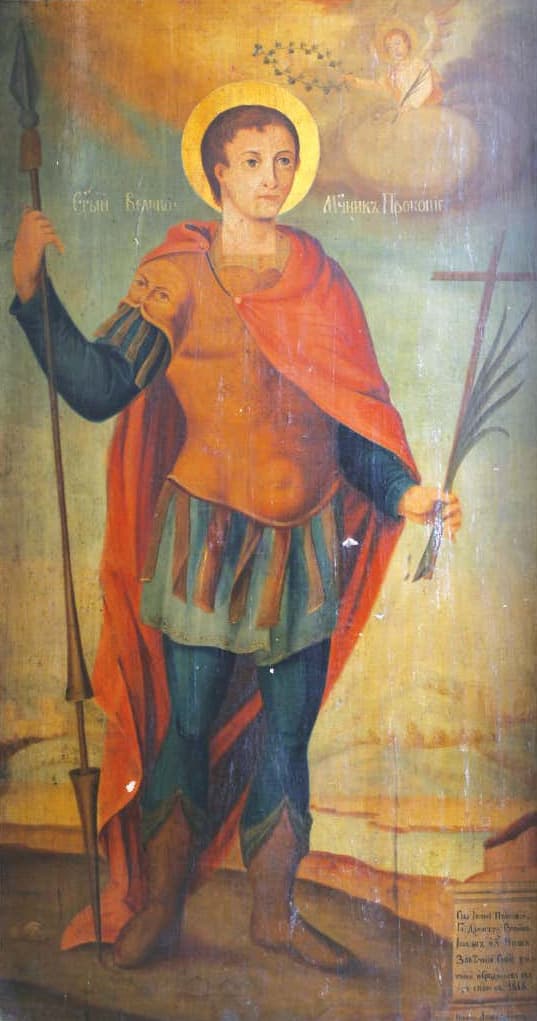
Procopius of Scythopolis
Procopius of Scythopolis was a 4th-century martyr venerated for his asceticism and theological learning. He served as a reader and exorcist in the church at Scythopolis during the persecution under Emperor Diocletian. Procopius is chiefly remembered for his martyrdom by beheading in Caesarea Maritima, as documented by Eusebius of Caesarea.
Nilus of Palestine
Nilus of Palestine was an early Christian martyr and an Egyptian bishop. He is remembered for leading Mass for Christians condemned to work in Palestinian quarries during the Diocletianic Persecution. For this act, he was burned alive by order of Emperor Galerius.
Elias of Palestine
Elias of Palestine was an early Christian martyr and priest. He is remembered for leading Mass for persecuted Christians in Palestinian quarries during the Diocletianic Persecution. For this, he was burned alive by order of Emperor Galerius.