
Joanna
August 3·1st century·Galilee
Joanna, the wife of Chuza, was a follower of Jesus mentioned in the Gospels who provided for him and his disciples and was a witness to his resurrection. She is honored in various Christian traditions, particularly as a "Holy Myrrhbearer" in Orthodox and Lutheran churches. Her prominence in Luke's Gospel suggests a significant role, possibly as a key witness due to her potential familial connection to Theophilus.
Key Facts
- ›Joanna was the wife of Chuza, the manager of Herod Antipas's household.
- ›She accompanied Jesus and the Apostles, providing for them from her own means.
- ›Joanna is named as one of the women who discovered the empty tomb of Jesus.
- ›In Orthodox tradition, she is known as Saint Joanna the Myrrhbearer.
- ›Some scholars identify Joanna with Junia, mentioned by the Apostle Paul as prominent among the apostles.
- ›Her name is derived from the Hebrew name Yochanah, meaning 'Yahweh has been gracious'.
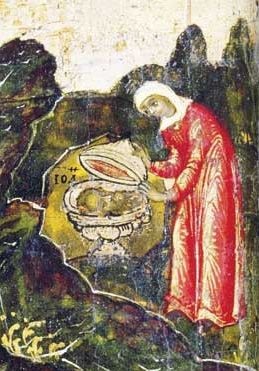
Joanna, wife of Chuza, Saint Joanna the Myrrhbearer, Junia
Myrrh Jar
About Joanna
Joanna, Wife of Chuza
Joanna, identified as the wife of Chuza, is a significant figure mentioned in the Gospels of the New Testament. Her husband served as the steward of Herod Antipas, the Roman tetrarch of Galilee. Joanna is recorded as one of the women who accompanied Jesus and the twelve apostles, providing financial support for their ministry out of her own means. She is also listed among those who went to Jesus' tomb after his crucifixion and discovered it to be empty, making her a witness to the resurrection.
Life and Ministry
The Gospel of Luke (8:2-3) introduces Joanna as one of the women "cured of evil spirits and infirmities" who followed Jesus. Her association with Chuza, a prominent official in Herod Antipas's court, suggests a level of social standing and financial capacity that allowed her to contribute significantly to Jesus' itinerant ministry. Her presence alongside other named women like Mary Magdalene and Susanna indicates a devoted core group of female followers who supported Jesus and his disciples.
Witness to the Resurrection
Joanna is specifically named in Luke 24:10 as one of the women who brought spices to Jesus' tomb. Along with Mary Magdalene and Mary of Clopas, she observed the empty tomb and the angelic message that Jesus had risen. While other Gospels mention women at the tomb, Luke's account notably includes Joanna by name in this crucial event, highlighting her role in the foundational moments of Christian belief.
Theological and Scholarly Significance
In Orthodox Christian tradition, Joanna is venerated as Saint Joanna the Myrrhbearer and is commemorated on the Sunday of Myrrhbearers. Some scholars propose that Joanna may be the same individual as Junia, mentioned by the Apostle Paul in Romans 16:7 as being "prominent among the apostles." This identification is based on linguistic parallels between the names and Junia's description as an early and respected member of the nascent Christian community. Furthermore, the placement of Joanna's name in a chiasmus within Luke's resurrection narrative suggests intentional emphasis on her testimony.
Cultural Depictions
Joanna has been depicted in various works of literature and media, including plays, television series, and novels, reflecting her enduring presence in Christian narrative and popular imagination.
Source: Wikipedia ↗
Frequently Asked Questions
Who was Joanna in the Bible?
Joanna was a woman mentioned in the Gospels who was healed by Jesus. She was the wife of Chuza, who managed the household of Herod Antipas, the ruler of Galilee. She accompanied Jesus and his disciples, providing for them, and was among the women who discovered the empty tomb of Jesus.
What is Joanna remembered for?
Joanna is chiefly remembered for her support of Jesus and his ministry, and for being a witness to his resurrection. In Orthodox tradition, she is honored as Saint Joanna the Myrrhbearer for her role in preparing spices for Jesus' burial.
What is Joanna's connection to Herod Antipas?
Joanna's husband, Chuza, served as the manager of Herod Antipas's household in Galilee. This connection is noted as the reason for the distinguishing epithet attached to her name, differentiating her from other women named Joanna.
Is Joanna the same person as Junia?
Some scholars, like Richard Bauckham, argue for the identification of Joanna with Junia, a figure mentioned by the Apostle Paul as being "prominent among the apostles." This theory suggests 'Joanna' was her Hebrew name and 'Junia' her Roman name.
Why is Joanna considered important in the Gospel of Luke?
Joanna's name appears at the center of a literary device called a chiasm in Luke's account of the resurrection. This placement suggests she was considered a centrally important character or witness by the Gospel writer.
Where is Joanna venerated?
Joanna is recognized as a saint in the Anglican, Catholic, Eastern Orthodox, and other Christian traditions. She is commemorated as a Holy Myrrhbearer on August 3 in the liturgical calendars of some churches.
Related Saints

Mary Magdalene
Mary Magdalene was a follower of Jesus, who, according to canonical gospels, witnessed his crucifixion and resurrection. She is regarded as a prominent female disciple and a historical figure, though information about her life is limited. She is chiefly remembered as the first witness to the resurrection, a role that led to her being honored as the "apostle to the apostles" in some traditions.
Mary
Mary was a first-century Jewish woman from Nazareth, the wife of Joseph and the mother of Jesus. She is a central figure in Christianity, venerated for her role as the Mother of God, and holds a high position in Islam as Maryam. She is remembered for her virgin conception of Jesus, her presence at his crucifixion, and her subsequent veneration across multiple faiths.
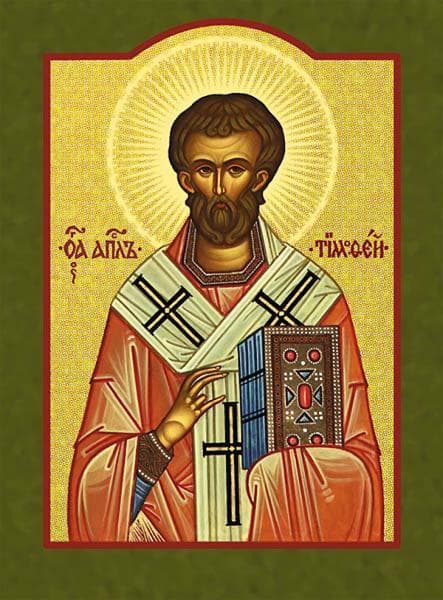
Timothy of Ephesus
Timothy of Ephesus was an early Christian evangelist and the first Bishop of Ephesus, known as a close companion and missionary partner of the Apostle Paul. He is chiefly remembered as the recipient of two New Testament epistles and for his leadership in the early church, eventually becoming a martyr in Ephesus. Timothy is venerated as a saint and apostle in various Christian traditions.