
Gregory I of Rome
March 12·6th century·Italy
Gregory I of Rome, also known as Saint Gregory the Great, was the 64th Bishop of Rome from 590 until his death in 604. A former prefect of Rome and a senator's son, he established monasteries and significantly improved the welfare of the people of Rome through his administration. He is chiefly remembered for his extensive writings, his efforts in revising Roman worship, his missionary work, and his role as one of the four Great Latin Church Fathers.
Key Facts
- ›Gregory was born around 540 in Rome into a wealthy noble family with close church connections; his father was a senator and prefect of Rome.
- ›He converted his family villa into a monastery dedicated to Andrew the Apostle and was ordained a deacon by Pope Pelagius II.
- ›Gregory served as the papal ambassador to the imperial court in Constantinople from 579 to 585.
- ›As pope, he re-energized missionary work, most notably sending Augustine of Canterbury to evangelize the Anglo-Saxons of Britain.
- ›He established an extensive administrative system for charitable relief of the poor in Rome.
- ›Gregory is recognized as one of the four Great Latin Church Fathers and was canonized by popular acclaim immediately after his death.
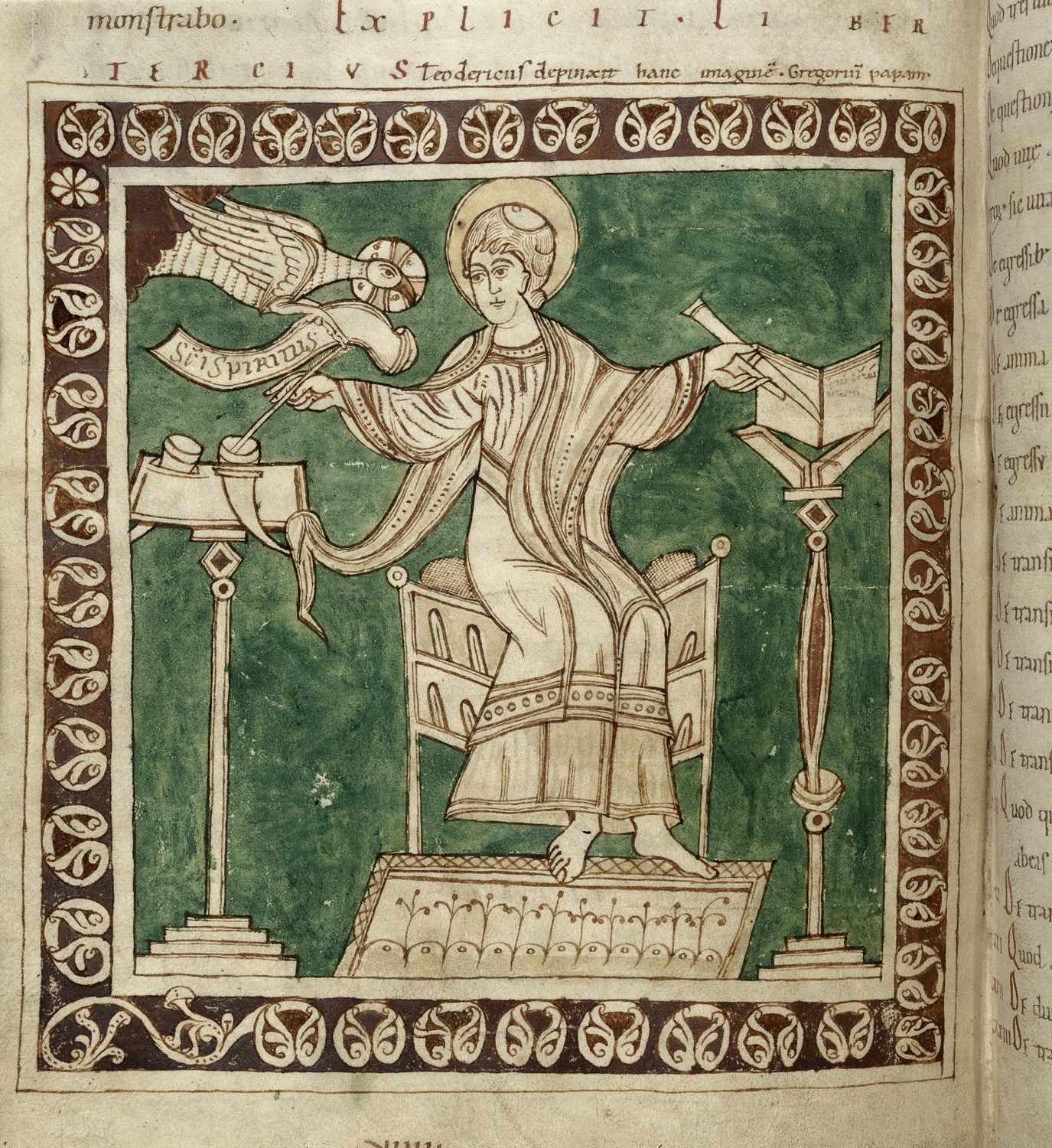
Saint Gregory the Great, San Gregorio Magno, Gregorius I, Gregorio I, Saint Gregory the Dialogist
Musicians, Students, Teachers, England, Clergy
Dove, Book, Papal Tiara, Cross, Mitre
About Gregory I of Rome
Gregory I, commonly known as Saint Gregory the Great, served as the 64th Bishop of Rome from 3 September 590 until his death on 12 March 604. Born around 540 in Rome into a prominent senatorial family with deep ecclesiastical connections, Gregory's early life saw him excel in education, mastering grammar, rhetoric, sciences, literature, and law. He followed in his father's footsteps, eventually becoming the Prefect of Rome, the city's highest civil office, at the young age of thirty.
Following his father's death, Gregory converted his family's villa into a monastery on the Caelian Hill, dedicating himself to a contemplative life. This period of monasticism fostered a deep respect for the vows of poverty and spiritual quest. He was later ordained a deacon by Pope Pelagius II, who also appointed him as his apocrisiarius (ambassador) to the imperial court in Constantinople, a post he held from 579 to 585. During his time in Constantinople, Gregory engaged in theological debates and sought military aid for Italy against the Lombards, though with limited success.
Upon his return to Rome and the death of Pope Pelagius II from plague, Gregory was elected Pope by acclamation. Despite his personal inclination towards monastic retirement, he embraced the papal office, lamenting the loss of his contemplative life but dedicating himself to his pastoral duties. His papacy was marked by significant administrative reforms, vigorous missionary efforts, and prolific writings. He is credited with re-energizing the Church's mission to non-Christian peoples in Northern Europe, most notably by sending Augustine of Canterbury to evangelize the Anglo-Saxons in Britain. Gregory also established a comprehensive system of charitable relief for the poor, managing the Church's extensive estates to provide for the needy in a time of crisis.
Gregory's theological contributions and liturgical work were immense. He is honored as one of the four Great Latin Church Fathers, alongside Augustine, Jerome, and Ambrose. His writings were more extensive than those of any previous pope, and he earned the epithet "the Dialogist" in Eastern Christianity for his "Dialogues." Throughout the Middle Ages, he was revered as "the Father of Christian Worship" for his crucial role in revising Roman liturgy. His influence on the development of the Divine Liturgy of the Presanctified Gifts in the Byzantine Rite was so profound that he is widely recognized as its de facto author.
Immediately after his death, Gregory was canonized by popular acclaim. He is also recognized as the second of the three Popes in the Annuario Pontificio to bear the title "the Great," alongside Leo I and Nicholas I. His legacy is one of profound spiritual leadership, administrative innovation, and enduring influence on the structure and worship of the Christian Church.
Source: Wikipedia ↗
Frequently Asked Questions
What was Gregory I's background before becoming Pope?
Gregory I came from a wealthy, noble Roman family with strong ties to the church. His father was a senator and the prefect of Rome. Gregory himself served as the prefect of Rome at the age of thirty.
Why is Gregory I known as 'the Great'?
He is known as 'the Great' for his significant administrative improvements, his extensive writings, his re-energizing of missionary work, and his profound influence on Christian worship and theology. He is one of three popes given this title.
What were Gregory I's major contributions to the Church?
Gregory I significantly revised Roman worship, is recognized as the de facto author of the Divine Liturgy of the Presanctified Gifts, and sent missionaries to England. His administrative system for charitable relief of the poor was also groundbreaking.
What is Gregory I remembered for in terms of missionary work?
He is most famous for sending the Gregorian mission, led by Augustine of Canterbury, to evangelize the Anglo-Saxons in Britain. This initiative was highly successful and paved the way for further missionary efforts into northern Europe.
What was Gregory I's stance on the poor and charitable giving?
Gregory I believed that wealth belonged to the poor and that the church was merely its steward. He established an extensive system for charitable relief, using church resources to provide food, clothing, and aid to the impoverished, especially refugees.
How did Gregory I influence Christian teaching on Jews?
Drawing on scripture and Roman law, Gregory declared that Jews should be protected by Christians and allowed to practice Judaism without harm. He insisted that Jews should not be forced to convert or be physically harmed, establishing a precedent for future papal protection.
Related Saints
Pope Gregory I
Pope Gregory I, also known as Saint Gregory the Great, was the 64th Bishop of Rome who served from 590 to 604. He is remembered for his significant administrative reforms, his role in re-energizing missionary work, and his prolific writings that shaped Christian theology and worship.
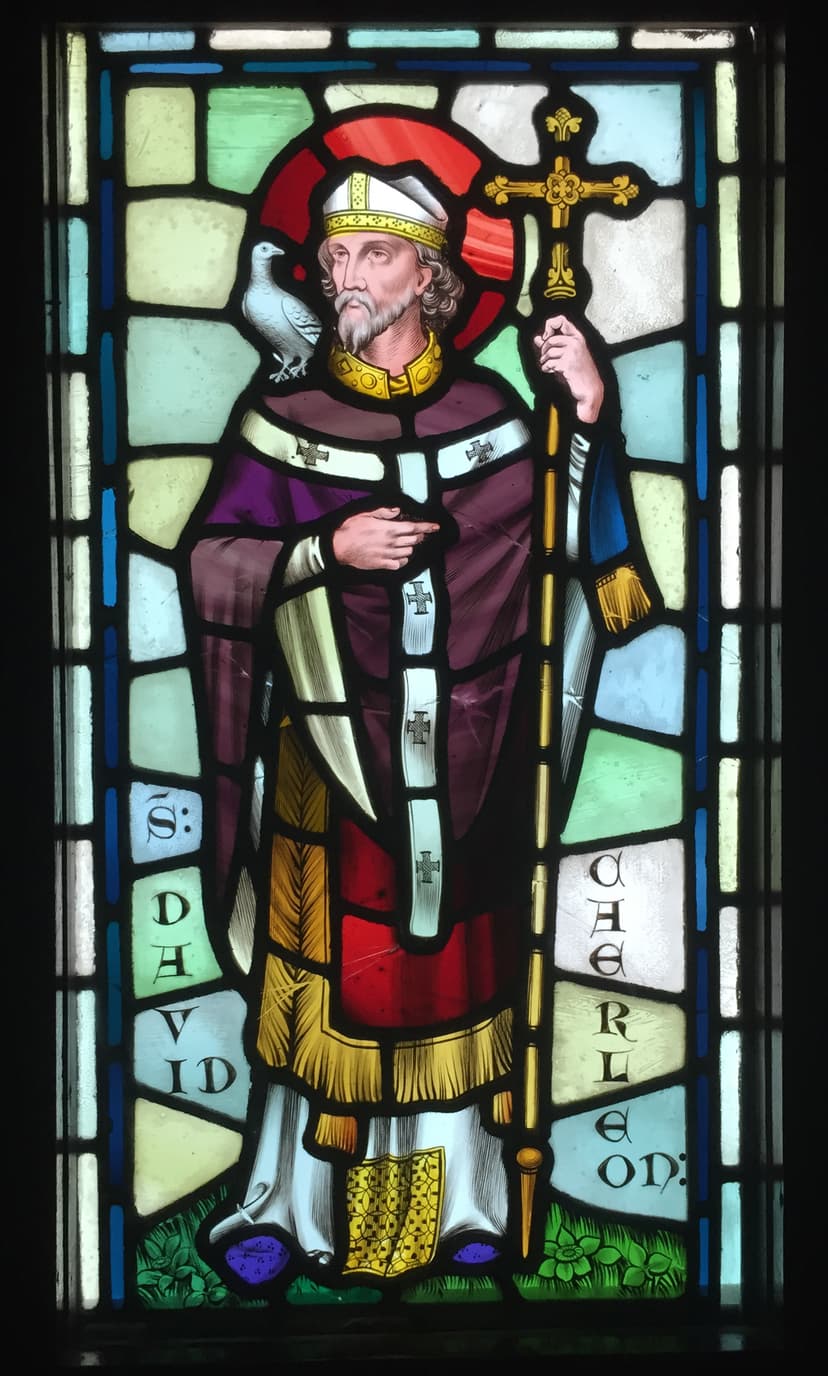
David of Wales
David of Wales was a Welsh bishop and the patron saint of Wales, who lived in the 6th century. He is remembered for his preaching against Pelagianism, founding monastic settlements, and living an ascetic life. His legacy includes inspiring devotion, place names, and artistic works, with his feast day celebrated on March 1st.
Senán mac Geirrcinn
Senán mac Geirrcinn was an Irish Christian minister prominent in the 6th century, revered as the founder of Inis Cathaigh (Scattery Island) and patron of the Corco Baiscinn and Uí Fhidgeinte. He is also listed among the Twelve Apostles of Ireland and is remembered for his austere monastic rule and his legendary confrontation with a sea creature known as the 'Cathach'.