
David of Wales
March 1·6th century·Wales
David of Wales was a Welsh bishop and the patron saint of Wales, who lived in the 6th century. He is remembered for his preaching against Pelagianism, founding monastic settlements, and living an ascetic life. His legacy includes inspiring devotion, place names, and artistic works, with his feast day celebrated on March 1st.
Key Facts
- ›David served as Bishop of Mynyw in the 6th century.
- ›He was renowned as a teacher and preacher, founding monastic settlements.
- ›David attended the Synod of Brefi where he opposed Pelagianism.
- ›His symbol is the leek, which is also the symbol of Wales.
- ›Tradition holds that his death occurred on March 1st, which is now Saint David's Day.
- ›He is venerated in the Catholic Church and the Eastern Orthodox Church.
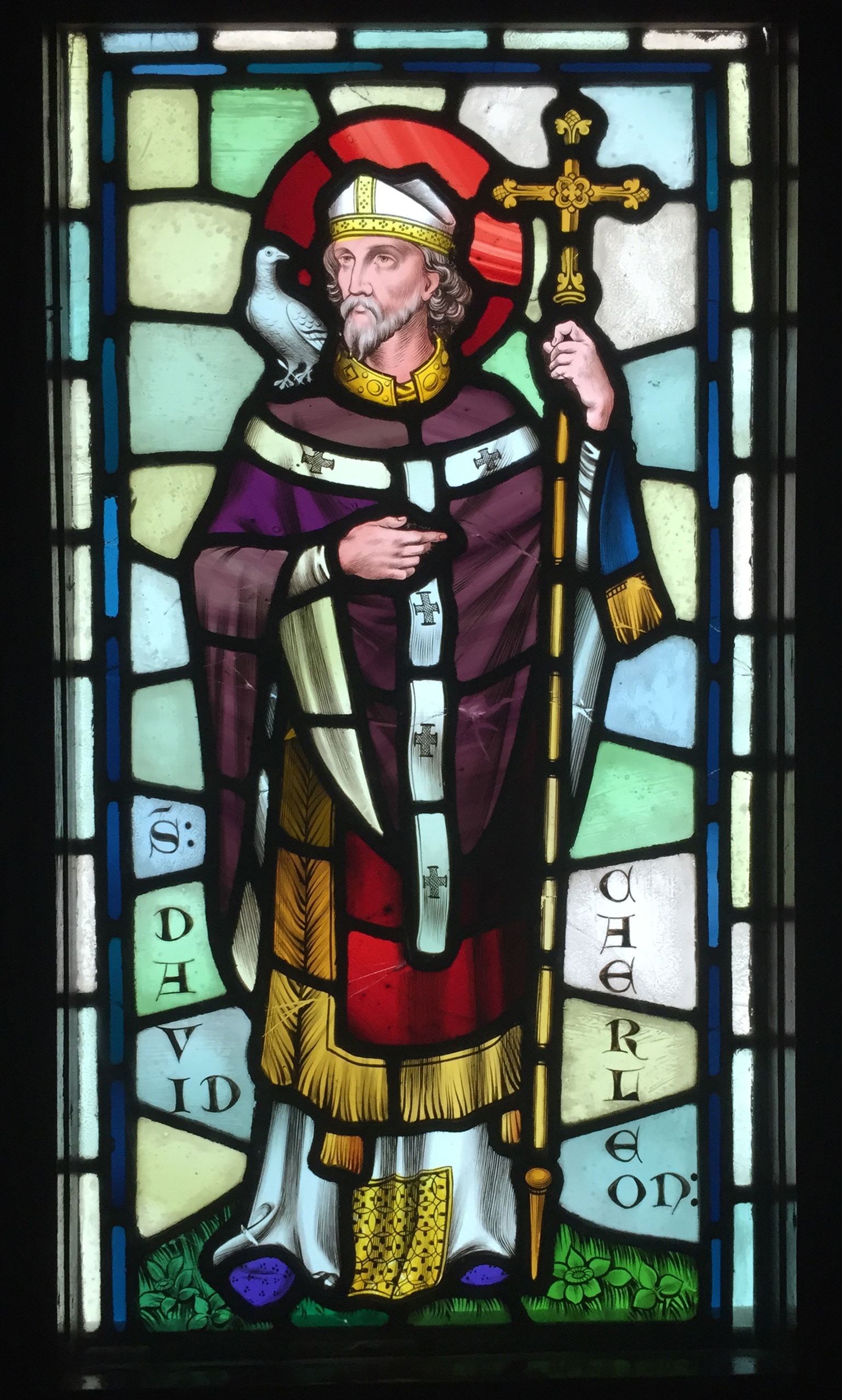
Dewi Sant, Davidus
Wales
Leek, White Dove
About David of Wales
David of Wales (Dewi Sant)
David of Wales, known in Welsh as Dewi Sant and in Latin as Davidus, was a highly influential Welsh Christian bishop and the patron saint of Wales. He lived during the 6th century, with his birth year traditionally estimated between 462 and 512, and his death occurring around 589 or 601. As Bishop of Mynyw (modern St Davids), David played a significant role in the development of Christianity in Wales.
Life and Ministry
Tradition, largely preserved in hagiographies like the Buchedd Dewi written by Rhygyfarch, details David's life and ministry. He is traditionally believed to be the son of Non and grandson of Ceredig ap Cunedda. David became a renowned teacher and preacher, founding numerous monastic settlements and churches across Wales, Dumnonia, and Brittany. The site of his monastery in the Glyn Rhosyn valley in Pembrokeshire is now home to St David's Cathedral.
A pivotal moment in his life was his attendance at the Synod of Brefi around 550, where his eloquence in denouncing Pelagianism led to his election as primate of the region. He later presided over the synod of Caerleon around 569. A famous miracle attributed to him occurred at the Synod of Brefi, where the ground is said to have risen to form a hill as he preached, with a white dove settling on his shoulder.
Monasticism and Teachings
David established a strict monastic rule emphasizing extreme asceticism. His monks were required to perform manual labor, such as plowing without draught animals, and lived on a diet of bread with salt and herbs, drinking only water. Personal possessions were forbidden, and monks were expected to dedicate their evenings to prayer, reading, and writing. David himself taught his followers to refrain from eating meat and drinking beer, advocating for a simple and disciplined life.
Veneration and Legacy
David was officially recognized by the Holy See in 1120 by Pope Callixtus II. He was also canonized by the Eastern Orthodox Church at an unknown date. His shrine at St David's Cathedral was a major pilgrimage site throughout the Middle Ages, though it suffered from Viking raids and was later despoiled during the Reformation. His feast day, March 1st, is celebrated as Saint David's Day, the national day of Wales. The leek, his symbol, is worn as an honorable badge and is a symbol of Wales. David's influence extended to continental Europe, inspiring place names in Brittany, and his life and teachings have been the subject of various artistic works, including musical compositions.
Death and Relics
Tradition holds that David died on March 1st, with the year commonly cited as 601 or 589. His last words to his followers, recorded in the Welsh Life, urged them to "Do ye the little things in life." His relics were originally kept at St David's Cathedral, where his shrine was a significant devotional site until it was stripped of its treasures during the Reformation.
Source: Wikipedia ↗
Frequently Asked Questions
Who was David of Wales?
David of Wales, also known as Dewi Sant, was a prominent Welsh Christian prelate who served as Bishop of Mynyw in the 6th century. He is recognized today as the patron saint of Wales.
What is David of Wales most remembered for?
He is primarily remembered for his eloquent preaching against Pelagianism at the Synod of Brefi, his establishment of monastic communities throughout Wales and beyond, and his ascetic lifestyle. His teachings emphasized simplicity and devotion, famously summarized in the phrase 'Do ye the little things'.
When is Saint David's Day celebrated?
Saint David's Day is celebrated on March 1st. This date traditionally marks the day of his death, though the exact year is uncertain, with common estimates being 589 or 601.
What are the symbols associated with Saint David?
The main symbol associated with Saint David is the leek, which has become a national symbol of Wales. He is also iconographically represented with a white dove on his shoulder, referencing a miracle during his preaching.
What was the monastic rule established by David?
David's monastic rule was very strict, requiring monks to perform manual labor like plowing without animals and to subsist on a simple diet of bread, salt, herbs, and water. Personal possessions were forbidden, and even saying 'my book' was considered an offense.
Related Saints
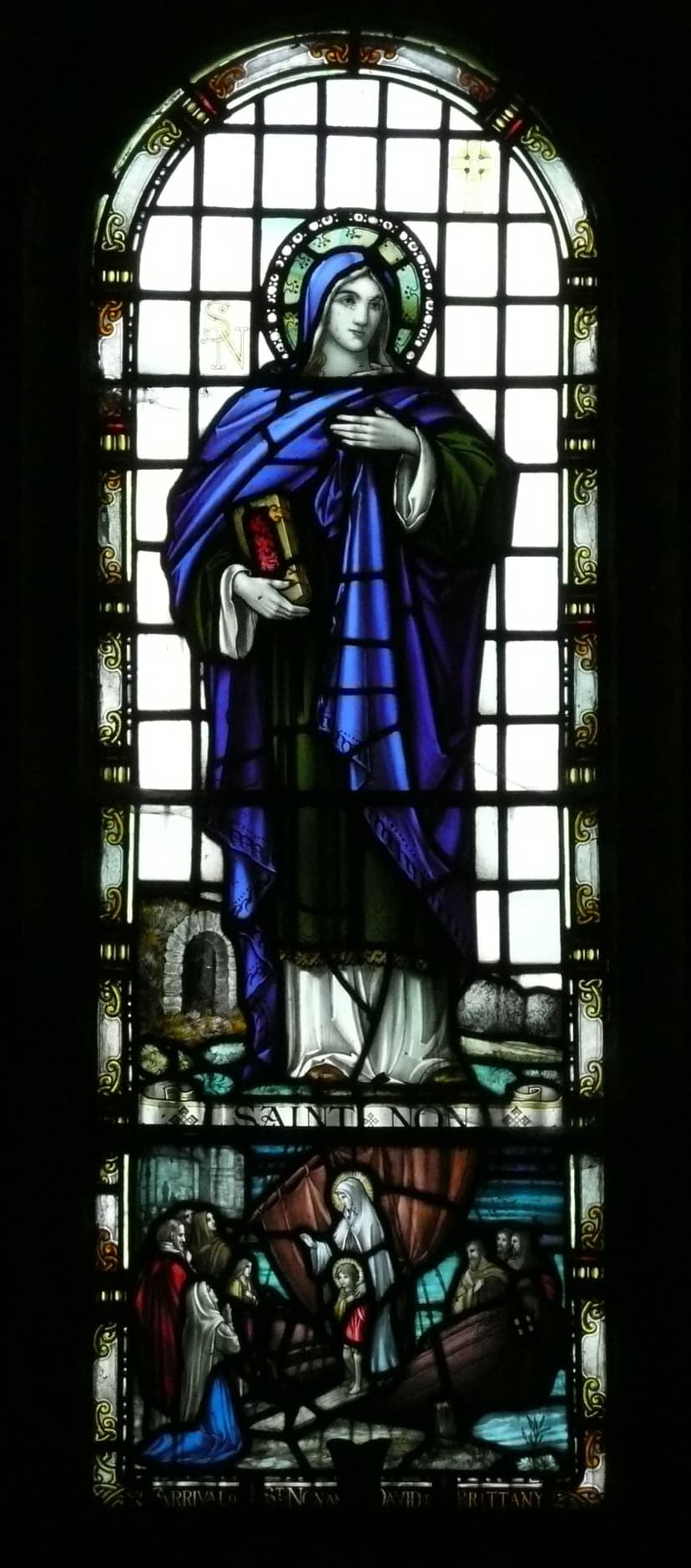
Non
Non was a Welsh saint, traditionally known as the mother of Saint David, the patron saint of Wales. She is chiefly remembered for her association with the birth of David, a significant event in Welsh Christian tradition, and for her own veneration as a holy woman and founder of a convent.
Teilo
Saint Teilo was a British Christian monk, bishop, and founder of monasteries and churches in early medieval Wales. Reputed as a disciple of Saint David, he served as bishop of Llandaff and established significant religious sites, including the first church at Llandaff Cathedral and Llandeilo Fawr. He is remembered for his missionary work, his flight to Brittany during a plague, and his veneration as a significant Welsh saint.
Dubricius
Dubricius was a 6th-century British ecclesiastic who evangelized large parts of south-east Wales and Ergyng. He founded monasteries, became a bishop, and served as a teacher to many notable Welsh saints. He is remembered for his scholarly intellect, his role in the early church in Wales, and his legendary association with the coronation of King Arthur.