
Dorotheus of Gaza
June 5·6th century·Palestine
Dorotheus of Gaza was a Christian monk and abbot from Antioch who lived in the sixth century. He is remembered for his spiritual instructions on the ascetic life, which significantly influenced both Eastern and Western monasticism. His writings, particularly the Didaskaliai, combined traditional monastic practices with his personal experiences and theological insights.
Key Facts
- ›Dorotheus was born in Antioch at the beginning of the sixth century into a prosperous Christian family.
- ›He received a classical education and studied rhetoric and medicine, possibly under Procopius of Gaza.
- ›He entered the monastery of Seridus near Gaza and served in various roles, including overseer of the guesthouse and head of the monastery's hospital.
- ›He was a disciple of the anchorites Barsanuphius and John the Prophet, and his writings were heavily influenced by them.
- ›His main work, the Didaskaliai, offers instructions on the ascetic life, drawing from scripture, monastic traditions, and his own experiences.
- ›His writings were translated into several languages, including Syriac, Arabic, Georgian, Latin, French, and English, and influenced various religious orders.
Dorotheus the Archimandrite, Abba Dorotheus
About Dorotheus of Gaza
Dorotheus of Gaza (c. 500 – 560 or 580), also known as Dorotheus the Archimandrite or Abba Dorotheus, was a prominent Christian monk and abbot of the sixth century. Born in Antioch into a prosperous family, he received a comprehensive classical education, including rhetoric and medicine, which later informed his spiritual writings. He entered the monastery of Seridus near Gaza, where he became a disciple of the ascetics Barsanuphius and John the Prophet.
Life and Monastic Ministry
Dorotheus' monastic life was marked by his service within the community of Seridus. Despite his initial aspirations for a purely contemplative life, he was entrusted with various responsibilities by Abbot Seridus and the elder monks. These included serving as the porter and overseeing the guesthouse. Recognizing his talents, Barsanuphius and John the Prophet later asked him to establish and manage a hospital within the monastery, an endeavor supported by his brother. Throughout his time at the monastery, Dorotheus maintained close spiritual guidance through correspondence with Barsanuphius and John, eventually becoming a direct intermediary for John and offering spiritual direction to younger monks.
Spiritual Writings and Influence
Dorotheus' enduring legacy rests on his spiritual writings, most notably the "Didaskaliai" (Discourses), a collection of twenty-four sections on the ascetic life. His works also include several letters and aphorisms. These writings are characterized by their practical approach, blending traditional monastic teachings with insights from Greek philosophy, medicine, and his own lived experience. He advocated for communal life while emphasizing the importance of individual struggle against passions and the cultivation of opposing virtues.
His teachings were deeply influenced by his spiritual fathers, Barsanuphius and John, and also drew from the wisdom of the Desert Fathers. Dorotheus is credited with potentially compiling or editing some collections of these sayings. His emphasis on scriptural grounding and the integration of theology with ascetic practice made his instructions accessible and relevant.
Legacy and Veneration
Dorotheus of Gaza is recognized as a saint by the Roman Catholic, Eastern Orthodox, and Oriental Orthodox Churches, with feast days celebrated on June 5 and June 18, respectively. His writings have been translated into numerous languages, impacting monasticism across Europe and the Middle East. The Benedictine, Cistercian, Trappist, and Jesuit orders have all been influenced by his ascetic teachings. In recent times, Pope Francis has referenced Dorotheus as an outstanding spiritual master, underscoring his continued relevance.
Source: Wikipedia ↗
Frequently Asked Questions
Who was Dorotheus of Gaza?
Dorotheus of Gaza was a Christian monk and abbot who lived in the sixth century. Born in Antioch, he spent much of his monastic life at the monastery of Seridus near Gaza.
What is Dorotheus of Gaza best known for?
He is primarily known for his spiritual writings, especially the Didaskaliai, which provided instructions on the ascetic life. These writings were influential in both Eastern and Western monastic traditions.
What were the main influences on Dorotheus' teachings?
Dorotheus was influenced by the teachings of his spiritual fathers, Barsanuphius and John the Prophet, as well as by the traditions of Basilian and Pachomian monasticism and the Sayings of the Desert Fathers. His classical education in rhetoric and medicine also informed his writings.
What is the spiritual significance of Dorotheus' writings?
His writings are valued for their practical guidance on spiritual growth, combining theological depth with everyday monastic realities. He emphasized virtues such as humility, charity, and patience, and taught how to counter vices.
How did Dorotheus' work spread?
Dorotheus' writings, originally in Greek, were translated into numerous languages, including Syriac, Arabic, Georgian, Latin, French, and English, over several centuries. This widespread translation facilitated their influence across different monastic communities and traditions.
Related Saints
Hilarion
Hilarion was a Christian anchorite, considered the founder of Palestinian monasticism. He lived as a hermit in the desert near Gaza, following the example of Anthony the Great, and is venerated for his asceticism and miraculous deeds.
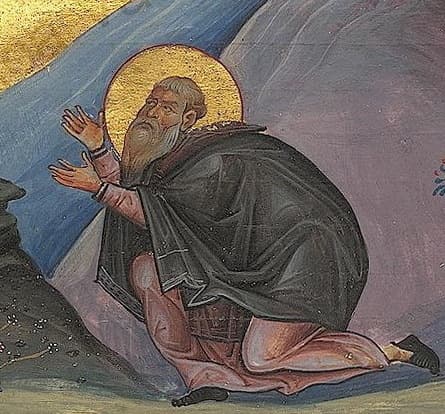
Hilarion the Great
Hilarion the Great was a 4th-century Christian anchorite and hermit, considered the founder of Palestinian monasticism. He is venerated for his ascetic life, miracles, and spiritual guidance, exemplifying monastic virtues in the tradition of Anthony the Great. Hilarion is remembered for establishing a monastic community near Gaza and for his influence on early Christian monasticism.
Sabbas the Sanctified
Sabbas the Sanctified was a Cappadocian Greek monk, priest, and founder of several monasteries, most notably Mar Saba in Palestine. He is remembered for his ascetic life, his role as a church leader, and his staunch opposition to Monophysitism and Origenism. His monastic rule, the Jerusalem Typikon, guided Byzantine monasteries.