
Hilarion the Great
Hilarion the Great was a 4th-century Christian anchorite and hermit, considered the founder of Palestinian monasticism. He is venerated for his ascetic life, miracles, and spiritual guidance, exemplifying monastic virtues in the tradition of Anthony the Great. Hilarion is remembered for establishing a monastic community near Gaza and for his influence on early Christian monasticism.
Key Facts
- ›Born around 291 to pagan parents in Tabatha, near Gaza.
- ›Studied in Alexandria and was inspired by the hermit Anthony.
- ›Established himself as a hermit inland from Gaza, living in solitude for 22 years.
- ›Became known for healing, exorcisms, and performing miracles.
- ›Considered the founder of monasticism in Palestine.
- ›Died in Cyprus at the age of eighty.
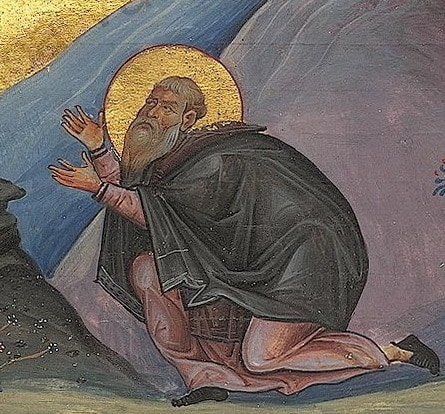
Thavata, of Gaza, the Great
Caulonia
Scroll With Inscription
About Hilarion the Great
Hilarion the Great (c. 291–371) was a pivotal figure in early Christian monasticism, renowned as the founder of monasticism in Palestine. Born to pagan parents in Tabatha, near Gaza, he was educated in Alexandria, where he encountered the teachings of Anthony the Great. Inspired by Anthony's ascetic lifestyle, Hilarion embarked on his own path as a hermit in the desert of Palestine.
Life and Historical Context
After a brief period studying with Anthony the Great, Hilarion chose to live in solitude inland from Gaza, establishing a solitary hut where he spent 22 years in prayer, fasting, and manual labor, weaving baskets as a monastic occupation. He famously struggled against temptations, mortifying his body to maintain spiritual purity. Unlike some contemporaries who sought to live in specific holy sites, Hilarion believed God's presence could be found anywhere, choosing not to confine himself to the Judaean Desert.
Ministry and Miracles
Following his period of solitary retreat, Hilarion began to attract disciples and people seeking spiritual guidance, healing, and exorcisms. His biographer, Jerome, recounts numerous miracles attributed to him, including the healing of individuals, the expulsion of demons, prophetic insights, and divinely inspired words. He established a monastery during the reign of Emperor Constantius, which grew into a significant community with many visitors, drawing people from across Palestine and Syria.
Final Years and Legacy
To escape the growing crowds, Hilarion eventually left Gaza and traveled to Egypt, Sicily, Dalmatia, and finally Cyprus, where he lived in a more remote location until his death at the age of eighty. His body was later exhumed and found to be perfectly preserved and sweetly scented, leading to its reinterment in his monastery at Maiuma. Hilarion is venerated by the Catholic, Eastern Orthodox, and Oriental Orthodox Churches as an exemplar of monastic virtues, and his life continues to be a significant example of early Christian asceticism and spiritual leadership.
Source: Wikipedia ↗
Frequently Asked Questions
Who was Hilarion the Great?
Hilarion the Great was a 4th-century Christian anchorite and hermit, considered the founder of monasticism in Palestine. He followed the example of Anthony the Great and spent most of his life in the desert, dedicated to prayer and asceticism.
What is Hilarion the Great known for?
He is primarily known for establishing the monastic tradition in Palestine, living a life of extreme asceticism, and for performing numerous miracles, including healing the sick and casting out demons. His biography by Jerome highlights his spiritual struggles and wisdom.
When and where did Hilarion the Great live?
Hilarion was born around 291 in Tabatha, a village near Gaza, and died in 371 in Cyprus. He spent the majority of his life in the desert regions of Palestine and later traveled to Sicily, Dalmatia, and Cyprus.
What was Hilarion's connection to Anthony the Great?
Hilarion was inspired by Anthony the Great, the father of Egyptian monasticism. After spending a short time studying with Anthony, Hilarion sought an even more solitary life in the desert of Palestine, establishing his own distinct monastic tradition there.
What is the significance of Hilarion in monastic history?
Hilarion is considered the 'father of Palestinian monasticism' by his biographer Jerome. He developed a model of solitary monastic life that became influential, and his community attracted many disciples seeking spiritual training.
Are there any specific miracles attributed to Hilarion?
Yes, historical accounts mention Hilarion healing the children of Helpidius, curing Alaphion which led to a prominent family's conversion, and stilling the sea during a tsunami in Dalmatia. He was also known for driving out demons and speaking words of wisdom.
Related Saints
Hilarion
Hilarion was a Christian anchorite, considered the founder of Palestinian monasticism. He lived as a hermit in the desert near Gaza, following the example of Anthony the Great, and is venerated for his asceticism and miraculous deeds.
John the Prophet
John the Prophet was an Eastern Christian hermit and teacher venerated as a saint in the Roman Catholic and Eastern Orthodox churches. He is remembered for his life of silence and the spiritual gifts of prophecy and perspicacity attributed to him. John served as a teacher to Dorotheus of Gaza and lived at the Monastery of Seridus.
Nilus of Palestine
Nilus of Palestine was an early Christian martyr and an Egyptian bishop. He is remembered for leading Mass for Christians condemned to work in Palestinian quarries during the Diocletianic Persecution. For this act, he was burned alive by order of Emperor Galerius.