
Demetrius of Sirmium
April 9·4th century·Roman Empire
Saint Demetrius of Sirmium was a Roman deacon and martyr of the early 4th century. He is remembered for his martyrdom, executed for preserving Christian texts. He is often confused with the Greek saint Demetrius of Thessaloniki.
Key Facts
- ›Born around 270 AD in Sirmium, Roman Empire.
- ›Served as a deacon to Bishop Irenaeus.
- ›Entrusted with safeguarding sacred books.
- ›Executed on April 9, 304 AD by order of Governor Probus.
- ›Martyrdom occurred one mile east of Sirmium's city walls.
- ›Seven consecrated virgins and two deacons also died on the day of his martyrdom.
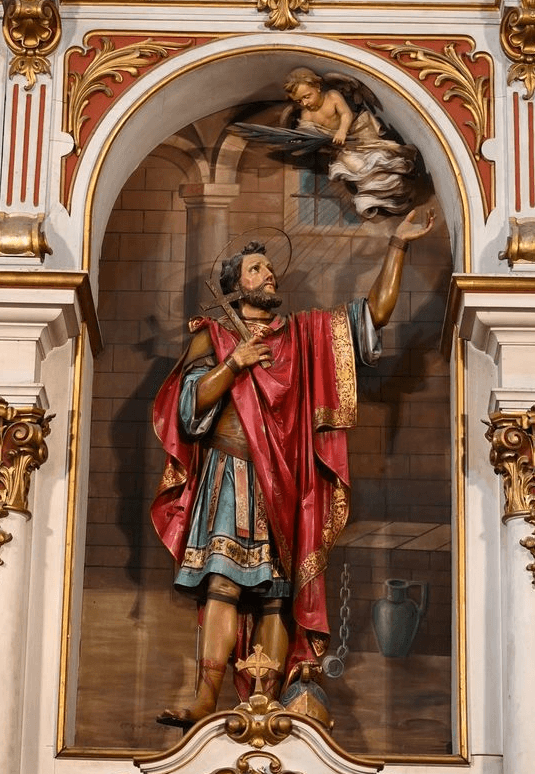
Deacons Stole
About Demetrius of Sirmium
Demetrius of Sirmium was a Roman deacon and martyr of the early 4th century. Born around 270 AD in Sirmium (modern-day Sremska Mitrovica), he was the son of a military officer. He served as a deacon to Bishop Irenaeus, who entrusted him with the crucial task of safeguarding sacred Christian texts.
His commitment to preserving these texts led to his condemnation and execution. Demetrius was sentenced to death by Governor Probus and died on April 9, 304 AD. While the precise manner of his martyrdom, whether by sword or spear, remains uncertain, it is recorded that his execution occurred one mile east of Sirmium's city walls, along the road to Bassianae. On the same day as his martyrdom, seven consecrated virgins and the deacons Donatus and Fortunatus also met their deaths.
Later traditions sometimes depict Saint Demetrius iconographically as a young legionary in Roman armor, a portrayal often associated with the Greek saint Demetrius of Thessaloniki, with whom he is frequently confused. However, his historical role was that of a deacon, vested in a white toga with a red deacon's stole.
A basilica, the Basilica of St. Demetrius, was erected between 426 and 441 AD by the Roman prefect Leontius at the believed site of his martyrdom. This structure was later destroyed during an Avar siege in 505 AD. Demetrius is also believed to have been a co-patron saint of a small Romanesque chapel near the entrance to the city's imperial palace.
Source: Wikipedia ↗
Frequently Asked Questions
Who was Saint Demetrius of Sirmium?
Saint Demetrius of Sirmium was a Roman deacon and martyr from the early 4th century. He was born around 270 AD in Sirmium, in the Roman Empire.
Why was Saint Demetrius of Sirmium martyred?
He was sentenced to death for preserving Christian texts. He served as a deacon and was entrusted by Bishop Irenaeus with safeguarding sacred books.
When and where was Saint Demetrius of Sirmium executed?
He was executed on April 9, 304 AD, by order of Governor Probus. The execution took place one mile east of Sirmium's city walls.
Is Demetrius of Sirmium the same as Demetrius of Thessaloniki?
No, he is often confused with the Greek saint Demetrius of Thessaloniki, who lived in the same period. However, they are distinct individuals.
What is known about the Basilica of St. Demetrius?
A basilica was erected between 426 and 441 AD at the site believed to be where Demetrius was martyred. This basilica was later destroyed during an Avar siege.
Related Saints
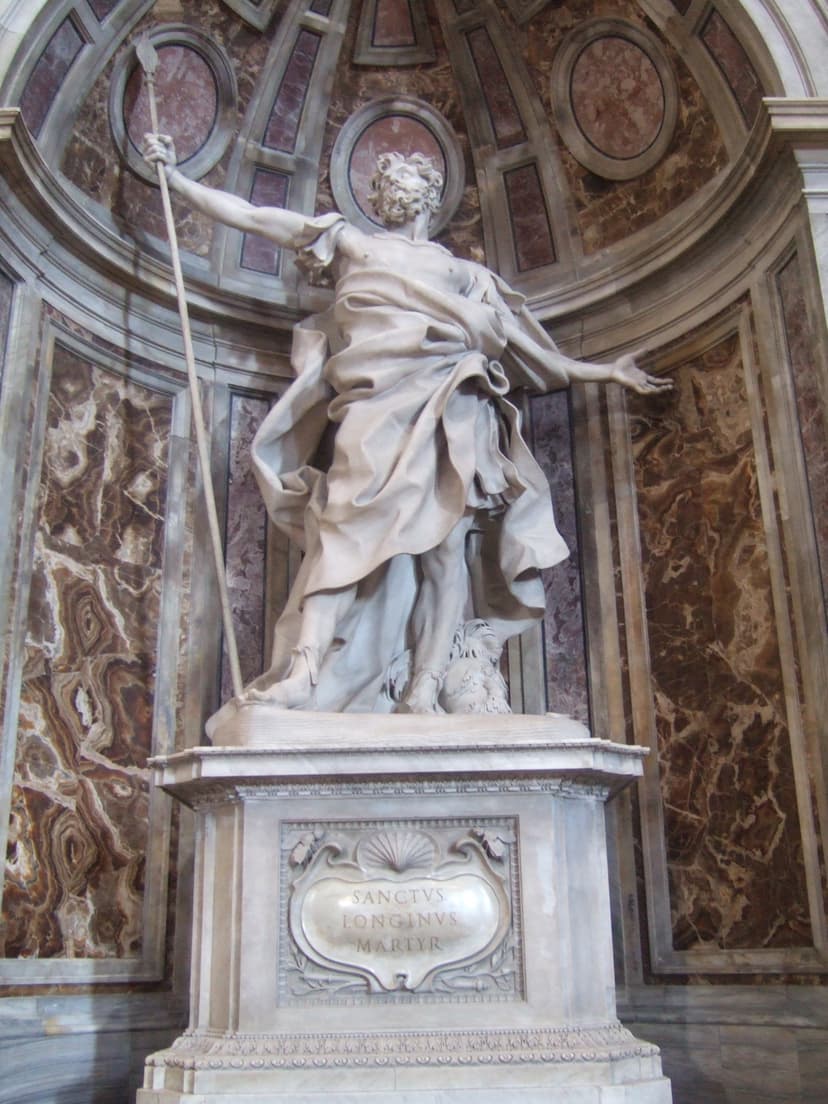
Longinus the Centurion
Longinus the Centurion is the Roman soldier traditionally credited with piercing the side of Jesus with a lance during the Crucifixion. Initially unnamed in scripture, his legend developed to describe him as a convert to Christianity whose blindness was cured by Jesus's blood. He is venerated as a saint and martyr in various Christian traditions, particularly for his role in the events of the Passion.
Maximilian of Antioch
Maximilian of Antioch was a Christian martyr executed during the reign of Emperor Julian the Apostate. He is remembered for his martyrdom under Roman persecution. His feast day is observed on August 21st.
Glyceria
Saint Glyceria was a Roman virgin of the early church, venerated primarily in Eastern Christianity and the Catholic Church. She is remembered as a virgin martyr whose relics reputedly poured forth the Oil of Saints. Her name signifies "sweetness".