
Clement of Rome
November 23·1st century·Italy
Clement of Rome, also known as Pope Clement I, was a significant early Christian leader and the first of the Apostolic Fathers. He is chiefly remembered for his First Epistle to the Corinthians, an early Christian document that asserted apostolic succession and church authority. Legends also describe his martyrdom by being tied to an anchor and thrown into the sea.
Key Facts
- ›Clement is considered the first of the Apostolic Fathers.
- ›He is recognized as the Bishop of Rome in the late first century.
- ›His only undisputed writing is the First Epistle to the Corinthians.
- ›The epistle is considered the earliest affirmation of the principle of apostolic succession.
- ›Apocryphal stories describe his martyrdom by being tied to an anchor and thrown into the sea.
- ›He is venerated as a saint in many Christian churches and is a patron saint of mariners.
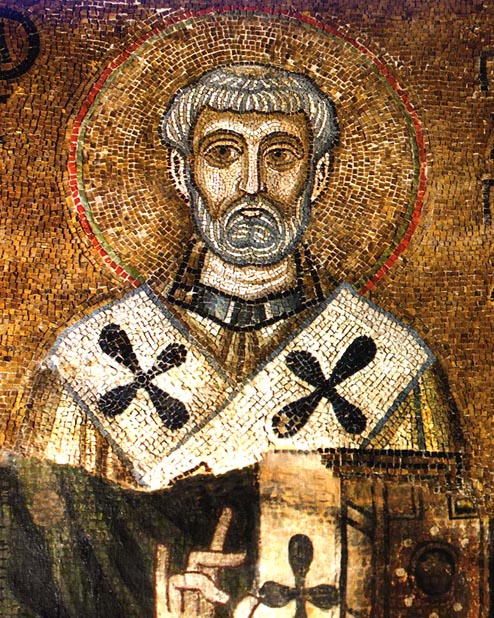
Pope Clement I, Clemens Romanus, Κλήμης Ῥώμης
Mariners
Anchor, Papal Vestments, Pallium, Tiara, Mitre, Papal Cross, Keys of Heaven, Palm of Martyrdom, Fountain Or Spring, Temple In the Sea, Anchored Cross, Mariner's Cross
About Clement of Rome
Clement of Rome, also known by his Latin name Clemens Romanus and Ancient Greek name Κλήμης Ῥώμης, was a significant figure in the early Christian Church, serving as the Bishop of Rome in the late first century. He is widely regarded as one of the Apostolic Fathers, a group of early Church leaders who were believed to have been disciples of the Apostles. Little is definitively known about his early life, but early church tradition suggests he may have been ordained by Saint Peter.
Life and Ministry
Historical accounts place Clement as the second, third, or fourth Bishop of Rome. Irenaeus described him as a successor to Anacletus and a personal acquaintance of the Apostles. The Liber Pontificalis, a collection of papal biographies, states that Clement was entrusted with the Church by Peter and appointed his successor. While Clement is mentioned in early succession lists, the exact nature of his role and the structure of the Roman church at that time remain subjects of scholarly discussion. He is believed to have lived during a period of Roman persecution of Christians.
First Epistle to the Corinthians
Clement's sole undisputed surviving work is his First Epistle to the Corinthians, often referred to as 1 Clement. Written around 96 AD, this letter is one of the oldest extant Christian documents outside the New Testament. Clement wrote to the church in Corinth to address a dispute where certain presbyters had been deposed. In the epistle, he strongly asserted the authority of the presbyters, arguing that they were appointed by the Apostles, and emphasized the importance of order and obedience within the church. 1 Clement is considered the earliest affirmation of the principle of apostolic succession and offers valuable insight into early Church ministry and the history of the Roman Church's awareness of its priority among local churches.
Death and Veneration
While the oldest sources do not mention his martyrdom, later apocryphal traditions, dating from the 4th century, describe Clement's death as a martyrdom. These legends claim he was banished from Rome to the Chersonesus during the reign of Emperor Trajan, where he was imprisoned and subsequently martyred by being tied to an anchor and thrown into the Black Sea. This depiction has made him a patron saint of mariners. His feast day is commemorated on November 23 in the Catholic Church, Anglican Communion, and Lutheran Church, and on November 25 in Eastern Orthodox Christianity.
Legacy
Clement's First Epistle remains a cornerstone of early Christian literature, influencing theological thought on church governance and the continuity of authority from the Apostles. His veneration as a saint and martyr, coupled with the vivid legends surrounding his death, has ensured his enduring place in Christian devotion. Relics believed to be his are enshrined in the Basilica di San Clemente in Rome, and he is symbolically represented by an anchor in art.
Source: Wikipedia ↗
Frequently Asked Questions
Who was Clement of Rome?
Clement of Rome, also known as Pope Clement I, was a prominent early Christian leader and the first of the Apostolic Fathers. He served as the Bishop of Rome in the late first century and is recognized as a saint in many Christian traditions.
What is Clement of Rome best known for?
He is chiefly remembered for his First Epistle to the Corinthians, an early Christian document that asserts the authority of presbyters and the principle of apostolic succession. Legends also surround his martyrdom, often depicting him tied to an anchor and thrown into the sea.
What is the significance of Clement's First Epistle?
The First Epistle of Clement is considered the earliest extant Christian document outside the New Testament and is seen as the earliest affirmation of apostolic succession. It was written to address disputes within the church at Corinth and emphasizes obedience to church authority.
What are the legends surrounding Clement's death?
According to apocryphal stories dating from the 4th century, Clement was banished to the Chersonesus by Emperor Trajan and martyred by being tied to an anchor and thrown into the Black Sea. Legends also speak of a miraculous ebbing of the sea revealing his shrine.
Is Clement of Rome considered a Pope?
Yes, Clement of Rome is widely considered to be the Bishop of Rome, and thus a Pope, in the late first century. Early church lists place him as the second or third bishop of Rome after Saint Peter.
What are the symbols associated with Saint Clement?
Saint Clement is iconographically recognized by the anchor, which relates to the legend of his martyrdom. He is often depicted in papal vestments, sometimes with a tiara or mitre, and may hold a palm of martyrdom.
Related Saints
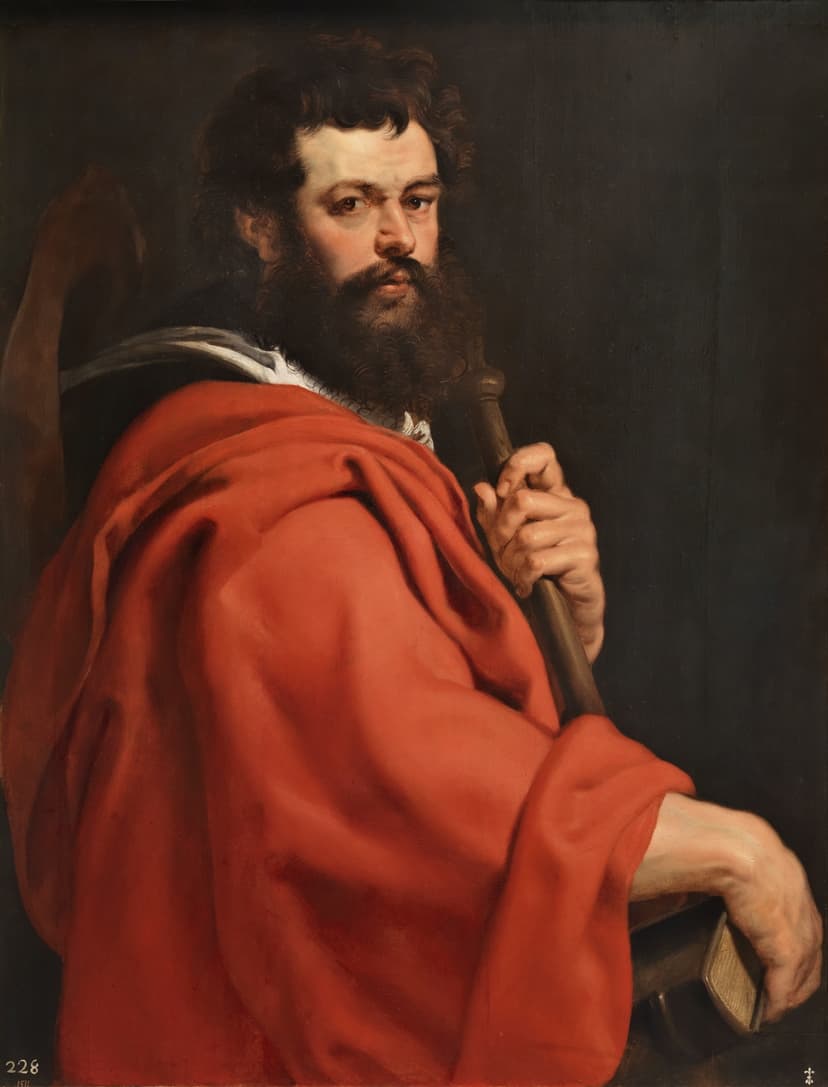
James the Great
James the Great was one of the Twelve Apostles of Jesus and is venerated as the patron saint of Spain. He is remembered as the second apostle to die and the first martyr, executed by King Herod Agrippa. Tradition holds that his relics are interred in Santiago de Compostela, Spain, a site that became a major pilgrimage destination.

Martha of Bethany
Martha of Bethany was a close follower of Jesus, known for her faith and hospitality, alongside her siblings Lazarus and Mary. She is chiefly remembered for her interactions with Jesus, particularly her concern for serving him and her steadfast belief in his divine power, as depicted in the Gospels of Luke and John. Her legacy includes her veneration as a saint in multiple Christian traditions and her association with various patronages and legends.

Mary of Bethany
Mary of Bethany was a close follower of Jesus, known for her intimate devotion and contemplative nature. She is chiefly remembered for two significant acts: sitting at Jesus' feet to listen to his teachings and anointing him with expensive perfume in preparation for his burial. Western Christianity historically conflated her with Mary Magdalene, but this distinction is now widely recognized.