
Arsenius I the Syrmian
Arsenius the Syrmian was the second Serbian Archbishop, serving from 1233 to 1263. He was a devoted disciple of Saint Sava of Serbia and played a significant role in the development of the Serbian Orthodox Church. Arsenius is remembered for establishing a new episcopal see at Peć and contributing to the construction of several important monasteries.
Key Facts
- ›He served as the second Serbian Archbishop from 1233 to 1263.
- ›Arsenius was a disciple and successor of Saint Sava of Serbia.
- ›He established a new episcopal see at Peć, where he built a monastery and church.
- ›He participated in the translation of Saint Sava's relics to Mileševa Monastery.
- ›Arsenius crowned King Stefan Uroš I and assisted in building Sopoćani and Gradac monasteries.
- ›He died on October 28, 1266, and his relics are now at Ždrebaonik Monastery in Montenegro.
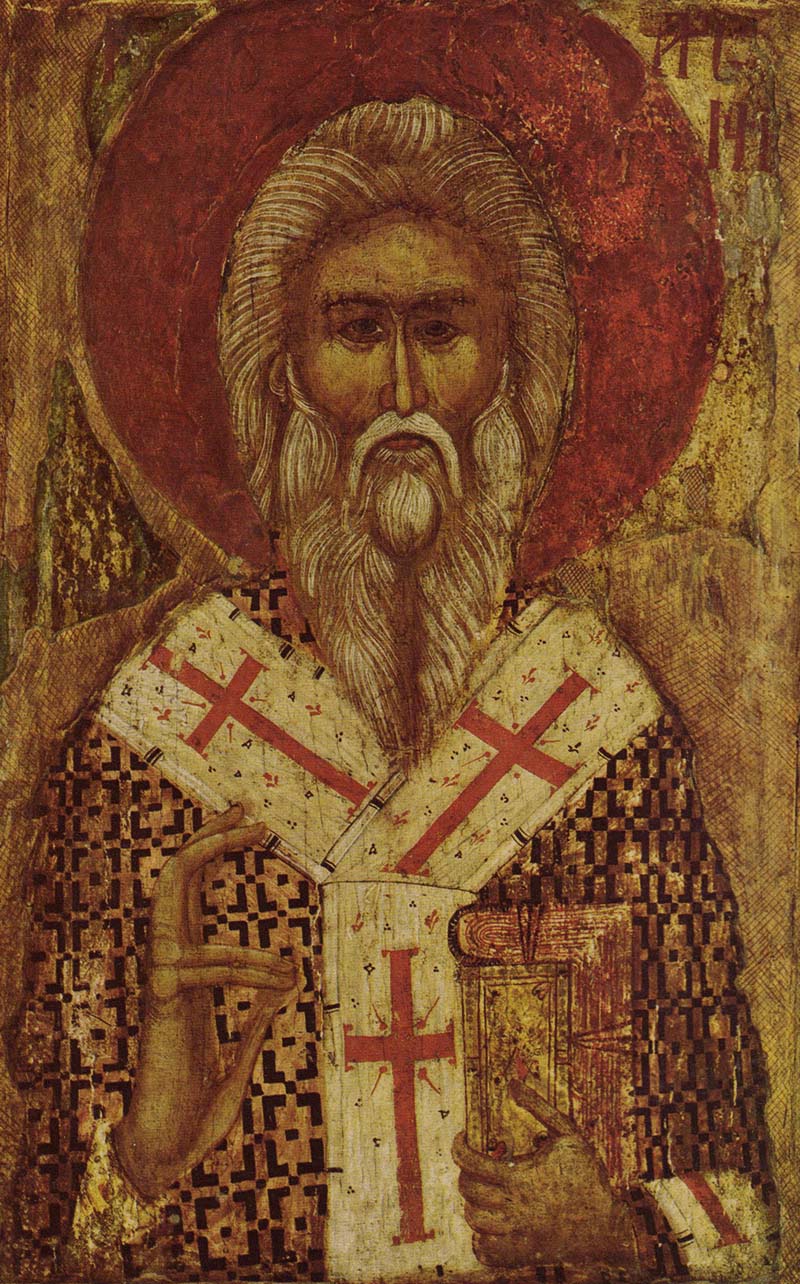
Arsenius the Syrmian, Arsenije Sremac
About Arsenius I the Syrmian
Arsenius the Syrmian
Arsenius the Syrmian (Serbian: Арсеније Сремац, Arsenius the Syrmian) was the second Serbian Archbishop, holding the position from 1233 to 1263. He was a prominent disciple of Saint Sava of Serbia and made significant contributions to the development and consolidation of the Serbian Orthodox Church.
Life and Historical Context
While his exact place and date of birth are unknown, it is believed that Arsenius hailed from the village of Dabar, near Slankamen, in what is now Serbia. He took monastic vows, likely at the Monastery of St. Demetrius. Impressed by the work of Saint Sava, he joined him at the Monastery of Žiča, where he became a disciple and synkellos. Due to his devout life, he was appointed ecclesiarch and later Archimandrite of Žiča.
When the Kingdom of Hungary invaded Serbia, Saint Sava entrusted Arsenius with the task of finding a safer location to establish a new episcopal see in the south. Arsenius chose Peć, where he founded a monastery and a church initially dedicated to the Holy Apostles, later re-consecrated to the Lord's Ascension. This established the foundation for the important Patriarchate of Peć.
Archbishop of Serbia
Upon Saint Sava's decision to abdicate, he designated Arsenius as his successor. Arsenius was consecrated bishop and continued the work of his predecessor. He played a key role in the construction of the Monastery of Peć and assisted in the translation of Saint Sava's relics from Trnovo to the Monastery of Mileševa. Additionally, Arsenius crowned King Stefan Uroš I and supported King Stefan Uroš I and Queen Helen in the building of the monasteries Sopoćani and Gradac.
Arsenius suffered a stroke in 1263, after which Saint Sava II, a nephew of Saint Sava, succeeded him. Arsenius died on October 28, 1266. His relics were originally interred at the Peć Monastery but are now venerated at the Ždrebaonik Monastery in Montenegro. His feast day is observed on October 28 according to the Orthodox liturgical calendar.
Source: Wikipedia ↗
Frequently Asked Questions
Who was Arsenius the Syrmian?
Arsenius the Syrmian was the second Archbishop of the Serbian Orthodox Church, serving from 1233 to 1263. He was a disciple of Saint Sava of Serbia and played a crucial role in the church's early history.
What was Arsenius the Syrmian's role in the Serbian Orthodox Church?
As Archbishop, Arsenius succeeded Saint Sava and continued his work. He is credited with establishing a new episcopal see at Peć, building a monastery and church there, and supporting the construction of other significant monasteries.
When did Arsenius the Syrmian live and die?
Arsenius the Syrmian was active from 1219 until his death on October 28, 1266. He served as Archbishop between 1233 and 1263.
Where are the relics of Arsenius the Syrmian located?
His relics were initially buried at the Peć Monastery but are now kept at the Ždrebaonik Monastery in Montenegro.
What is Arsenius the Syrmian remembered for?
He is primarily remembered for his service as Archbishop, his discipleship under Saint Sava, his establishment of the see at Peć, and his involvement in the construction and translation of relics for important Serbian monasteries.
Related Saints
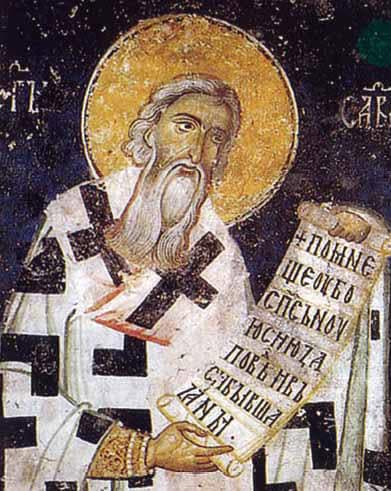
Sava of Serbia
Saint Sava was a Serbian prince and Eastern Orthodox monk, the first Archbishop of the autocephalous Serbian Church, and a key figure in Serbian history, literature, and law. He is revered for his role in establishing the Serbian Orthodox Church's independence and for his extensive writings that shaped Serbian medieval literature and legal codes. Sava is widely considered the most important figure in Serbian history and is venerated as the patron saint of Serbia.
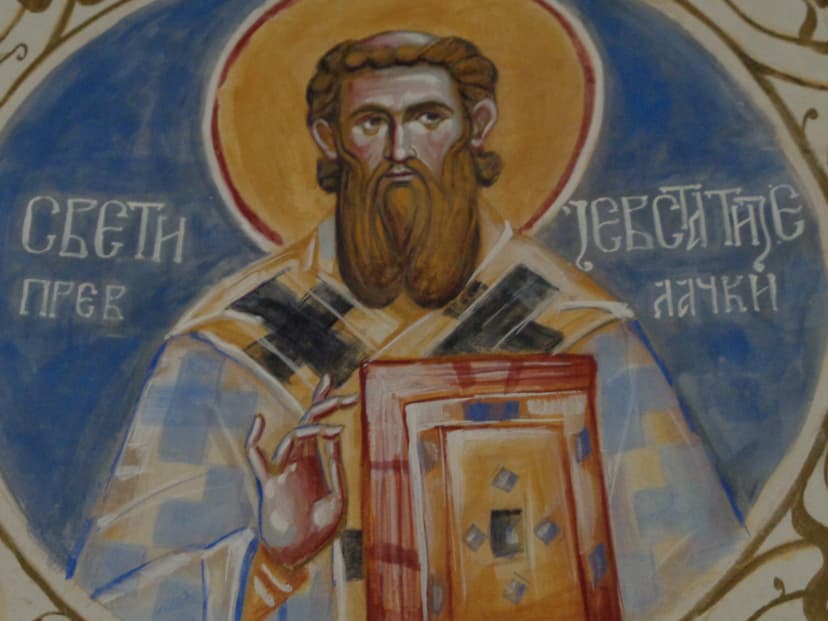
Eustathius I of Serbia
Eustathius I of Serbia was the sixth Serbian Archbishop, serving from 1279 to 1286. He is remembered for his significant role in the Serbian Orthodox Church, having held various monastic and episcopal positions before becoming Archbishop. His relics were transferred to the Monastery of Peć, and he is commemorated by the Serbian Orthodox Church.
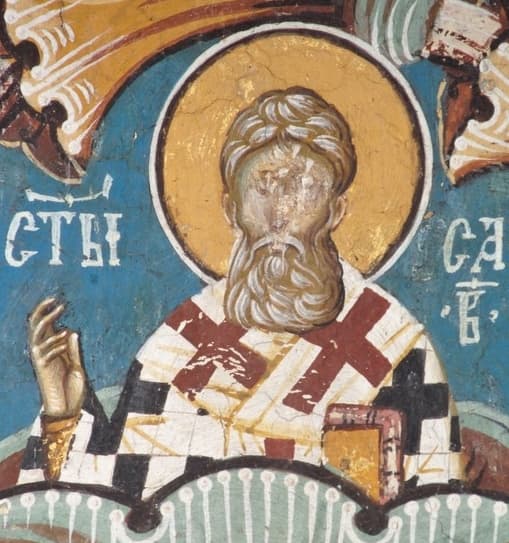
Sava II of Serbia
Sava II of Serbia was the third Serbian Archbishop, serving from 1263 until his death in 1271. He was a member of the prominent Nemanjić dynasty, being the middle son of King Stefan the First-Crowned. Sava II is remembered for his role as a spiritual leader within the Serbian Orthodox Church during a significant period of its history.