
Ammon of Nitria
January 10·4th century·Egypt
Ammonas of Egypt was an early Christian anchorite and Desert Father, born around the early 4th century. He was a disciple of Anthony the Great and is remembered for his asceticism, spiritual teachings, and insights into early Christian monasticism. His sayings are preserved in the Sayings of the Desert Fathers, and his epistles offer valuable historical context.
Key Facts
- ›Ammonas was born around the early 4th century.
- ›He was a disciple of Anthony the Great and Pambo.
- ›Ammonas spent 14 years in Scetis practicing asceticism.
- ›He is recorded as having been ordained a bishop, though accounts vary.
- ›Epistles attributed to him provide insight into early Christian monasticism.
- ›He is said to have died at the beginning of the fifth century.
Ammonas, Amtnonas, Ammon, Ammonius
About Ammon of Nitria
Ammonas of Egypt
Ammonas of Egypt, also known by variations of his name such as Ammonas, Ammon, and Ammonius, was an eastern Christian anchorite, monastic, and Desert Father who lived around the early 4th century. He is recognized as a saint within the Eastern Orthodox Church. Ammonas was a direct disciple of prominent monastic figures Anthony the Great and Pambo. His spiritual teachings and ascetic practices were influential, and many of his recorded sayings are preserved in the collection known as the Sayings of the Desert Fathers.
Life and Ministry
Ammonas embraced an ascetic life, moving into the Egyptian desert with his siblings to draw nearer to God. He spent a notable period of 14 years in Scetis, a significant center for early monasticism. He became a trusted follower of Anthony the Great and, following Anthony's relocation in AD 305, succeeded him as the abbot of the monastery on the Outer Mountain of Pispir, located east of the Nile River.
There is historical ambiguity surrounding Ammonas' ordination. Timothy, the Bishop of Alexandria at the time, sought to ordain him. Some accounts suggest Ammonas resisted ordination, even to the extent of self-mutilation, to avoid the role. The Episcopal Church, for instance, regards him as a hermit who never accepted ordination. Nevertheless, other historical records confirm that Ammonas was eventually ordained a Christian bishop. At least two epistles attributed to him from the third or fourth century exist, translated into Syriac, Latin, and Greek, and are often found alongside the letters and exhortations of Anthony the Great. Scholars acknowledge that other epistles exist attributed to an Ammonas, but their direct authorship by Ammonas of Egypt cannot be definitively confirmed.
The epistles that are historically verified to be written by Ammonas of Egypt offer crucial insights into the practices and spiritual life of eastern Christian monasticism during the early centuries of Christianity. He is said to have died at the beginning of the fifth century and, according to Palladius of Galatia, was buried in a chapel known as Rufinianæ.
Teachings and Legacy
Ammonas' teachings emphasize self-control, detachment from personal will, and obedience to spiritual elders as paths to knowing God's will. His sayings encourage a disciplined spiritual life, often through simple practices like daily prayer and maintaining a focus on God's presence. His legacy is primarily tied to his contributions to early Christian monasticism and his role as a spiritual guide, whose wisdom continues to be studied and revered.
Source: Wikipedia ↗
Frequently Asked Questions
Who was Ammonas of Egypt?
Ammonas of Egypt was an early Christian anchorite, monastic, and Desert Father who lived around the early 4th century. He was a follower of Anthony the Great and Pambo, and his teachings were influential in the development of monastic life.
What is Ammonas remembered for?
Ammonas is remembered for his asceticism, his spiritual sayings recorded in the Sayings of the Desert Fathers, and his epistles which provide insights into early Christian monasticism. He is venerated as a saint in the Eastern Orthodox Church.
Was Ammonas ordained as a bishop?
Historical accounts present conflicting information regarding Ammonas' ordination. While some traditions regard him as a lifelong hermit who resisted ordination, other records indicate he was eventually ordained a Christian bishop.
Where can Ammonas' teachings be found?
Many of Ammonas' sayings are preserved in eleven sections of the Sayings of the Desert Fathers. Additionally, epistles attributed to him, translated into Syriac, Latin, and Greek, offer further insights into his spiritual guidance.
When did Ammonas live and die?
Ammonas was born around the early 4th century and is said to have died at the beginning of the fifth century. He spent a significant portion of his life in the Egyptian desert.
Related Saints
Anthony the Great
Anthony the Great was a Christian monk from Egypt, revered as a saint and known as the "Father of All Monks" for his importance to Christian monasticism. His life, detailed by Athanasius of Alexandria, helped spread the concept of monasticism, particularly in Western Europe, and his encounters with temptation have inspired much art and literature. He is invoked against infectious diseases, often referred to as "Saint Anthony's fire."
Paul of Thebes
Paul of Thebes, also known as Paul the First Hermit, was an Egyptian saint recognized as the first Christian hermit. He is venerated for his devout life spent in solitude in the desert of Thebes, from a young age until his death.
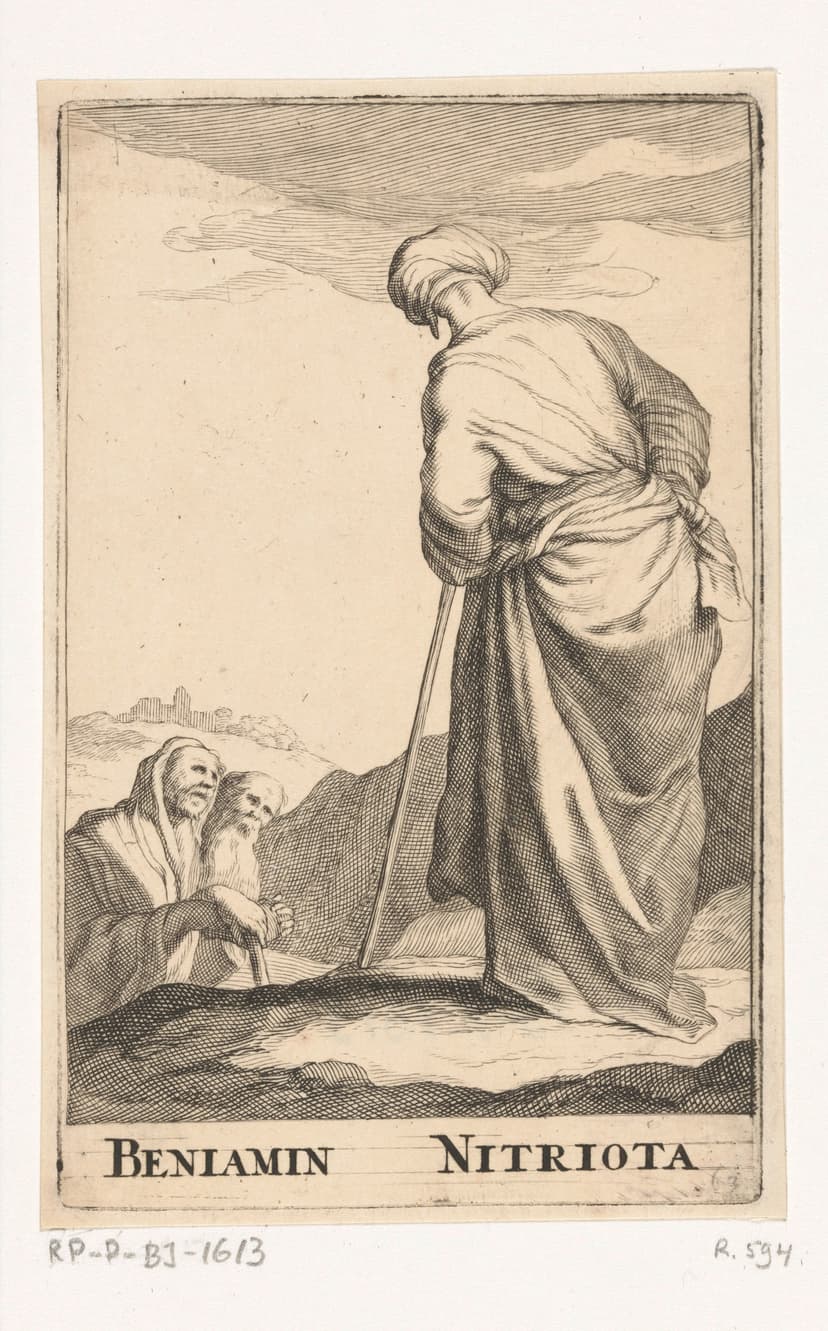
Benjamin of Nitria
Benjamin of Nitria refers to two Orthodox saints, both known for their ascetic lives and healing gifts. The first, a monk who died in 392, lived ascetically on Mount Nitria and is remembered for healing the sick through touch or by giving them oil, even while suffering from dropsy himself. The second, a 5th-century hermit martyred in 424, is considered one of the earliest Orthodox hermits in Egypt and is also credited with miraculous healing powers.