
Phnom Kulen
Cambodia·Asia
Phnom Kulen is a sacred mountain range in Siem Reap Province, Cambodia, revered by Hindus and Buddhists for its religious significance and beautiful natural features, including waterfalls and ancient carvings. It is historically important as the birthplace of the Khmer Empire, where King Jayavarman II proclaimed independence and established the Devaraja cult.
Key Facts
- ›Phnom Kulen is an isolated chain of mountain plateaux averaging 400 meters in elevation, with its highest point around 500 meters.
- ›Geologically, it is formed of sandstone and was a crucial quarry for the Angkorian civilization.
- ›It is considered a holy mountain in Cambodia and is a pilgrimage site for Hindus and Buddhists.
- ›King Jayavarman II proclaimed Cambodia's independence from Java at Phnom Kulen in 802 CE, initiating the Devaraja cult.
- ›The site is known for its ancient carvings, including the '1000 Lingas' at Kbal Spean and a large reclining Buddha statue at Preah Ang Thom.
- ›Phnom Kulen National Park was established to preserve its natural scenic features and is on Cambodia's Tentative List for World Heritage nomination.
Kulen Mountain, Mahendraparvata
- Birthplace of the Ancient Khmer Empire
- Site of King Jayavarman Ii's Proclamation of Independence
- Center For the Devaraja Cult
- Ancient Quarry Site For Angkorian Temples
- Location of the '1000 Lingas' Carvings
- Sacred Pilgrimage Destination
Visiting Sacred Hilltop Sites, Bathing In Holy Waters, Praying At Religious Monuments, Swimming In Waterfalls
King Jayavarman Ii, Udayadityavarman Ii, Vishnu, Lakshmi, Brahma, Ganesh, Preah Ang Thom
About Phnom Kulen
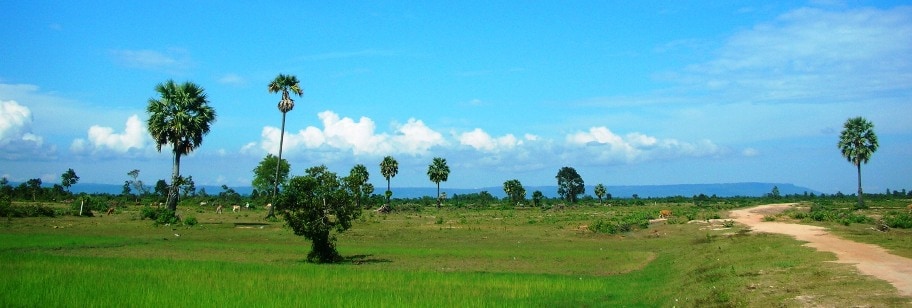
Phnom Kulen, also known as 'Lychee Mountain' or historically as Mahendraparvata, is a significant mountain range and plateau located in Siem Reap Province, Cambodia. It is revered as a holy mountain by both Hindus and Buddhists and serves as a vital pilgrimage site.
Geography and Geology
The range is characterized by a series of moderate-height plateaux rather than a sharp peak, stretching approximately 40 kilometers. The plateau's surface generally maintains an elevation of around 400 meters, with its highest point reaching approximately 500 meters. Geologically, Phnom Kulen is composed of sandstone, which was extensively quarried during the Angkorian era for the construction of temples and other structures.
Historical Importance
Phnom Kulen holds profound historical importance as the cradle of the ancient Khmer Empire. In 802 CE, King Jayavarman II proclaimed Cambodia's independence from Java at this very location. He also initiated the Devaraja cult, a linga cult that established the divine kingship of the Khmer rulers. Later, under Udayadityavarman II, Phnom Kulen served as the empire's capital, boasting numerous temples and residences, and even featuring the remarkable '1000 Lingas' at Kbal Spean. Its water resources also played a crucial role in irrigating the surrounding region.
Religious and Cultural Significance
As a holy mountain, Phnom Kulen attracts pilgrims who come to venerate its sacred sites. Among the most notable religious attractions are the giant reclining Buddha statue housed in the 16th-century Preah Ang Thom monastery, and the Kbal Spean riverbed, intricately carved with over a thousand lingas and depictions of Hindu deities like Vishnu, Lakshmi, and Brahma. The mountain also features two picturesque waterfalls, popular for recreation and spiritual reflection.
Protected Area and Heritage Status
Phnom Kulen is now protected as part of Phnom Kulen National Park, established to conserve its natural beauty and cultural heritage. The site's immense historical and religious value has led to its inclusion on Cambodia's Tentative List for World Heritage nomination, underscoring its importance to global heritage.
Source: Wikipedia ↗
Frequently Asked Questions
What is Phnom Kulen known for historically?
Phnom Kulen holds immense historical importance as the birthplace of the ancient Khmer Empire. It was here that King Jayavarman II proclaimed Cambodia's independence from Java in 802 CE and initiated the Devaraja cult.
What are the main religious sites at Phnom Kulen?
The mountain is considered a holy site for Hindus and Buddhists. Key religious attractions include the sacred hilltop site, the 16th-century Preah Ang Thom monastery with its giant reclining Buddha, and the Kbal Spean with its '1000 Lingas' carvings.
What are the natural attractions of Phnom Kulen?
Phnom Kulen features two notable waterfalls. The first is a moderate size, while the second is larger and cascades into a popular swimming area. The mountain also has a stream called Chup Preah flowing into its valley.
Is Phnom Kulen a protected area?
Yes, Phnom Kulen is part of Phnom Kulen National Park, established to preserve its natural scenic features like waterfalls and its historical and religious significance. It is also on Cambodia's Tentative List for World Heritage nomination.
What is the meaning of the name Phnom Kulen?
The name Phnom Kulen translates to 'Lychee Mountain', referring to the fruit that grows in the area. It is also known as 'mountain of the lychees'.
Related Sacred Mountains
Adam's Peak
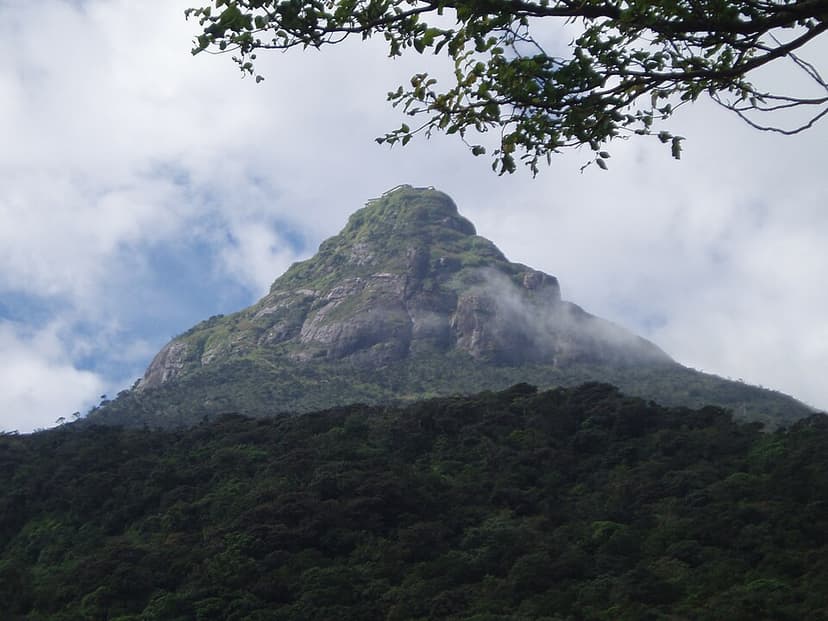
Adam's Peak, also known as Sri Pada, is a 2,243-meter-tall conical mountain in central Sri Lanka famed for a sacred footprint-shaped rock formation near its summit. This "sacred footprint" is revered by Buddhists as the Buddha's, by Hindus as Shiva's or Hanuman's, and by some Islamic and Christian traditions as Adam's or St. Thomas the Apostle's, making it a significant pilgrimage site for multiple faiths.
Mount Kailash
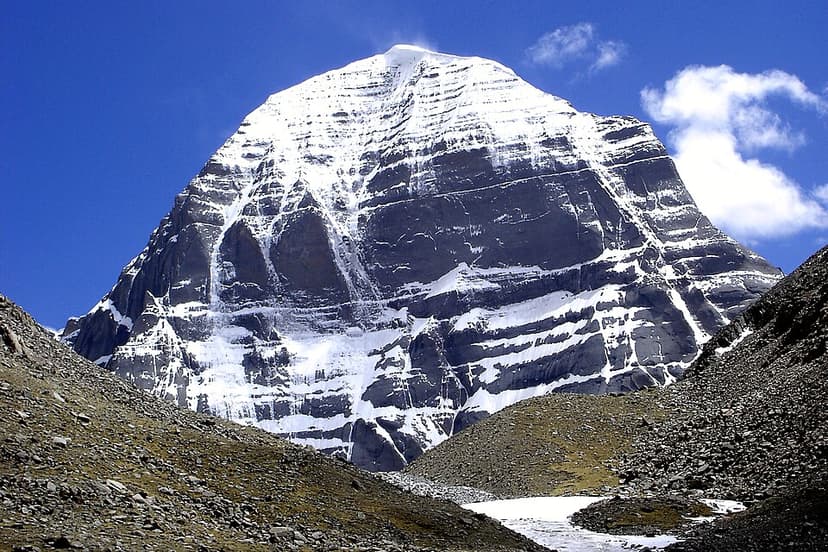
Mount Kailash, revered in four major religions, is a sacred peak in Tibet, China, considered the spiritual center of the universe. Its religious significance has led to a prohibition on climbing, preserving its pristine state for pilgrims who undertake arduous circumambulations around its base. The mountain is also a critical source for several major Asian rivers.
Arunachala
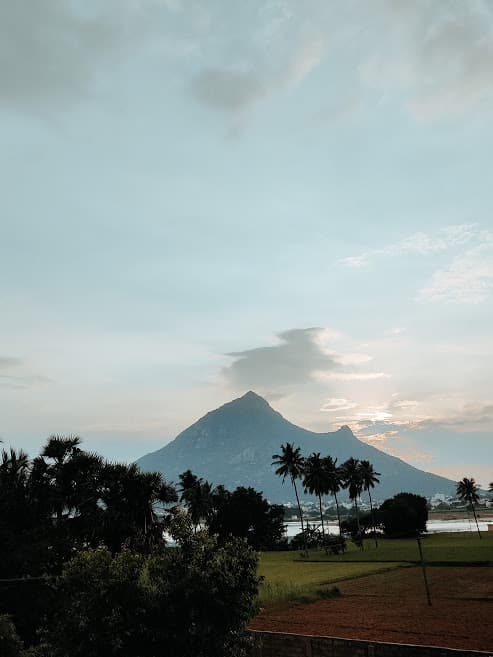
Arunachala is a sacred hill and one of the five main Shaiva holy places in South India, located in Tamil Nadu. It is revered as a manifestation of Lord Shiva and is the site of the Arunachalesvara Temple. The hill holds immense spiritual significance, particularly for devotees of Ramana Maharshi, and is a focal point for annual religious festivals and pilgrimage.