
Paektu Mountain
China and North Korea·Asia
Paektu Mountain, also known as Changbai Mountain in China, is an active stratovolcano straddling the border of China and North Korea. Revered by Korean and Manchu peoples as their ancestral homeland, it holds immense spiritual and cultural significance, featuring a caldera lake known as Heaven Lake. Its last recorded eruption was in 1903, but ongoing research monitors its potential for future activity.
Key Facts
- ›Paektu Mountain is an active stratovolcano on the China-North Korea border, reaching an elevation of 2,744 meters (9,003 ft).
- ›It features a caldera containing Heaven Lake, which is the source of the Songhua, Tumen, and Yalu rivers.
- ›The mountain's caldera was formed by a colossal eruption in 946 AD, one of the most powerful in the last 5,000 years.
- ›It is considered a national symbol in both North and South Korea, appearing in their national anthems.
- ›The Manchu people, founders of the Qing dynasty, considered it their ancestral homeland and a symbol of imperial power.
- ›The volcano last erupted in 1903 and is monitored for potential future activity, with research teams from both Koreas collaborating.
Baekdu Mountain, Baekdusan, Paektusan, Changbai Mountain, CháNgbáIshāN, Taebaeksan, BùXiáNshāN, ShàNshàNdàLǐNg, DutàIshāN, CóNgtàIshāN, TàIbáIshāN, Golmin šAnggiyan Alin, öNdöR Tsagaan Aula, BáItóUshāN
Korean Shamanism, Manchu Shamanism, Buddhism
- Ancestral Homeland For Korean and Manchu Peoples
- National Symbol of North and South Korea
- Birthplace of Dangun, Founder of Gojoseon, In Korean Mythology
- Symbol of Imperial Power For the Chinese Qing Dynasty
- Site of Resistance Against Japanese Occupation
- Considered the 'Sacred Mountain of the Revolution' In North Korea
Dangun, Hwanung, Ungnyeo, Kim Il Sung, Kim Jong Il, BukūRi YongšOn, Kangxi Emperor
About Paektu Mountain
Paektu Mountain, known in China as Changbai Mountain, is a towering active stratovolcano that forms a natural border between China and North Korea. Standing at 2,744 meters (9,003 ft), it is the highest peak in both North Korea and Northeast China, and the apex of the Baekdu-daegan and Changbai mountain ranges. The mountain is profoundly sacred to the Korean and Manchu peoples, who consider it their ancestral homeland and a place of deep spiritual significance. Its caldera cradles the breathtaking Heaven Lake, which is the genesis of several major rivers, including the Songhua, Tumen, and Yalu.
Geological History and Activity
The formation of Paektu Mountain's caldera is attributed to a monumental eruption in 946 AD, an event ranked among the most powerful volcanic eruptions globally in the last five millennia. This cataclysmic event, known as the Millennium eruption, deposited ash across vast distances, reaching as far as Greenland. The volcano has a history of activity, with subsequent smaller eruptions recorded in 1668, 1702, and most recently in 1903. Due to its expected eruption cycle of approximately once a century, ongoing research by volcanologists from both Koreas and international scientists monitors its activity, with concerns about a potential future eruption prompting significant study in the 2010s.
Cultural and Mythological Significance
Paektu Mountain is deeply woven into the cultural fabric of Northeast Asia. For Koreans, it is revered as the mythical birthplace of Dangun, the founder of the ancient Korean kingdom of Gojoseon, a narrative supported by various Korean historical kingdoms. The mountain is a potent national symbol for both North and South Korea, finding mention in their respective national anthems and the national emblem of North Korea. The Manchu people, founders of China's Qing dynasty, also hold Paektu Mountain as their ancestral homeland, with Qing emperors performing rites and drawing legitimacy from its geography and feng shui. This shared reverence underscores its role as a unifying element and a repository of collective memory and identity.
Sovereignty and Tourism
The significance of Paektu Mountain has also led to historical and contemporary territorial disputes, particularly concerning the precise demarcation of borders around Heaven Lake. Treaties between China and North Korea in the 1960s established their modern borders, granting North Korea a significant portion of the mountain and lake. Despite these agreements, interpretations of historical inscriptions and nationalistic sentiments continue to fuel claims and counter-claims, particularly from South Korean groups. The mountain is a popular tourist destination, with visitors often accessing it from the Chinese side, though the North Korean side also receives visitors. The surrounding areas are rich in flora and fauna, and historical sites related to Korean resistance movements are preserved and accessible.
Source: Wikipedia ↗
Frequently Asked Questions
What is Mount Paektu known for?
Mount Paektu is renowned for its spiritual and cultural significance to Korean and Manchu peoples, its status as an active volcano, and its majestic crater lake, Heaven Lake. It is considered an ancestral homeland by these groups and a national symbol for Korea.
What is the geological significance of Mount Paektu?
Mount Paektu is an active stratovolcano notable for a massive eruption in 946 AD, which created its caldera and Heaven Lake. This eruption was one of the most powerful in the last 5,000 years, with its ash found as far away as Greenland. The volcano is monitored for potential future eruptions, with the last occurring in 1903.
What are the different names for Mount Paektu?
In China, it is known as Changbai Mountain. Historically, it has been referred to by various names in Chinese texts, including Bùxiánshān, Shànshàndàlǐng, Dutàishān, Cóngtàishān, and Tàibáishān. The Korean name, Baekdusan or Paektusan, meaning 'white-head mountain,' first appeared in 991 AD. It has also been called Taebaeksan, meaning 'great-white mountain'.
How is Mount Paektu culturally important?
Mount Paektu is deeply ingrained in Korean mythology as the birthplace of Dangun, the founder of Gojoseon. It is a national symbol for both North and South Korea, featured in anthems and emblems. For the Manchu people, it is their ancestral homeland, and for the Qing dynasty, it symbolized imperial authority.
Are there any disputes regarding Mount Paektu's sovereignty?
Yes, there have been historical and recent territorial disputes concerning Mount Paektu and Heaven Lake. While China and North Korea have treaties outlining their borders and joint custody, some South Korean groups contest China's claims and use of the name 'Changbai Mountain,' viewing the entire mountain as Korean territory.
Related Sacred Mountains

Mount Fuji
Mount Fuji is an iconic, active stratovolcano in Japan, recognized as the country's highest peak and a significant cultural and religious site. It is revered in Shinto and Buddhist traditions, serving as a destination for pilgrimage and artistic inspiration for centuries. Its symmetrical cone, often snow-capped, makes it a prominent symbol of Japan.

Mount Shasta
Mount Shasta is a potentially active stratovolcano located in Siskiyou County, California, at the southern end of the Cascade Range. It is the second-highest peak in the Cascades and the most voluminous stratovolcano in the Cascade Volcanic Arc, known for its significant geological history and cultural importance. The mountain is a focal point for various spiritual traditions and legends, attracting both climbers and those seeking spiritual experiences.
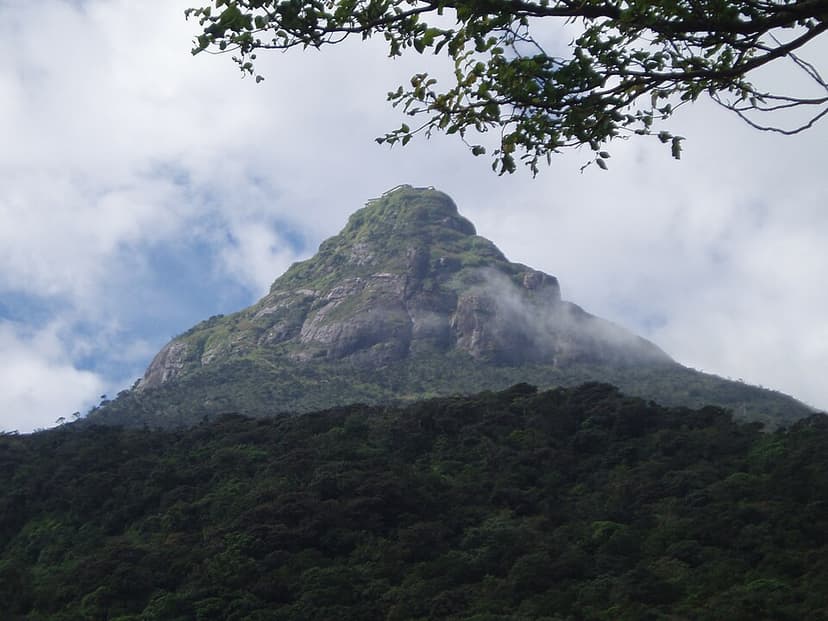
Adam's Peak
Adam's Peak, also known as Sri Pada, is a 2,243-meter-tall conical mountain in central Sri Lanka famed for a sacred footprint-shaped rock formation near its summit. This "sacred footprint" is revered by Buddhists as the Buddha's, by Hindus as Shiva's or Hanuman's, and by some Islamic and Christian traditions as Adam's or St. Thomas the Apostle's, making it a significant pilgrimage site for multiple faiths.