
Mount Bromo
Mount Bromo is an active somma volcano located in East Java, Indonesia, and is a significant Hindu pilgrimage site. Named after the Hindu god of creation, Brahma, it is a prominent feature of the Tengger mountains and a major tourist attraction within Bromo Tengger Semeru National Park. The volcano is situated in the "Sea of Sand" (Segara Wedi), a protected nature reserve.
Key Facts
- ›Mount Bromo is an active somma volcano in East Java, Indonesia.
- ›Its name derives from the Javanese pronunciation of Brahma, the Hindu god of creation.
- ›It is part of the Tengger mountains and lies within Bromo Tengger Semeru National Park.
- ›The volcano is located in the 'Sea of Sand' (Segara Wedi), a nature reserve protected since 1919.
- ›It is a significant pilgrimage site for Javanese Hindus, with offerings made into its crater.
- ›The volcano experienced notable eruptions in 2004, 2010-2011, and 2015.

Gunung Bromo
- Sacred Site For Javanese Hindus, Named After Brahma.
- Site of the Annual Yadnya Kasada Festival, Involving Offerings Into the Caldera.
- Associated With the Hindu God of Wisdom, Ganesha, Whose Idol Is At the Crater Mouth.
- the Pura Luhur Poten Temple On the 'Sea of Sand' Is Central To Tenggerese Hindu Practices.
- Making Offerings of Fruit, Rice, Vegetables, Flowers, and Livestock Into the Caldera During the Yadnya Kasada Festival.
Brahma, Ganesha
- Exclusion Zones Are Sometimes Issued With Radii of 2-3 Kilometers From the Active Crater During Periods of High Volcanic Activity.
- Access May Be Restricted Or Warned Against Depending On the Level of Volcanic Activity.
- Visitors Are Advised To Stay Clear of the Caldera Floor During Periods of High Activity.
About Mount Bromo
Mount Bromo, also known as Gunung Bromo, is an active somma volcano situated in East Java, Indonesia, and is a revered Hindu pilgrimage site. It forms part of the Tengger mountain range and is a prominent feature within the Bromo Tengger Semeru National Park. While not the highest peak in the massif, Mount Bromo is recognized for its high activity and iconic status, drawing numerous tourists and pilgrims.
Religious and Cultural Significance
The mountain's name is derived from the Javanese pronunciation of Brahma, the Hindu god of creation, underscoring its spiritual importance. At the rim of its crater, an idol of Ganesha, the Hindu god of wisdom, is present and worshipped by Javanese Hindus. The 'Sea of Sand' (Segara Wedi), a nature reserve surrounding the volcano since 1919, hosts the Pura Luhur Poten temple, which is central to the religious practices of the Tenggerese people.
Pilgrimage and Rituals
A significant cultural event is the annual Yadnya Kasada festival, held on the fourteenth day of the Hindu calendar. During this festival, Tenggerese people ascend the mountain to make offerings of fruits, rice, vegetables, flowers, and livestock by throwing them into the volcano's caldera as a tribute to the mountain gods. This tradition is rooted in a legend dating back to the 15th century.
Volcanic Activity and Access
Mount Bromo has experienced several notable eruptions, including those in 2004, 2010-2011, and 2015. These events have sometimes led to the issuance of warnings by the Indonesian Center for Volcanology and Disaster Mitigation, advising people to remain clear of the volcano and establishing exclusion zones around the crater. Depending on the volcanic activity, access to the crater and surrounding areas can be restricted, and flights may be affected by ash plumes.
Visiting Mount Bromo
Visitors typically access Mount Bromo from the nearby village of Cemoro Lawang, either by walking to the volcano or by taking an organized jeep tour. These tours often include a stop at viewpoints like Mount Penanjakan, which offers panoramic views of the Bromo caldera and surrounding landscape, including the often-mistaken Mount Batok.
Source: Wikipedia ↗
Frequently Asked Questions
What is Mount Bromo?
Mount Bromo is an active somma volcano and a significant Hindu pilgrimage site located in East Java, Indonesia. It is part of the Tengger mountains and is a popular tourist destination.
What is the significance of Mount Bromo's name?
The name 'Bromo' comes from the Javanese pronunciation of Brahma, the Hindu god of creation. This reflects the mountain's religious importance to the local Hindu population.
Where is Mount Bromo located?
Mount Bromo is situated in East Java, Indonesia, in the middle of a plain known as the 'Sea of Sand' (Segara Wedi). It is part of the Tengger mountains.
What are the pilgrimage activities at Mount Bromo?
On the fourteenth day of the Hindu festival of Yadnya Kasada, the Tenggerese people make offerings of fruits, rice, vegetables, flowers, and livestock into the volcano's caldera. These offerings are made to the mountain gods.
Has Mount Bromo erupted recently?
Mount Bromo has a history of volcanic activity, with notable eruptions occurring in 2004, during 2010-2011, and in 2015. These eruptions have sometimes led to warnings and temporary closures of the area.
What is the 'Sea of Sand'?
The 'Sea of Sand' (Segara Wedi) is a nature reserve located around Mount Bromo, characterized by its sandy plains. It has been protected since 1919 and is a notable feature of the landscape surrounding the volcano.
Related Sacred Mountains
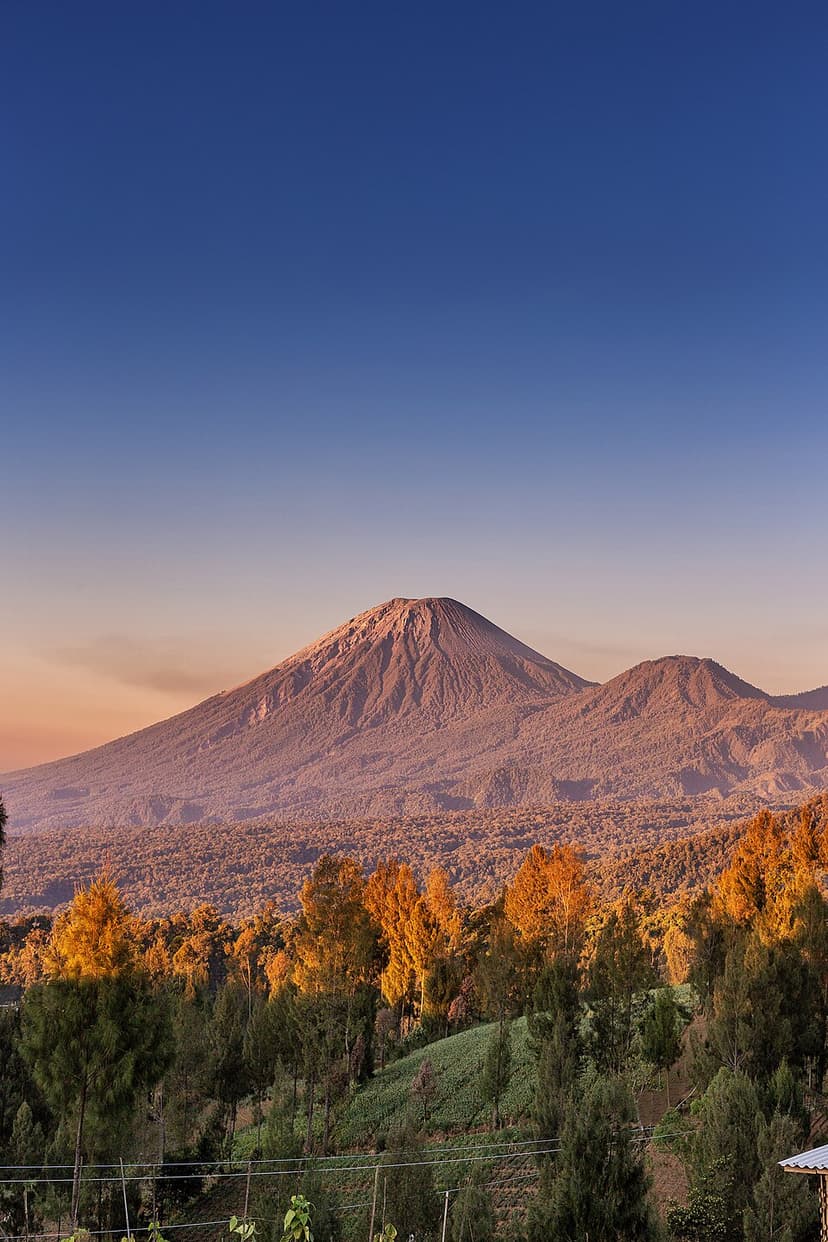
Semeru
Semeru is the highest and most active volcano on the Indonesian island of Java, standing at 3,676 meters. Derived from the Hindu concept of Meru, the world mountain, it is also known as Mahameru, meaning "The Great Mountain." Its spiritual significance is profound, with Indonesian Hindus believing it to be the abode of Shiva.

Mount Agung
Mount Agung, known locally as Gunung Agung, is Bali's highest point and an active stratovolcano. It holds deep religious significance for the Balinese people, who believe it to be a replica of Mount Meru, the axis of the universe, and is home to the island's most important temple, Pura Besakih. Its eruptions have historically had devastating impacts, but also hold spiritual meaning for the local population.

Mount Merapi
Mount Merapi, meaning "Fire Mountain" in Javanese, is an exceptionally active stratovolcano in Indonesia, located on the border of Central Java and Yogyakarta. It is one of the most active volcanoes in the country, with a history of regular eruptions since 1548, posing significant risks to the densely populated surrounding areas. Its spiritual significance is deeply intertwined with Javanese culture, where it is believed to be a dwelling place for spirits and part of a sacred axis connecting the peak to the Indian Ocean.