
Mount Athos
Mount Athos is a mountain and peninsula in northeastern Greece, a significant center of Eastern Orthodox monasticism. Governed by its monastic community, it is ecclesiastically under the Patriarch of Constantinople and is a UNESCO World Heritage Site due to its religious importance, well-preserved architecture, and natural environment. Access is restricted, particularly for women, by both Greek law and religious tradition.
Key Facts
- ›Mount Athos is located on the easternmost peninsula of Chalkidiki in northeastern Greece.
- ›It has been a center of Orthodox monasticism since at least the 9th century, with historical roots possibly as early as the 3rd or 4th century.
- ›The monastic community of Mount Athos is an autonomous region within Greece, under the direct jurisdiction of the Ecumenical Patriarch of Constantinople.
- ›The mountain itself reaches an elevation of 2,033 meters (6,670 ft) and is covered in diverse forests.
- ›Access to the monastic republic is restricted to men and requires a special permit (diamonitirion).
- ›It was inscribed as a UNESCO World Heritage Site in 1988 for its religious significance and preserved monastic heritage.

Athos, Acté, Akté, Oros Athos, Hersonisos Tou Atho, Agio Oros, Sveta Gora, Afon, Muntele Athos, Muntele Atos
Eastern Orthodox Christianity
- Center of Eastern Orthodox Monasticism
- Site of Ancient Greek Mythology
- Historical Monastic Traditions Dating Back To the Byzantine Era
- Preservation of Religious and Architectural Heritage
- Visits By Male Pilgrims Requiring A Diamonitirion Permit
- Exploration of Monasteries and Hermitages
- Participation In Religious Services
Athanasius the Athonite, Nikephoros Ii Phokas, Blessed Virgin Mary, John the Evangelist, Athos, Poseidon, Darius, Mardonius, Xerxes I, Dinocrates
- Permit Required For Entry
- Access Restricted To Male Visitors Only
- Regulated By Monastic Authorities and the Greek State
About Mount Athos
Mount Athos is a mountain and peninsula in northeastern Greece, revered as a paramount center of Eastern Orthodox monasticism. It is an autonomous monastic republic, governed by its monastic community and ecclesiastically under the direct jurisdiction of the Ecumenical Patriarch of Constantinople. The mountain itself rises to 2,033 meters (6,670 ft) and is characterized by steep, densely forested slopes.
History and Significance
Mount Athos boasts a long and profound history of Christian presence, with organized monastic life flourishing since at least the 9th century during the Byzantine era, though monks may have been present as early as the 3rd or 4th century. According to tradition, the Blessed Virgin Mary blessed the mountain, consecrating it as her garden, and from that moment, it was designated as out of bounds for women. This tradition underpins the strict gender-based access restrictions in place today.
In antiquity, the mountain was known as Athos and featured in Greek mythology as the subject of a battle between giants and gods. Historically, the peninsula was traversed by ancient armies, notably Darius and Xerxes of Persia, and was home to several cities mentioned by ancient writers. The architect Dinocrates even proposed carving the entire mountain into a statue of Alexander the Great.
Monastic Life and Heritage
The monastic community of Mount Athos expanded significantly during the Byzantine period, with key foundations like the Great Lavra monastery established by Saint Athanasius the Athonite in 963 marking a transition to organized cenobitic monasticism. Throughout centuries of Ottoman rule, the monastic republic maintained a degree of autonomy, preserving its religious institutions. Today, Mount Athos continues to be a vibrant spiritual center for Eastern Orthodox monks and is recognized globally for its cultural and religious importance.
UNESCO World Heritage Site and Access
In 1988, the monastic community of Mount Athos was inscribed on the UNESCO World Heritage List. This designation acknowledges its enduring religious significance, the exceptional preservation of its monasteries and architecture, and the integrity of its natural environment. Access to the mountain and the monastic areas is strictly controlled, requiring a special permit known as a diamonitirion, and is limited exclusively to male visitors, reflecting centuries of religious tradition and governance.
Source: Wikipedia ↗
Frequently Asked Questions
What is Mount Athos known for?
Mount Athos is renowned as a major center of Eastern Orthodox monasticism with a history stretching back over a millennium. It is also recognized for its well-preserved Byzantine architecture and its unique status as an autonomous monastic republic within Greece.
Where is Mount Athos located?
Mount Athos is situated on the Athos peninsula, the easternmost 'leg' of the Chalkidiki peninsula in northeastern Greece, directly on the Aegean Sea.
Are women allowed to visit Mount Athos?
No, by Greek law and religious tradition, women are prohibited from entering the autonomous region governed by the monastic community of Mount Athos. Access is restricted to male visitors.
What is the elevation of Mount Athos?
The peak of Mount Athos reaches an elevation of 2,033 meters (6,670 ft) above sea level. The mountain features steep, densely forested slopes.
When was Mount Athos recognized as a UNESCO World Heritage Site?
The monastic community of Mount Athos was inscribed on the UNESCO World Heritage List in 1988. This recognition is due to its long history of religious importance, well-preserved monastic architecture, and the natural environment of the peninsula.
What are the names for Mount Athos?
In ancient times, it was known as Athos. In modern Greek, it is called Oros Athos, and the designation Agio Oros, meaning 'Holy Mountain,' is also commonly used. Many Orthodox languages also translate this to 'Holy Mountain'.
Related Sacred Mountains

Mount Olympus
Mount Olympus is a massif in Greece renowned as the mythical home of the Twelve Olympian gods in ancient Greek religion. It is a prominent natural landmark with exceptional biodiversity, designated as Greece's first National Park and a World Biosphere Reserve. Recognized for its natural and cultural significance, the wider area was inscribed as a UNESCO World Heritage Site in 2026, making it a popular destination for hikers and pilgrims.
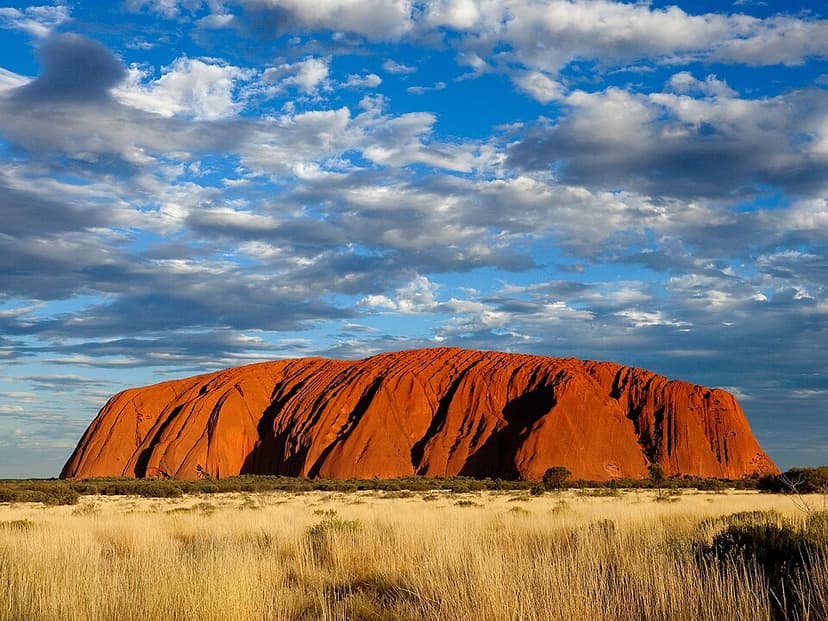
Uluru
Uluru, also known as Ayers Rock, is a massive sandstone monolith located in the southern Northern Territory of Australia. It is a deeply sacred site for the Pitjantjatjara people, the Indigenous inhabitants of the region, and is renowned for its striking colour changes at different times of day. As a UNESCO World Heritage Site, Uluru is both a significant natural landmark and a crucial Indigenous cultural site in Australia.

Mount Etna
Mount Etna is an active stratovolcano located on the east coast of Sicily, Italy. It is one of Europe's most active and tallest volcanoes, with a history stretching back over 500,000 years. Its fertile volcanic soils support significant agriculture, and its frequent eruptions have shaped its cultural and mythological landscape.