
Mount Aqraa
Syrian–Turkish Border·Asia
Mount Aqraa, historically known as Mount Sapan or Mount Hazzi, is a significant cult site in ancient Canaanite religion and continuing through classical antiquity. Located on the Syrian-Turkish border, this limestone mountain served as a mariners' landmark and a home to storm gods in various ancient mythologies, with a rich history of worship and pilgrimage.
Key Facts
- ›Anciently known as Mount Sapan and Mount Hazzi, it was considered the home of storm gods like Teshub and Baʿal.
- ›The mountain was a cult site in ancient Canaanite religion and continued through classical antiquity.
- ›Texts from the ancient port of Ugarit describe its peak as the palace of the storm god Baʿal.
- ›It appears in Hebrew Scriptures as Mount Zaphon and became a metonym for the direction 'north'.
- ›In antiquity, it was called Mount Casius and was considered the 'Mount Olympus of the near East'.
- ›The cult site is marked by a large mound of ash and debris, with archaeological investigation limited by military restrictions.
Jebel Aqra, Kel Dağı, Mount Sapan, Mount Hazzi, Mount Zaphon, Mount Casius, Kasion, Casius Mons
Canaanite Religion, Hurrian Religion, Hittite Religion, Greek Mythology, Christianity
- Ancient Mariners' Landmark
- Home of Storm Gods In Ancient Mythologies
- Divine Guarantor On Hittite Treaties
- Metonym For 'North' In Hebrew Language
- Considered the 'Mount Olympus of the Near East' By Greeks
- Site For Royal and Imperial Sacrifices and Consultations
- Sacrifices At Peak Sanctuary
- Climbing the Mountain At Night To Witness Sunrise
- Founding of Monasteries Near the Treeline
- Ascetic Practices On Pillars
Teshub, BaʿAl, ʿAnat, Zeus Kasios, Seleucus I Nicator, Trajan, Hadrian, Julian, Libanius, Barlaam, Simeon Stylites the Younger
- Military Restrictions Due To Border Location
- Site Closed Following Construction of A Turkish Military Base On the Summit In 2012
About Mount Aqraa
Mount Aqraa: A Sacred Summit of Ancient Divinity
Mount Aqraa, known in antiquity by names such as Mount Sapan, Mount Hazzi, and Mount Casius, is a prominent limestone mountain straddling the border between modern-day Syria and Turkey. Its strategic location near the mouth of the Orontes River on the Mediterranean coast made it a vital mariners' landmark. The mountain holds profound significance as an ancient cult site, central to Canaanite, Hurrian, and Hittite religions, and continuing its sacred status through classical antiquity.
Religious and Mythological Significance
In ancient belief systems, Mount Aqraa was venerated as the dwelling place of powerful storm gods. The Hurrians called it Mount Hazzi and believed it was the home of their storm god Teshub. The Hittites continued this worship, celebrating Teshub's victories and honoring the mountain as a divine guarantor in their treaties. Later, texts from the nearby ancient port of Ugarit revealed that its inhabitants considered the peak of Mount Sapan to be the celestial palace of their storm god Baʿal and his sister ʿAnat. The worship of Baʿal Zephon was widespread, with evidence found even in Egypt.
Historical and Cultural Importance
The mountain's importance extended beyond religious worship. In Hebrew Scriptures, it appears as Mount Zaphon, and its prominence at the northern end of Canaan led it to become a metonym for the direction "north." During classical antiquity, known as Mount Casius, it was considered the "Mount Olympus of the Near East." Kings and emperors, including Seleucus I Nicator, Trajan, and Hadrian, ascended its peak for divine counsel and to perform sacrifices. The last pagan emperor, Julian, is recorded to have had an epiphanic vision of Zeus Kasios upon its summit.
Legacy and Archaeological Remains
The sacred character of Mount Aqraa also attracted Christian hermits and ascetics, who established monasteries and lived contemplative lives on its slopes. Today, the ancient cult site is evidenced by a substantial mound of ash and debris. However, archaeological investigations have been significantly hampered by military restrictions due to the mountain's border location. The site was further impacted by the construction of a Turkish military base on the summit in 2012, leading to the presumed destruction of remaining archaeological remains.
Source: Wikipedia ↗
Frequently Asked Questions
What is Mount Aqraa known as in ancient times?
Mount Aqraa was known by several ancient names, including Ṣapōn in Semitic languages, Ḫazzi by the Hurrians and Hittites, and Kasion (or Casius) by the Greeks and Romans.
What was the religious significance of Mount Aqraa?
It was a major cult site for ancient Canaanite religion, considered the home of storm gods like Teshub and Baʿal. Its peak was believed to house the palace of Baʿal, and it was sometimes thought to be the home of all gods.
What evidence remains of the ancient cult site?
A large mound of ashes and debris, measuring 180 feet wide and 26 feet deep, marks the cult site. However, only a small portion has been excavated due to ongoing military restrictions.
How did Mount Aqraa influence the Hebrew language?
Due to its importance and northern position, Mount Sapan became a metonym for the direction 'north' in the Hebrew language, also appearing as Mount Zaphon in the Hebrew Scriptures.
Were there any notable historical figures associated with Mount Aqraa?
Yes, historical figures like Seleucus I Nicator sought advice from Zeus Kasios at its peak. Emperors Trajan and Hadrian also scaled the mountain, and the last pagan emperor, Julian, experienced a vision there.
Related Sacred Mountains

Mount Carmel
Mount Carmel is a coastal mountain range in northern Israel, significant for its rich history as a site of human evolution, ancient civilizations, and diverse religious traditions. Its name, likely meaning "garden-land" or "vineyard of God," reflects its lush vegetation and spiritual importance across Canaanite, Israelite, Christian, Baháʼí, and Druze faiths. The mountain is renowned for its caves, ancient altars, and association with the prophet Elijah, making it a focal point for pilgrimage and historical study.
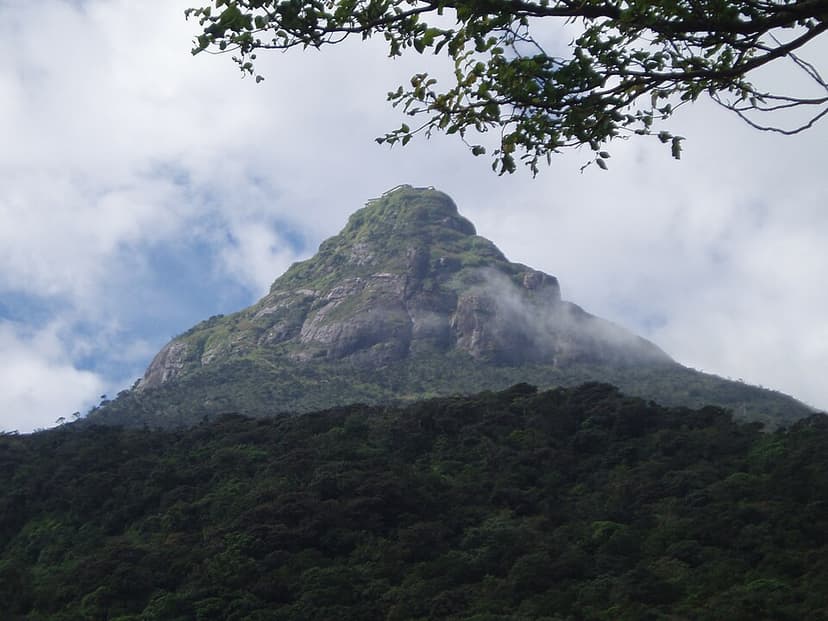
Adam's Peak
Adam's Peak, also known as Sri Pada, is a 2,243-meter-tall conical mountain in central Sri Lanka famed for a sacred footprint-shaped rock formation near its summit. This "sacred footprint" is revered by Buddhists as the Buddha's, by Hindus as Shiva's or Hanuman's, and by some Islamic and Christian traditions as Adam's or St. Thomas the Apostle's, making it a significant pilgrimage site for multiple faiths.

Mount Ararat
Mount Ararat, also known as Mount Ağrı and Masis, is a dormant compound volcano in eastern Turkey, composed of Greater Ararat and Little Ararat. It holds profound religious and cultural significance, particularly for Armenians, who consider it their principal national symbol and a sacred mountain associated with Noah's Ark. Its towering presence has inspired art, literature, and national identity for centuries.