
Jabal Thawr
Jabal Thawr is a mountain in Saudi Arabia, south of Mecca, significant for its cave, Ghār Thawr. This cave is revered in Islam as the refuge of the Islamic prophet Muhammad and his companion Abu Bakr during their migration to Medina. The mountain and its cave are visited by many pilgrims and tourists due to their religious importance.
Key Facts
- ›Jabal Thawr is located in the lower part of Mecca, Saudi Arabia.
- ›The mountain has a height of 750 meters (2,460 feet).
- ›It is famous for Ghār Thawr, a cave where Muhammad and Abu Bakr hid.
- ›The cave played a crucial role during the Hijra (migration) to Medina.
- ›The site holds religious significance for Muslims.
- ›It is a destination for pilgrims and tourists visiting Mecca.

Mount Thawr
- Site of Refuge For Prophet Muhammad and Abu Bakr During the Hijra .
- Symbol of Divine Protection and Perseverance In Islamic Tradition.
Visiting GhāR Thawr ., Reflection and Prayer.
Muhammad, Abu Bakr
About Jabal Thawr
Jabal Thawr (Arabic: جَبَل ثَوْر) is a mountain located in Saudi Arabia, specifically in the southern part of Mecca, south of the Misfalah district. The mountain rises to an elevation of 750 meters (2,460 feet).
Ghār Thawr: A Sacred Cave
The primary significance of Jabal Thawr lies in the cave it houses, known as Ghār Thawr (Arabic: غَار ثَوْر). This cave is of profound religious importance in Islam. It is believed to be the place where the Islamic prophet Muhammad and his companion Abu Bakr took refuge from the Quraysh during their pivotal migration to Medina, an event known as the Hijra.
Religious and Tourist Significance
For Muslims worldwide, Ghār Thawr is a sacred site, symbolizing divine protection and a critical moment in Islamic history. Consequently, Jabal Thawr and its cave attract numerous pilgrims and tourists who visit Mecca, seeking to connect with this historical and spiritual location. The mountain is located approximately 5 miles (8.0 kilometers) from the city of Mecca.
Source: Wikipedia ↗
Frequently Asked Questions
Where is Jabal Thawr located?
Jabal Thawr is located in Saudi Arabia, in the southern part of Mecca, south of the Misfalah district. It is situated approximately 5 miles (8.0 kilometers) away from the city center.
What is the significance of the cave in Jabal Thawr?
The mountain is known for Ghār Thawr, a cave where the Islamic prophet Muhammad and his companion Abu Bakr took refuge from the Quraysh during their migration to Medina. This event is of great religious significance in Islam.
What is the elevation of Jabal Thawr?
Jabal Thawr has a height of 750 meters (2,460 feet) above sea level.
Who visited the cave in Jabal Thawr?
The cave in Jabal Thawr is believed to have been a refuge for the Islamic prophet Muhammad and his companion Abu Bakr. They stayed there during their migration from Mecca to Medina.
Is Jabal Thawr a popular tourist destination?
Yes, due to its religious significance in Islam, Jabal Thawr and its cave are visited by many pilgrims and tourists who come to Mecca.
Related Sacred Mountains

Jabal al-Nour
Jabal al-Nour, meaning "Mountain of the Light," is a mountain near Mecca, Saudi Arabia, renowned for housing the Cave of Hira. This cave is of immense significance to Muslims as it is where the Islamic prophet Muhammad received his first revelation of the Quran from the angel Jibra'il. It is a popular pilgrimage site and tourist attraction for those visiting Mecca.
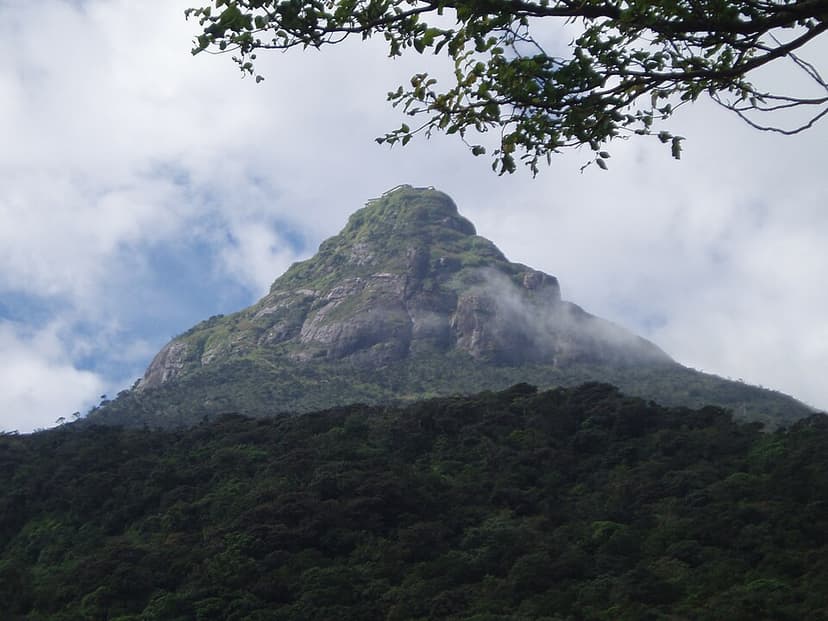
Adam's Peak
Adam's Peak, also known as Sri Pada, is a 2,243-meter-tall conical mountain in central Sri Lanka famed for a sacred footprint-shaped rock formation near its summit. This "sacred footprint" is revered by Buddhists as the Buddha's, by Hindus as Shiva's or Hanuman's, and by some Islamic and Christian traditions as Adam's or St. Thomas the Apostle's, making it a significant pilgrimage site for multiple faiths.

Mount Carmel
Mount Carmel is a coastal mountain range in northern Israel, significant for its rich history as a site of human evolution, ancient civilizations, and diverse religious traditions. Its name, likely meaning "garden-land" or "vineyard of God," reflects its lush vegetation and spiritual importance across Canaanite, Israelite, Christian, Baháʼí, and Druze faiths. The mountain is renowned for its caves, ancient altars, and association with the prophet Elijah, making it a focal point for pilgrimage and historical study.