
Jabal al-Nour
Jabal al-Nour, meaning "Mountain of the Light," is a mountain near Mecca, Saudi Arabia, renowned for housing the Cave of Hira. This cave is of immense significance to Muslims as it is where the Islamic prophet Muhammad received his first revelation of the Quran from the angel Jibra'il. It is a popular pilgrimage site and tourist attraction for those visiting Mecca.
Key Facts
- ›Located near Mecca in the Hejaz region of Saudi Arabia.
- ›Contains the Cave of Hira, where Muhammad received his first Quranic revelation.
- ›The mountain is composed of Precambrian aged intrusive igneous rocks, primarily hornblende tonalite.
- ›The ascent to the cave involves approximately 1750 steps and can take between half an hour and three hours.
- ›The Cave of Hira is approximately 3.7 meters long and 1.60 meters wide, located at a height of 270 meters.
- ›It is a popular destination for pilgrims and tourists, especially during Hajj.

Mountain of the Light, Hill of the Illumination, Jabal An-NūR, Ghar-I-Hira
- Site of the First Revelation of the Quran To Prophet Muhammad.
- Associated With the Angel Jibra'Il .
- Central To the Prophetic Biography .
- Climbing To the Cave of Hira
- Meditation and Seeking Solitude
- Visiting For Personal Pleasure and Spirituality
Muhammad, Jibra'Il
About Jabal al-Nour
Jabal al-Nour, which translates to "Mountain of the Light" or "Hill of the Illumination," is a significant mountain located near Mecca in the Hejaz region of Saudi Arabia. Its profound importance stems from the presence of the Cave of Hira (Ghar-i-Hira) on its slopes, a sacred site where Muslims believe the Islamic prophet Muhammad received his first divine revelation of the Quran from the angel Jibra'il. This event, believed to have occurred around August of 610 A.D. on Laylat al-Qadr, marks the commencement of Muhammad's prophethood and the foundation of Islamic scripture.
Geology and Appearance
The mountain itself is composed of intrusive igneous rocks, predominantly Precambrian-aged coarse-grained hornblende tonalite, with some granodiorite. Physically, Jabal al-Nour is distinguished by an unusual summit that gives it the appearance of two mountains stacked atop one another. The Cave of Hira, accessible via a strenuous climb, is a modest-sized grotto measuring approximately 3.7 meters in length and 1.60 meters in width, located at an altitude of 270 meters. The ascent to the cave involves around 1750 steps, with the journey taking between half an hour and three hours.
Spiritual Significance and Pilgrimage
Before Islam, the Cave of Hira held minor significance. However, its role transformed dramatically with the advent of Islamic revelations. Prophet Muhammad sought solitude and meditation in the cave for one month annually, engaging in a practice known as Tahannuth, taking provisions and feeding the poor who visited him. While not considered as holy as sites like the Al-Haram Mosque in Mecca, the Cave of Hira is a popular destination for pilgrims and tourists, particularly during the Hajj season, with thousands visiting daily to witness the place of the first revelation. Visiting the cave is often undertaken for personal spiritual fulfillment, though its sanctity is interpreted differently among various Islamic schools of thought.
Source: Wikipedia ↗
Frequently Asked Questions
What is the significance of Jabal al-Nour?
Jabal al-Nour is significant because it houses the Cave of Hira, which is believed to be the location where the Islamic prophet Muhammad received his first revelation of the Quran from the angel Jibra'il. This event marks a pivotal moment in Islamic history.
How tall is Jabal al-Nour and how long does it take to climb?
Jabal al-Nour is approximately 640 meters (2,100 ft) tall. The climb to the Cave of Hira involves about 1750 steps and can take anywhere from half an hour to three hours, depending on the climber's pace.
What is the Cave of Hira like?
The Cave of Hira is a grotto measuring about 3.7 meters in length and 1.60 meters in width. It is situated at an elevation of 270 meters on the mountain. The cave itself is described as being without water or vegetation, apart from a few thorns.
When is the first revelation said to have occurred?
The first revelation of the Quran to Muhammad in the Cave of Hira is said to have occurred on Laylat al-Qadr, one of the last ten nights of Ramadan, estimated to be around August of 610 A.D. This experience is sometimes identified with the beginning of revelation.
Is visiting the Cave of Hira a required part of the Hajj pilgrimage?
While many visitors climb to the Cave of Hira during Hajj for personal pleasure and spirituality, it is not considered an integral part of the Hajj pilgrimage by most Muslims. The reward for praying there is generally the same as in any other place in Mecca.
Related Sacred Mountains

Jabal Thawr
Jabal Thawr is a mountain in Saudi Arabia, south of Mecca, significant for its cave, Ghār Thawr. This cave is revered in Islam as the refuge of the Islamic prophet Muhammad and his companion Abu Bakr during their migration to Medina. The mountain and its cave are visited by many pilgrims and tourists due to their religious importance.
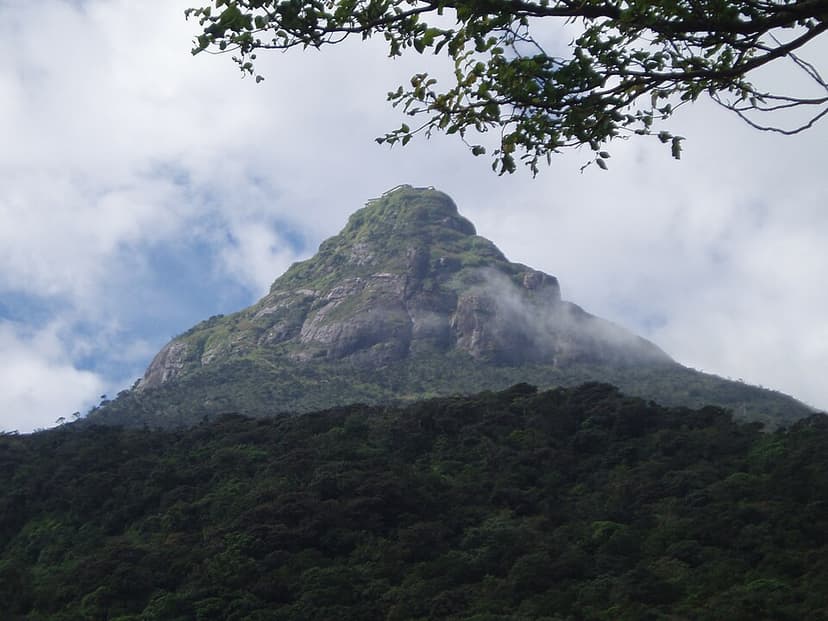
Adam's Peak
Adam's Peak, also known as Sri Pada, is a 2,243-meter-tall conical mountain in central Sri Lanka famed for a sacred footprint-shaped rock formation near its summit. This "sacred footprint" is revered by Buddhists as the Buddha's, by Hindus as Shiva's or Hanuman's, and by some Islamic and Christian traditions as Adam's or St. Thomas the Apostle's, making it a significant pilgrimage site for multiple faiths.

Mount Carmel
Mount Carmel is a coastal mountain range in northern Israel, significant for its rich history as a site of human evolution, ancient civilizations, and diverse religious traditions. Its name, likely meaning "garden-land" or "vineyard of God," reflects its lush vegetation and spiritual importance across Canaanite, Israelite, Christian, Baháʼí, and Druze faiths. The mountain is renowned for its caves, ancient altars, and association with the prophet Elijah, making it a focal point for pilgrimage and historical study.