
Dakpa Sheri
Tibet·Asia
Dakpa Sheri, also known as Tsari, is a sacred mountain in Tibet's Shannan Prefecture, revered by Tibetan Buddhists as a pilgrimage site comparable to Mount Kailash. Its circumambulation is believed to confer significant spiritual merit, with annual and twelve-yearly pilgrimage routes drawing devotees. The mountain's name translates to "Pure Crystal Mountain" and it is considered an abode for deities.
Key Facts
- ›Dakpa Sheri is a sacred néri (abode-mountain) in Tibetan Buddhism, considered as significant as Mount Kailash.
- ›The mountain is located in the Tsari region of Lhöntse County, Tibet's Shannan Prefecture.
- ›Two main pilgrimage routes exist: the annual Tsari Ningkor and the twelve-yearly Tsari Ringkor.
- ›The Tsari Ringkor, a longer pilgrimage, historically involved a journey through tribal territories in the Assam Himalaya.
- ›Pilgrimages have been suspended since 1956 due to border tensions between China and India.
- ›The name "Tsari" can refer to both the mountain and the surrounding geographical region.
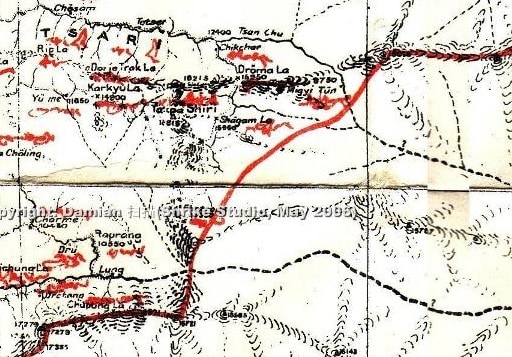
Tsari, Takpa Siri, Dá Guā Xī Rè
Tibetan Buddhism
- Sacred Pilgrimage Site For Tibetan Buddhists.
- Considered An Abode For Deities .
- Circumambulation Believed To Confer Significant Spiritual Merit.
- Associated With the Longer Twelve-Yearly Rongkor Chenmo Pilgrimage.
- Annual Tsari Ningkor Circumambulation Over 3 Days.
- Twelve-Yearly Tsari Ringkor Pilgrimage.
- Pilgrimage Sometimes Includes Visits To Tso Karpo Or Tsari Sarpa.
- Pilgrimages Have Been Suspended Since 1956 Due To Border Tensions Between China and India.
About Dakpa Sheri
Dakpa Sheri: The Pure Crystal Mountain
Dakpa Sheri, also known by its Tibetan name Tsari, is a sacred mountain located in the Tsari region of Lhöntse County, within Tibet's Shannan Prefecture. Revered by Tibetan Buddhists, it is classified as a "néri," meaning an "abode-mountain" for deities. The spiritual significance of Dakpa Sheri is considered so profound that its circumambulation is believed to bestow as much merit as completing the pilgrimage around Mount Kailash.
Pilgrimage Traditions
The mountain is the focus of two significant pilgrimage traditions. The Tsari Ningkor is an annual pilgrimage where devotees circle the mountain over approximately three days, navigating seven steep mountain passes. A more elaborate and less frequent pilgrimage is the Tsari Ringkor, also known as the Rongkor Chenmo, which takes place once every twelve years. This longer route historically extended into the tribal territories of the Assam Himalaya, descending to the confluence of the Chayul Chu and Subansiri rivers before returning to the starting point at Chösam. These pilgrimages were historically facilitated by arrangements made by Tibetan officials and involved significant numbers of pilgrims.
Geographical Context and Historical Significance
Geographically, Dakpa Sheri is situated on the water-parting line of the Yume Chu and Pindigo rivers, which are tributaries of the Subansiri River. These rivers lie near the disputed China-India Line of Actual Control, with the Yume Chu on the Chinese side and the Pindigo on the Indian side. The name "Tsari" itself is derived from Tibetan, with "tsa" being a consonant and "ri" meaning "mountain." Various interpretations of "Tsari" exist, including "Psychic Energy Channel Mountain" and "Foundation Mountain."
Since 1956, following border tensions between China and India, the pilgrimage routes to Dakpa Sheri have been suspended. This interruption has impacted the traditional twelve-yearly Ringkor pilgrimage. Historically, before Tibet's annexation by China, towns like Migyitun played a central role in organizing the larger pilgrimage, and the Tibetan government would offer gifts to local tribes to ensure safe passage for pilgrims through their territories.
Source: Wikipedia ↗
Frequently Asked Questions
What is Dakpa Sheri and why is it considered sacred?
Dakpa Sheri, also known as Tsari, is a sacred mountain in Tibet. It is considered a néri, an abode for deities, and Tibetan Buddhists believe its circumambulation yields merit comparable to that of Mount Kailash.
What are the pilgrimage traditions associated with Dakpa Sheri?
There are two main pilgrimage traditions: the annual Tsari Ningkor, which circles the mountain over three days, and the Tsari Ringkor, a more extensive pilgrimage held every twelve years that historically extended into the Assam Himalaya.
When was the last major pilgrimage to Dakpa Sheri?
The last Tsari Ringkor pilgrimage took place in 1956. Subsequent pilgrimages have been halted due to border tensions between China and India.
What does the name Dakpa Sheri mean?
Dakpa Sheri is translated as 'Pure Crystal Mountain'. The name 'Tsari' itself is derived from Tibetan, where 'tsa' is a consonant and 'ri' means 'mountain'.
Where is Dakpa Sheri located geographically?
Dakpa Sheri is situated in the Tsari region of Lhöntse County, Tibet's Shannan Prefecture. Geographically, it lies on the water-parting line of the Yume Chu and Pindigo rivers, near the China-India Line of Actual Control.
Related Sacred Mountains
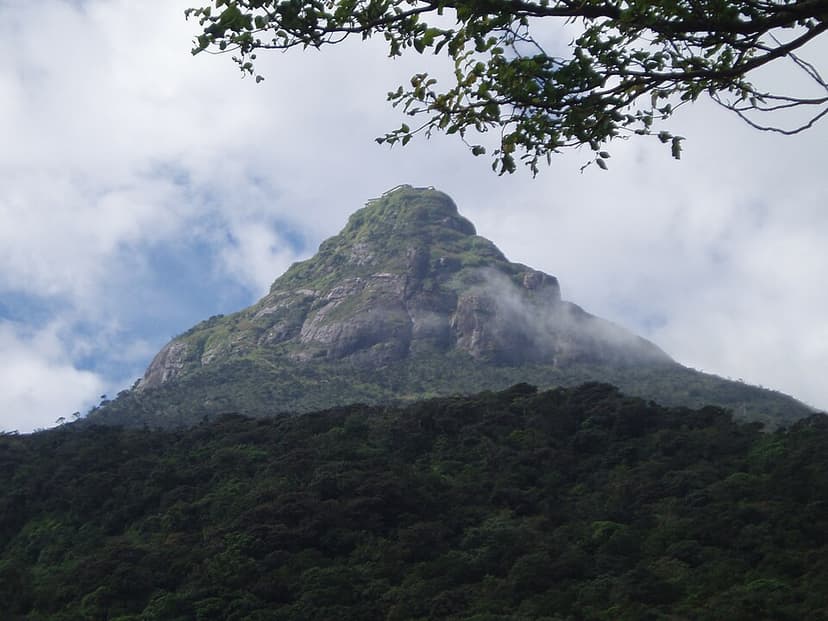
Adam's Peak
Adam's Peak, also known as Sri Pada, is a 2,243-meter-tall conical mountain in central Sri Lanka famed for a sacred footprint-shaped rock formation near its summit. This "sacred footprint" is revered by Buddhists as the Buddha's, by Hindus as Shiva's or Hanuman's, and by some Islamic and Christian traditions as Adam's or St. Thomas the Apostle's, making it a significant pilgrimage site for multiple faiths.
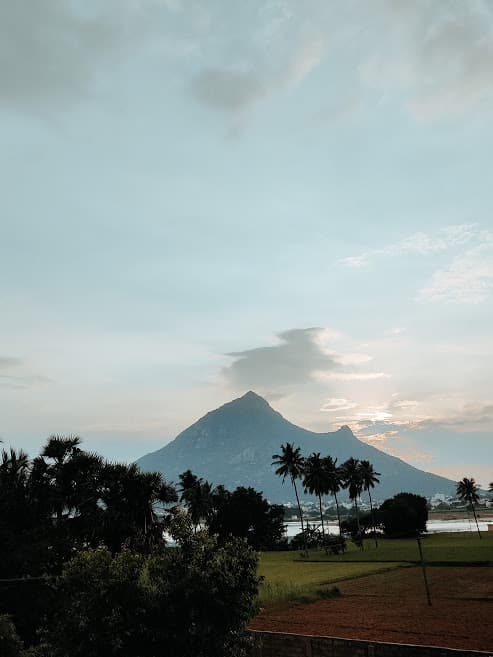
Arunachala
Arunachala is a sacred hill and one of the five main Shaiva holy places in South India, located in Tamil Nadu. It is revered as a manifestation of Lord Shiva and is the site of the Arunachalesvara Temple. The hill holds immense spiritual significance, particularly for devotees of Ramana Maharshi, and is a focal point for annual religious festivals and pilgrimage.

Ba Vì mountain range
The Ba Vì mountain range, also known as Tản Viên Sơn, is a significant soil-limestone mountain range in northern Vietnam, revered in Vietnamese folk religion as "the lord of mountains". While not the highest in the country, its most famous peak, Tản Viên Peak, is central to the mythology of the mountain god Tản Viên Sơn Thánh. The range is also a protected area, Ba Vì National Park, known for its primary forests and biodiversity.