
Vårfruberga Abbey
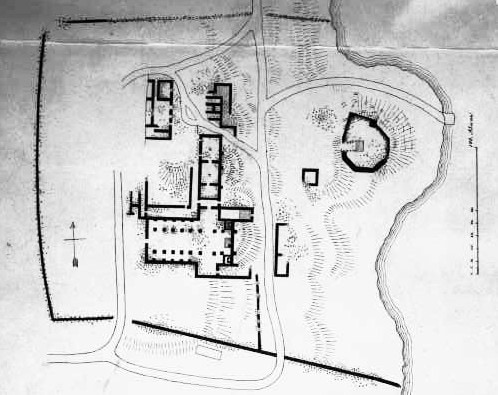
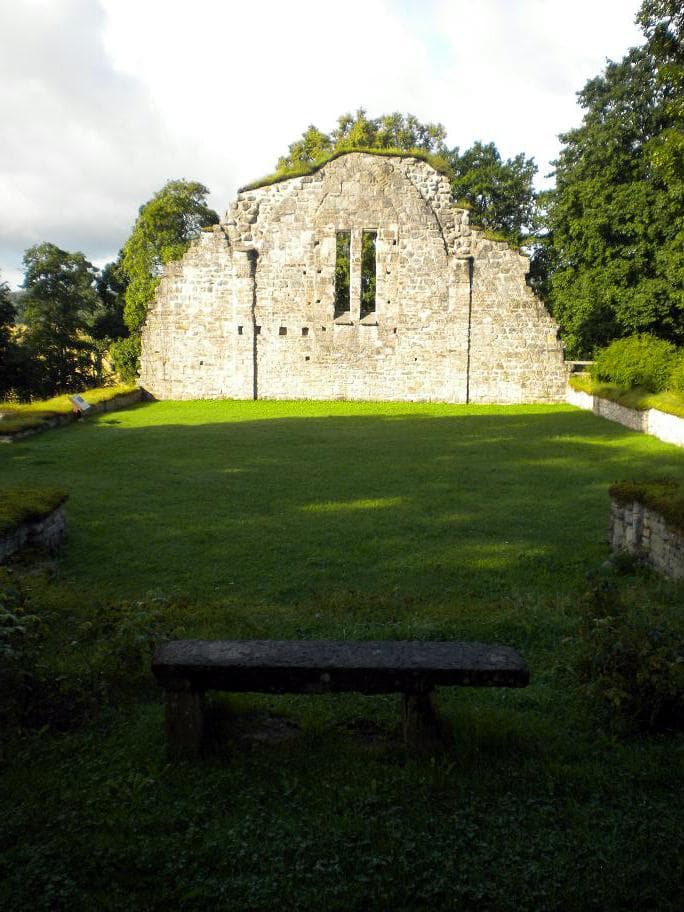
Vårfruberga Abbey, originally known as Fogdö Abbey, was a Cistercian nunnery established in the 12th century. It underwent several relocations before settling at Kungsberg in 1289, where it was renamed Vårfruberga and formally accepted into the Cistercian order. The abbey flourished until 1527 when it was dissolved by King Gustav Vasa, and its buildings were demolished to supply stone for Gripsholm Castle, though parts of the walls still survive.
Key Facts
- ›Founded as a Benedictine house in the 12th century, later becoming Cistercian.
- ›Relocated multiple times, with a significant move to Kungsberg in 1289.
- ›Renamed Vårfruberga ('Mountain of our Lady') upon its move to Kungsberg.
- ›Dissolved in 1527 by King Gustav Vasa during the Reduction period.
- ›Monastery buildings were dismantled for stone to construct Gripsholm Castle.
- ›Parts of the original monastery walls are still extant.
Cistercian
Nun's Window, Remnants of Original Walls
Fogdö Abbey
Birger Jarl, Valdemar, Gustav I of Sweden
Dissolution of the Abbey In 1527
About Vårfruberga Abbey
Vårfruberga Abbey, formerly known as Fogdö Abbey, was a significant Cistercian nunnery in Sweden with a history stretching back to the 12th century. Originally established as a Benedictine house, its exact early location is obscure, but by 1233, the nuns had moved to what is now Fogdö church. This site served as both a parish and monastic church, evidenced by a "nun's window" and modifications to accommodate the nuns' choral liturgy, with influences from Cistercian architectural styles.
In 1289, the community relocated to Kungsberg, approximately 3 kilometers east of Fogdö, where a more substantial monastic complex was constructed in accordance with Cistercian principles. At this time, the abbey was renamed Vårfruberga, meaning 'Mountain of Our Lady,' and was formally incorporated as a daughter house of Julita Abbey within the Cistercian order. The abbey church was designed in a Latin cross plan with three aisles and a nave divided to separate the nuns from the laity.
The abbey's existence concluded in 1527 during the Swedish Reduction under King Gustav Vasa. The king ordered the dissolution of the abbey and appropriated its properties. The monastery buildings were subsequently demolished, with their stone materials being used in the construction of Gripsholm Castle. Despite the demolition, portions of the original abbey walls continue to survive, attesting to its historical presence.
Source: Wikipedia ↗
Frequently Asked Questions
When was Vårfruberga Abbey founded?
The origins of the monastery trace back to the 12th century as a house of Benedictine nuns. It later transitioned to Cistercian practices.
Where was Vårfruberga Abbey located?
The abbey was situated on the Fogdö peninsula in Lake Mälaren, north-west of Strängnäs, in Södermanland, Sweden. Its final location was at Kungsberg.
What happened to Vårfruberga Abbey?
The abbey was dissolved in 1527 by King Gustav I of Sweden. The monastery buildings were subsequently demolished and their stone used for the construction of Gripsholm Castle.
Is Vårfruberga Abbey still active?
No, Vårfruberga Abbey is no longer an active monastic community. It was dissolved in the 16th century.
What is known about the architecture of Vårfruberga Abbey?
The church was designed in the shape of a Latin cross with three aisles and a short transept. A wall divided the nave to separate the nuns from the lay congregation. Services of a builder trained in the Cistercian style were utilized for its construction.
Related Monasteries

Alvastra Abbey
Alvastra Abbey was a significant Cistercian monastery established in 1143 by French monks from Clairvaux Abbey, on land donated by King Sverker I of Sweden. For nearly four centuries, it flourished and even established another monastery at Varnhem. The abbey was dissolved during the Protestant Reformation and is now known as a ruin, notable for containing the graves of several Swedish monarchs and queens.
Riseberga Abbey
Riseberga Abbey was a Cistercian nunnery in Sweden that operated from around 1180 until 1534. It was a significant landowner and held the right to appoint vicars for the local parish. Though the convent was dissolved and its buildings later burnt down, the ruins remain, and its amphitheater is now used as a sylvan theater. The abbey is also associated with the legend of Fair Elisif.

Roma Abbey
Roma Abbey is a ruined Cistercian abbey and a crown estate located on the Swedish island of Gotland. Founded in 1164, it grew to become an important religious and landholding institution before its lands were confiscated by the Danish Crown during the Reformation. The estate, now owned by the National Property Board of Sweden, includes a manor house built in 1733 and is notable for its unique manorial cultural landscape and the summer theatre performances held among the ruins.