
Tournay Abbey
Tournay Abbey is an active Benedictine monastery located in Tournay, Hautes-Pyrénées, France. Originally a priory established in the 11th century, it was elevated to an abbey in the 17th century before being suppressed during the French Revolution. A new monastic community was re-established in the 1930s and eventually settled at the current site in Tournay in 1952, with construction of the modern monastery completed in 1958.
Key Facts
- ›Founded as a priory in the 11th century.
- ›Became an abbey in the 17th century.
- ›Suppressed during the French Revolution.
- ›Re-established and transferred to Tournay in 1952.
- ›Houses an active community of approximately 20 monks.
- ›Modern monastery buildings completed in 1958.

Abbaye Notre-Dame De Tournay
Suppressed During the French Revolution
About Tournay Abbey
Tournay Abbey, known in French as Abbaye Notre-Dame de Tournay, is an active Benedictine monastery located in Tournay, in the Hautes-Pyrénées department of France. Its history traces back to the 11th century when a priory was first established on the site.
Historical Development
The priory at Tournay eventually gained abbey status in the 17th century. However, this monastic establishment was suppressed during the tumultuous period of the French Revolution. The continuity of monastic life at Tournay was re-established in the 20th century. A new abbey was founded in the 1930s, and after a period of relocation, it was transferred to Tournay in 1952. The construction of the modern monastic buildings commenced that year and was completed in 1958.
Current Status
Today, Tournay Abbey remains an active Benedictine community, housing approximately 20 monks. It continues its religious observance and monastic traditions in its current location.
Source: Wikipedia ↗
Frequently Asked Questions
When was Tournay Abbey founded?
A priory was first established on the site in the 11th century. It was later elevated to an abbey in the 17th century before its suppression during the French Revolution.
Is Tournay Abbey still active today?
Yes, Tournay Abbey is an active Benedictine monastery. It currently houses a community of approximately 20 monks.
Where is Tournay Abbey located?
Tournay Abbey is situated in Tournay, in the Hautes-Pyrénées department of France.
What happened to the original Tournay Abbey?
The original priory, established in the 11th century and later an abbey, was suppressed during the French Revolution. A new abbey was founded in the 1930s and eventually moved to the present site in Tournay.
When was the current monastery at Tournay built?
A new abbey was founded in the 1930s and transferred to Tournay in 1952, the year after construction of the new monastery began. The building was completed in 1958.
Related Monasteries

Fontgombault Abbey
Fontgombault Abbey is a Benedictine monastery located in Fontgombault, France, known for its Romanesque architecture and its rich history spanning nearly a millennium. Founded in 1091, it has experienced periods of growth, destruction, dissolution, and refounding, most recently in 1948 by monks from Solesmes Abbey. Today, it is a thriving community within the Solesmes Congregation, dedicated to Gregorian chant and the traditional Latin Mass.
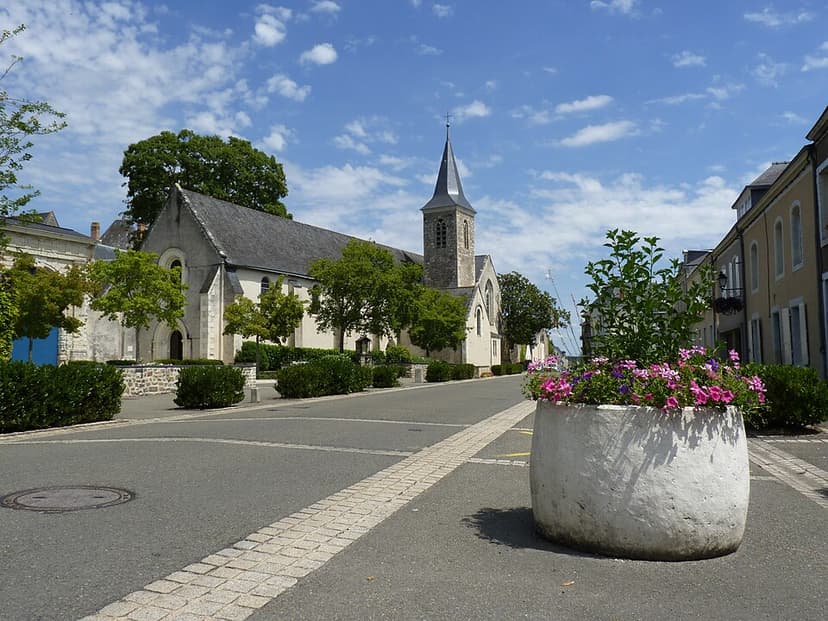
Solesmes
Solesmes is a commune in northwestern France, primarily known as the location of the Benedictine Abbey of Saint Peter. Founded in 1010, the abbey was suppressed during the French Revolution but re-established in 1833 by Dom Prosper Guéranger. A second Benedictine abbey for women, Saint Cecilia's, is also situated in Solesmes.

Bec Abbey
Bec Abbey, formally the Abbey of Our Lady of Bec, was a highly influential Benedictine monastic foundation in Normandy, France. Founded in 1034 by Saint Herluin, it became a major center of intellectual life in the 11th century, particularly under Abbots Lanfranc and Anselm, who both later became Archbishops of Canterbury. Although damaged during the Wars of Religion and largely ruined by the French Revolution, the site was re-established in 1948 and is known today for its pottery and ecumenical links.