
Toul
Christianity·France·Active commune and sub-prefecture·4th century
Toul is a historic commune and sub-prefecture in northeastern France, strategically located between Commercy and Nancy, and bisected by the Moselle River and the Canal de la Marne au Rhin. Originally the capital of the Gaulish tribe of the Leuci, known to the Romans as Tullum Leucorum, Toul has a long history as a fortified town, a free imperial city, and a seat of bishops. Its most prominent surviving features are the impressive stone ramparts designed by Sébastien Le Prestre de Vauban, which encircle the old town.
Key Facts
- ›Known to the Romans as Tullum Leucorum, it was the capital of the Gaulish tribe of the Leuci.
- ›Became a Free Imperial City during the High Middle Ages and was annexed to France in 1552.
- ›The diocese of Toul, seat of the bishops of Toul, existed from approximately 365 until 1807.
- ›Its stone ramparts were significantly redesigned by military engineer Sébastien Le Prestre de Vauban in the late 17th century.
- ›Served as a primary base for the Air Service, United States Army during World War I, influencing the naming of the 'Toul Sector'.
- ›The surrounding countryside is a wine-growing region known for the AOC Côtes de Toul vintage, particularly Gris de Toul.
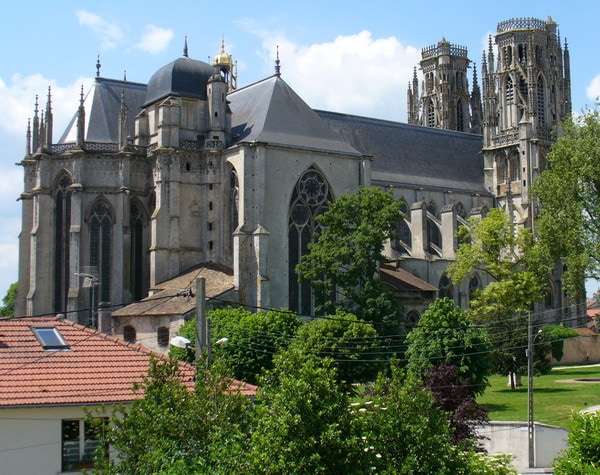
Gothic, Vauban Fortifications
- Stone Ramparts Designed By Vauban
- Gothic Cathedral
- Chapel of the Knights Templar Commandery of Libdeau
- Wine Cellars of A Former Monastery
- River Moselle
- Canal De La Marne Au Rhin
Tullum Leucorum
Saint Gerard of Toul, SéBastien Le Prestre De Vauban, Hobey Baker, Marcel Bigeard, Laurent Gouvion Saint-Cyr
- Synod of Toul Convened By King Theudebald
- Battle Near Toul Between King Theudebert Ii and King Theuderic Ii
- Became Part of East Francia By the Treaty of Meerssen
- Annexed To France By King Henry Ii
- Siege of Toul
- Base For Us Army Air Service During World War I
- Use of Toul-Croix De Metz Airfield By American 358th Fighter Group
- Toul-RosièRes Air Base As An American Nato Air Base
About Toul
Toul is a commune and sub-prefecture in the Meurthe-et-Moselle department of northeastern France. Historically, it was known to the Romans as Tullum Leucorum and served as the capital of the Gaulish tribe of the Leuci. Its strategic location between Commercy and Nancy, alongside the Moselle River and the Canal de la Marne au Rhin, has shaped its history as a fortified town and a significant administrative and religious center.
History and Significance
The history of Toul stretches back to ancient times, with Roman presence and its role as a tribal capital. In the medieval period, it evolved into a Free Imperial City within the Holy Roman Empire before its annexation to France in 1552. The city was the seat of the bishops of Toul, with a diocese founded around 365 that existed until 1807.
A defining characteristic of Toul is its impressive stone ramparts, significantly enhanced by Sébastien Le Prestre de Vauban, Louis XIV's renowned military engineer, in the late 17th century. These fortifications, following Vauban's characteristic defensive designs, encircle the old town and stand as a testament to its strategic importance.
Toul also played a notable role in modern military history. During World War I, it served as a critical base for the Air Service, United States Army, leading to the designation of the 'Toul Sector' and acting as a launch point for significant offensives. In the mid-20th century, Toul-Rosières Air Base was an American NATO facility.
Sights and Economy
Beyond its fortifications, Toul's old town features architecture reflecting its past glories, including a major Gothic cathedral undergoing restoration. Vestiges of its past, such as ornamental stonework on houses built as canonical residences, are visible. Notably, while no monastery structure remains visible, its wine cellars are still present beneath shops on Rue Gambetta.
The surrounding region is recognized for its viticulture, producing the AOC Côtes de Toul vintage, with Gris de Toul being a particularly esteemed variety. The Moselle River and the Canal de la Marne au Rhin continue to be navigated, historically for commercial transport of goods like steel, and now also for pleasure craft.
Source: Wikipedia ↗
Frequently Asked Questions
What was Toul known as in Roman times?
During Roman times, Toul was known as Tullum Leucorum. It served as the capital of the Gaulish tribe of the Leuci.
When did Toul become part of France?
Toul was annexed to France by King Henry II in 1552. This annexation was later recognized by the Holy Roman Empire in the Peace of Westphalia of 1648.
What is significant about Toul's ramparts?
The impressive stone ramparts of Toul are a significant feature, largely designed by Louis XIV's military engineer Sébastien Le Prestre de Vauban. Construction of his enclosure began in 1699-1700. While not a UNESCO World Heritage Site themselves, they follow Vauban's renowned fortification patterns and encircle the old town.
What role did Toul play in World War I?
During World War I, Toul was the primary base for the Air Service, United States Army. The Americans referred to the area as the Toul Sector, and two major offensives, the St. Mihiel Offensive and the Meuse-Argonne Offensive, were launched from this region.
Is there a monastery in Toul?
While there is no trace of a monastery itself, its wine cellars still exist beneath the shops on the north side of Rue Gambetta. Access is reportedly possible via the Camera Shop.
What is special about the wines from the Toul region?
The countryside around Toul is a wine-growing region that produces the AOC Côtes de Toul vintage. The Gris de Toul is particularly notable among these wines.
Related Monasteries

Abbey of Saint-Sernin
The Abbey of Saint-Sernin, located in Toulouse, France, is a former abbey church noted for its significance as a pilgrimage site and its exceptional Romanesque sculpture. Originally built on the site of a 4th-century basilica containing the relics of Saint Saturnin, the current structure evolved over centuries, with major construction phases in the 11th and 12th centuries. Its architectural plan, featuring an ambulatory and radiating chapels, became influential, and it was recognized as a UNESCO World Heritage Site in 1998 as part of the Routes of Santiago de Compostela in France.

Douai
Douai is a city in northern France with a history tracing back to a 4th-century Roman fortress. It rose to prominence as a textile market center during the Middle Ages and later became a significant cultural and religious hub, particularly for English Catholics seeking education during times of persecution. The city is renowned for its impressive Gothic belfry, a UNESCO World Heritage site, and its historic role as a seat of learning.

Évreux
Évreux is a historic French commune and the capital of the Eure department in Normandy. Originally known as Mediolanum Aulercorum in late Antiquity, the town's history is marked by its role as a regional center, the seat of counts, and a significant site for both Catholic and Jewish scholarship. Heavily damaged in World War II, much of its center has since been rebuilt, retaining significant medieval architectural elements, particularly in its cathedral and the former abbey church of Saint-Taurin.