
Tonbridge Priory
Christian·England·Ruins (demolished)·12th century
Tonbridge Priory was an Augustinian priory in Tonbridge, Kent, England, established in 1124 by Richard Fitz Gilbert de Clare. The priory suffered a significant fire in 1337, necessitating its rebuilding, and was ultimately disestablished in 1523. Although the building remained intact until at least 1735, it was a ruin by 1780 and its remains were demolished in 1842 to make way for a railway line.
Key Facts
- ›Established in 1124 by Richard Fitz Gilbert de Clare.
- ›Dedicated to St. Mary Magdalene.
- ›Destroyed by fire in 1337 and subsequently rebuilt.
- ›Disestablished in 1523 and dissolved on February 8, 1525.
- ›The site was later occupied by the original Tonbridge station.
- ›Remains were demolished in 1842 for railway construction.
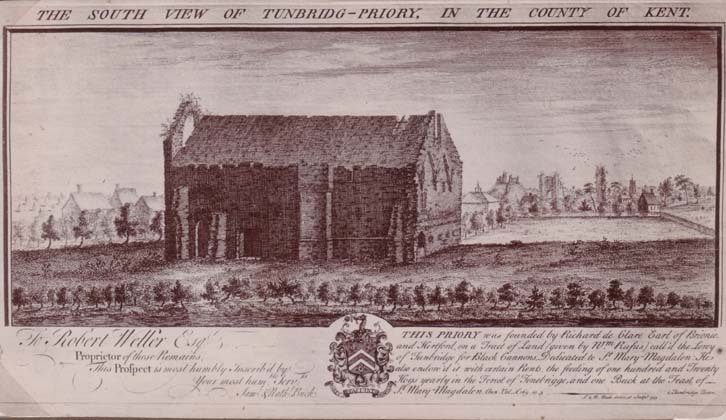
Chapter House, Church, Dormitory, Library, Refectory, Vestry
Richard Fitz Gilbert De Clare, Pope Celestine Iii, King Richard Ii, King Edward I, Bishop of Rochester, Archbishop of Canterbury, Margaret De Clare, Hugh De Audley, Margaret De Audley, Ralph De Stafford, King Edward Iii, Cardinal Wolsey, Andrew Judde, William Stafford, 4th Earl of Stafford
- Established In 1124.
- Richard Fitz Gilbert De Clare Buried In 1136.
- Papal Bull Issued By Pope Celestine Iii In 1191.
- Granted Rights of Pannage and Buck For St. Mary Magdalene's Feast.
- Income Recorded As Nearly £52 in 1291.
- King Richard Ii Confirmed Forest Rights.
- Granted Possession of Tonbridge Parish Church In 1267.
- Destroyed By Fire On July 11, 1337.
- Rebuilt With Assistance and Rights To Leigh Church Revenues.
- Margaret De Clare Buried In 1342.
- Hugh De Audley Buried In 1347.
- Prior Loaned King Edward Iii £4 in 1348.
- Margaret De Audley Buried In 1349.
- Ralph De Stafford Buried In 1372.
- Mill At Yenesfield Mentioned In 1353.
- Income Recorded As £99 6s 8d In 1353.
- Granted Licence In Mortmain During Reign of King Richard Ii.
- Proposed For Dissolution By Cardinal Wolsey In 1523.
- Dissolved On February 8, 1525.
- Townsfolk Opposed Dissolution.
- Passed To the Crown and Granted To Dean and Chapter of Windsor.
- Andrew Judde Established Tonbridge Free Grammar School In 1553.
- Building Intact In 1753, A Ruin By 1780.
- Coffins and Skeletons Discovered In the 1820s.
- Remains Demolished In 1842 For Railway Construction.
- More Bones Discovered In 1934 During Signal Box Construction.
About Tonbridge Priory
Tonbridge Priory was an Augustinian religious house located in Tonbridge, Kent, England. Its establishment in 1124 is attributed to Richard Fitz Gilbert de Clare, a significant figure who also held Tonbridge Castle and was later interred within the priory. The priory was dedicated to St. Mary Magdalene and possessed a range of monastic buildings, including a chapter house, church, dormitory, library, refectory, and vestry.
History and Development
The priory experienced a major setback in 1337 when it was destroyed by fire. Its subsequent rebuilding was supported by the Bishop of Rochester and the Archbishop of Canterbury, who granted it the revenues from the church and vicarage at Leigh to aid in its restoration and the maintenance of two canons. Financial records from the medieval period indicate the priory held properties across East Anglia, Kent, Surrey, and Sussex, with its income fluctuating over time. Royal patronage played a role, with King Richard II confirming certain forest rights for the priory.
Dissolution and Demise
In the early 16th century, Tonbridge Priory was identified by Cardinal Wolsey as one of many monastic institutions to be dissolved to fund the establishment of Christ Church, Oxford. The disestablishment occurred in 1523, with the dissolution formalized on February 8, 1525. Despite local opposition from the townsfolk who wished to retain the priory, the process continued. Following its dissolution, the priory passed to the Crown and was later granted to the Dean and Chapter of Windsor. The physical structure of the priory remained standing in some form until at least 1735, but by 1780 it was described as a ruin. The final demolition of the priory's remains took place in 1842 to facilitate the construction of the South Eastern Railway line through Tonbridge, with the original station subsequently built on the site.
Source: Wikipedia ↗
Frequently Asked Questions
When was Tonbridge Priory founded?
Tonbridge Priory was established in 1124. It was founded by Richard Fitz Gilbert de Clare, who also held Tonbridge Castle.
What religious order was Tonbridge Priory part of?
Tonbridge Priory was an Augustinian priory. It housed canons and had various buildings typical of monastic life, including a chapter house, church, dormitory, and library.
What happened to Tonbridge Priory?
The priory was destroyed by fire in 1337 and rebuilt. It was later disestablished in 1523 and dissolved in 1525. The building eventually fell into ruin, with its remains being demolished in 1842 for the construction of the South Eastern Railway.
Who founded Tonbridge Priory?
The priory was founded by Richard Fitz Gilbert de Clare, who was the holder of Tonbridge Castle. He was later buried in the priory himself.
What notable figures are associated with Tonbridge Priory?
Richard Fitz Gilbert de Clare, its founder, is associated, as he was buried there. Additionally, several members of the de Clare and de Audley families were buried at the priory, including Margaret de Clare, Hugh de Audley, and Margaret de Audley.
What was the significance of the fire in 1337?
The fire on July 11, 1337, destroyed the priory. It was rebuilt with assistance from the Bishop of Rochester and the Archbishop of Canterbury, who granted the priory rights to church revenues for its maintenance and rebuilding.
Related Monasteries

Aldeby Priory
Aldeby Priory was a 12th-century Benedictine monastic house located in Aldeby, Norfolk, England. Initially established as a priory cell of Norwich Cathedral, it was founded by Agnes de Beaupré and her husband Hubert de Rye. The priory was dedicated to St. Mary and received confirmation of grants from Henry I, including the church and manor of Aldeby. Despite its modest size, it played a role in local administration and faced financial and structural issues in its later years before its dissolution.
Aldgate Priory
Holy Trinity Priory, also known as Christchurch Aldgate, was an Augustinian priory founded around 1108 by Queen Matilda of Scotland near Aldgate in London. It held significant ties to English royalty, with several queens maintaining a close relationship with the priory and some royal children buried there. The priory was a center of learning in the 12th century and played a role in civic life, with its prior serving as an Alderman of London. It was dissolved in 1532 and its buildings have since been largely lost, with only remnants surviving.

Anglesey Priory
Anglesey Abbey is a National Trust property in Lode, England, that evolved from an Augustinian priory founded in the early 12th century. After its dissolution in 1536, the site was transformed into a Jacobean-style house, and later extensively developed by Lord Fairhaven into a country house with significant art collections and landscaped gardens. The property now features a house, gardens, and a working mill, preserving the legacy of its monastic past and its later private ownership.