
St Radegund's Abbey
Christian·England·Ruins and converted building·12th century
St. Radegund's Abbey at Bradsole was a medieval monastic house founded in 1191 near Dover, England, by Premonstratensian Canons. Dedicated to St. Radegund, the abbey suffered from an inhospitable site and declining monastic life, leading to its dissolution in 1538. Today, the refectory building has been converted into a farmhouse and is a listed building, with remaining ruins also preserved.
Key Facts
- ›Founded in 1191 on land donated by King Richard I.
- ›Established by Premonstratensian Canons from Prémontré, France.
- ›Building commenced in 1191 and lasted approximately fifty years.
- ›Dissolved in 1538 as part of the Dissolution of the Monasteries.
- ›The refectory was converted into a farmhouse and is a Grade II* listed building.
- ›Remaining ruins are also Grade II* listed.
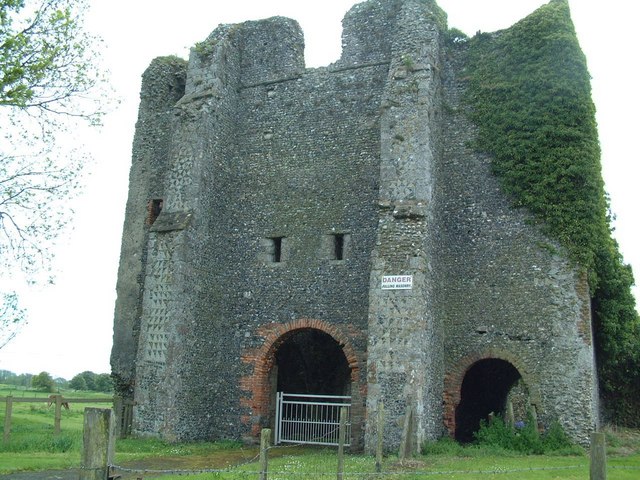
Refectory Converted Into A Farmhouse, Grade Ii* Listed Buildings
Radegund, King Richard I
Dissolution of the Monasteries
About St Radegund's Abbey
St. Radegund's Abbey at Bradsole
St. Radegund's Abbey at Bradsole was a medieval monastic house situated in the parish of Hougham Without, near Dover in southeast England. The abbey was founded in 1191, with the land for its establishment donated by King Richard I. The monastic community was formed by Premonstratensian Canons, who were sent from the order's mother abbey at Prémontré in France. Construction of the abbey buildings began in 1191 and continued for approximately fifty years.
The abbey was dedicated to St. Radegund, a sixth-century Merovingian princess known for her asceticism and charitable works. Despite benefiting from its control over several local churches, the chosen site for the abbey proved to be quite inhospitable, presenting ongoing challenges for the community.
By the late 13th century, the canons at Bradsole became involved in increasingly secular activities, including overseeing the construction of Dover Castle. By the end of the following century, the monastic buildings had deteriorated significantly, with only eight canons remaining in residence. The abbey met its end in 1538 when it was dissolved as part of King Henry VIII's Dissolution of the Monasteries. A considerable portion of the abbey's stonework was subsequently removed to aid in the construction of Sandgate Castle.
Following its dissolution, the site was sold to Simon Edolph in 1590. He repurposed the abbey's refectory building, converting it into a farmhouse. This structure remains standing and is recognized as a Grade II* listed building. The remaining ruins of the abbey, some of which now form a gateway to the farmhouse, have also been granted Grade II* listed status, preserving remnants of this historical monastic site.
Source: Wikipedia ↗
Frequently Asked Questions
When was St. Radegund's Abbey founded?
St. Radegund's Abbey was founded in 1191. The land for the abbey was donated by King Richard I.
Who established the monastic community at St. Radegund's Abbey?
The community was established by Premonstratensian Canons who were sent from the mother abbey of Prémontré in France. Building work began in the same year as its founding.
What happened to St. Radegund's Abbey?
The abbey was dissolved in 1538 during the Dissolution of the Monasteries. Much of its stone was taken to construct Sandgate Castle.
What remains of St. Radegund's Abbey today?
The refectory building of the abbey still stands and has been converted into a farmhouse. It is a Grade II* listed building. Other remaining ruins, including parts that serve as a gateway to the farmhouse, are also Grade II* listed.
Was St. Radegund's Abbey a large or prosperous institution?
While the abbey controlled several local churches, the site itself proved inhospitable. By the end of the 14th century, only 8 canons remained in residence, suggesting a decline in its fortunes.
Related Monasteries

Aldeby Priory
Aldeby Priory was a 12th-century Benedictine monastic house located in Aldeby, Norfolk, England. Initially established as a priory cell of Norwich Cathedral, it was founded by Agnes de Beaupré and her husband Hubert de Rye. The priory was dedicated to St. Mary and received confirmation of grants from Henry I, including the church and manor of Aldeby. Despite its modest size, it played a role in local administration and faced financial and structural issues in its later years before its dissolution.
Aldgate Priory
Holy Trinity Priory, also known as Christchurch Aldgate, was an Augustinian priory founded around 1108 by Queen Matilda of Scotland near Aldgate in London. It held significant ties to English royalty, with several queens maintaining a close relationship with the priory and some royal children buried there. The priory was a center of learning in the 12th century and played a role in civic life, with its prior serving as an Alderman of London. It was dissolved in 1532 and its buildings have since been largely lost, with only remnants surviving.

Anglesey Priory
Anglesey Abbey is a National Trust property in Lode, England, that evolved from an Augustinian priory founded in the early 12th century. After its dissolution in 1536, the site was transformed into a Jacobean-style house, and later extensively developed by Lord Fairhaven into a country house with significant art collections and landscaped gardens. The property now features a house, gardens, and a working mill, preserving the legacy of its monastic past and its later private ownership.