
St. Fana Coptic Orthodox Monastery
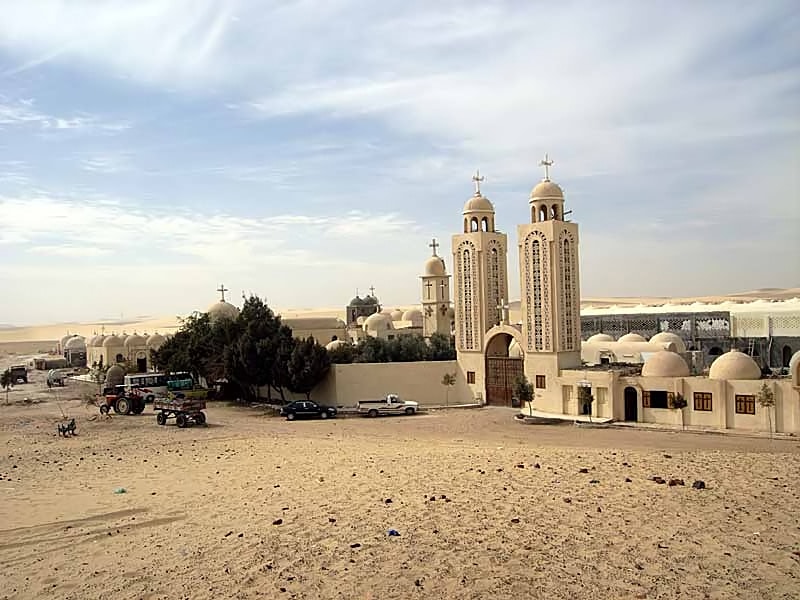
The Monastery of Saint Fana is a Coptic Orthodox monastery located in the Western Desert of Egypt, near Minya Governorate. It is named after the 4th-century hermit Saint Fana and is sometimes referred to as the Monastery of Abu Fanah or Monastery of the Cross. Historically, it was a significant monastic center, reportedly housing around 1,000 monks in pre-Islamic times, though its numbers dwindled significantly by the 14th-15th centuries.
Key Facts
- ›Named after the Coptic Christian hermit Saint Fana (C. 354–395).
- ›Located in Minya Governorate, approximately 300 km south of Cairo.
- ›Its church is known for its many beautifully decorated crosses.
- ›Historically housed around 1,000 monks, but later reduced to as few as two.
- ›Experienced a revival in the early 2000s with the consecration of new monks.
- ›Has been the site of land disputes and sectarian tensions in the 21st century.
Ancient Basilica
Church With Many Decorated Crosses, Cave of Saint Fana, Ruins of An Ancient Qasr
Monastery of Abu Fanah, Monastery of the Cross
Saint Fana, Pope Theodosius Iii of Alexandria, Pope Matthew I of Alexandria, Abu Al-Makarim, Al-Maqrizi, Father Michel Marie Jullien, Otto Friedrich August Meinardus, Helmut Buschhausen, Pope Shenouda, Bishop Ava Demetrius
- Restoration of the Church By Al-Rashid Abu Fadl.
- Mentions In the History of the Patriarchs of Alexandria Regarding Pope Theodosius Iii and Pope Matthew I.
- Excavations Led By Prof. Dr. Helmut Buschhausen In the 1990s.
- Declaration of An Archaeological Periphery In 2002.
- Construction of New Monastic Buildings and Consecration of Monks Starting In the 2000s.
- Land Disputes and Sectarian Tensions In the Late 2000s.
About St. Fana Coptic Orthodox Monastery
Monastery of Saint Fana
The Monastery of Saint Fana is a Coptic Orthodox monastery situated in the Western Desert of Egypt, within the Minya Governorate, approximately 300 kilometers south of Cairo. It is named in honor of Saint Fana, also known as Bane, a Coptic Christian hermit who lived in the 4th century. The monastery is sometimes referred to by alternative names such as the Monastery of Abu Fanah or the Monastery of the Cross, the latter due to the presence of numerous intricately decorated crosses within its church.
History and Significance
Historical accounts suggest the monastery was likely established around the burial site of Saint Fana. The tomb of the saint was unearthed during excavations conducted by an international team in 1992. Early historical records, such as those from the 12th-century historian Abu al-Makarim, mention the church of Saint Fana, noting its restoration by al-Rashid Abu Fadl. The 14th–15th century Egyptian historian al-Maqrizi commented on the monastery's fine architecture. The monastery is also noted in the History of the Patriarchs of Alexandria in relation to significant papal elections.
In its prime, prior to the arrival of Islam in the 7th century, the monastery reportedly housed as many as 1,000 monks. However, its monastic population drastically declined over centuries, with al-Maqrizi recording only two monks present during his time. By the mid-20th century, when visited by Otto Friedrich August Meinardus in the 1960s, the monastery was largely in ruins, with only the historical church remaining intact, deeply sunk into the sand. Remains of a qasr, or ancient tower, and Saint Fana's cave, where he is said to have lived, were also noted in the vicinity.
Modern Revival and Challenges
The modern history of the Monastery of Saint Fana began to take shape following renewed interest from the Coptic Orthodox Church after the excavations in the 1990s. In 2002, the Egyptian Ministry of Culture designated a significant area as the monastery's archaeological periphery. Subsequently, the Coptic Orthodox Church constructed new monastic buildings, including cells, a reception area, and a large cathedral, situated just outside the archaeological zone. Permanent monastic habitation resumed in 1999 with the arrival of five monks, and by 2003, Pope Shenouda consecrated twelve additional monks, marking a significant revival.
However, the monastery has also faced challenges, particularly in the form of land disputes and sectarian tensions with neighboring communities, which have led to conflicts and documented incidents of attacks on monastic property. These events have drawn attention from both domestic and international observers, sparking debate about land ownership, religious freedom, and the nature of inter-communal relations in the region.
Source: Wikipedia ↗
Frequently Asked Questions
Where is the Monastery of Saint Fana located?
The monastery is situated in the Western Desert of Egypt, in the Minya Governorate. It is located about 300 km south of Cairo and is near the villages of Qasr Hur and Beni Khaled.
When was the Monastery of Saint Fana founded?
The monastery was most likely built around the burial site of Saint Fana. While the exact founding date is not specified, the tomb of Saint Fana was discovered in 1992, and historical mentions of the church date back to the 12th century.
What is the religious tradition of the Monastery of Saint Fana?
The Monastery of Saint Fana belongs to the Coptic Orthodox Church. It is a significant site for this denomination in Egypt.
What is the current status of the Monastery of Saint Fana?
The monastery is considered active, with a monastic community currently residing there. New monastic buildings were constructed in the early 2000s, and it is accessible to visitors.
Has the Monastery of Saint Fana been involved in any conflicts?
Yes, in the late 2000s, the monastery experienced conflicts related to land disputes with local Arab communities. These incidents sometimes escalated into violence and were debated in both local and international media, with differing interpretations regarding their sectarian nature.
Related Monasteries

St. Macarius Coptic Orthodox Monastery
The Monastery of Saint Macarius the Great, located in Wadi El Natrun, Egypt, is a Coptic Orthodox monastery with a history stretching back to the 4th century AD. Attributed to Saint Macarius the Great, it is one of the oldest continually inhabited monastic communities in the world. The monastery is significant for its historical architecture, religious relics, and its role in the development of Christian monasticism.

St. Menas Coptic Orthodox Monastery
The Monastery of Saint Mina is a significant Coptic Orthodox monastery located in the Western Desert near Alexandria, Egypt. It is dedicated to Saint Menas, a martyr revered as the 'Wonders' Maker'. The modern monastery, established in 1959, is situated near the extensive ruins of the ancient pilgrimage city of Abu Mena, which flourished from the late 4th century until its destruction in the 7th century.

Virgin Mary (El-Sourian) Coptic Orthodox Monastery
The Virgin Mary (El-Sourian) Coptic Orthodox Monastery, commonly known as the Syrian Monastery, is located in Egypt's Wadi El Natrun. Founded in the 6th century AD by monks rejecting the Julianist heresy, it later became a significant center for Syriac Orthodox monks from the 8th to the 14th century, earning its current name. The monastery is renowned for its rich library of Syriac manuscripts, its ancient wall paintings, and unique architectural features like the Door of Prophecies.