
Šišatovac Monastery
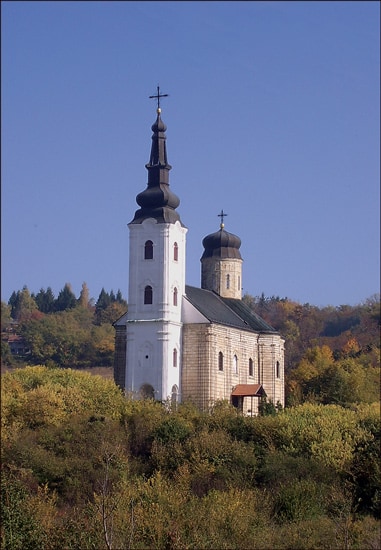
Šišatovac Monastery is a Serbian Orthodox monastery located on Fruška Gora mountain in northern Serbia. Its foundation is attributed to monks fleeing the Žiča monastery, with the earliest reliable records dating to the mid-16th century. The monastery has undergone significant rebuilding and repairs, notably in the 18th century and after suffering damage during World War II, and is recognized as a Monument of Culture of Exceptional Importance.
Key Facts
- ›The monastery's foundation is attributed to refugee monks from the Serbian monastery of ŽIča.
- ›The earliest reliable historical records of the monastery date back to the MID-16th century.
- ›The current church building was constructed in 1778 through a donation by Bishop Vikentije Popović-Hadžilavić.
- ›The iconostasis was created by the Baroque painter Grigorije Davidović-ObšIć.
- ›ŠIšatovac Monastery was declared a Monument of Culture of Exceptional Importance in 1990.
- ›The monastery suffered significant damage during World War II at the hands of Croatian Ustaše fascists.
Baroque
Iconostasis By Grigorije Davidović-ObšIć
Manastir šIšAtovac
Vikentije Popović-HadžIlavić, Grigorije Davidović-ObšIć, Sekula Vitkovic
- Foundation By Refugee Monks From žIčA Monastery
- Suffered Heavy Damages During World War Ii
About Šišatovac Monastery
Šišatovac Monastery is a significant Serbian Orthodox monastic complex situated on the picturesque Fruška Gora mountain in the northern Serbian province of Vojvodina. Its origins are traditionally attributed to monks seeking refuge from the Serbian monastery of Žiča, though the earliest concrete historical evidence of its existence and life dates to the mid-16th century.
History and Significance
The monastery's architectural history includes a 16th-century building, with the extant church structure being a later construction from 1778, facilitated by a donation from Vikentije Popović-Hadžilavić, the Bishop of Vršac. A notable contributor to the monastery's patronage was Sekula Vitkovic, who was appointed regimental commander of the Danube Serbian Militia in 1731. The monastery's interior features an iconostasis created by the renowned Baroque painter Grigorije Davidović-Obšić, highlighting the artistic heritage preserved within its walls.
During the tumultuous period of World War II, Šišatovac Monastery endured severe damage inflicted by Croatian Ustaše fascists within the Independent State of Croatia. Following this period, efforts have been made towards its preservation and restoration. In recognition of its historical and cultural value, Šišatovac Monastery was designated a Monument of Culture of Exceptional Importance in 1990 and is now afforded state protection.
Source: Wikipedia ↗
Frequently Asked Questions
When was Šišatovac Monastery founded?
The exact founding date is not precisely known, but the earliest reliable records illustrating its life date back to the mid-16th century. Its origins are attributed to refugee monks from the Serbian monastery of Žiča.
What is the architectural style of Šišatovac Monastery?
The monastery building dates from the 16th century, with the current church constructed in 1778. The iconostasis within the church is noted as the work of the famed Baroque painter Grigorije Davidović-Obšić, suggesting Baroque influences in its decoration.
Has Šišatovac Monastery been damaged historically?
Yes, the monastery and its church suffered heavy damages during World War II at the hands of Croatian Ustaše fascists. It has also undergone significant rebuilding and repairs throughout its history.
Is Šišatovac Monastery protected by the state?
Yes, Šišatovac Monastery was declared a Monument of Culture of Exceptional Importance in 1990 and is protected by the state.
Related Monasteries

Mileševa Monastery
Mileševa Monastery is a Serbian Orthodox monastery founded between 1234 and 1236 by King Stefan Vladislav I. It is renowned for its exceptional 13th-century frescoes, including the iconic "White Angel," and served as a significant spiritual and cultural center. The monastery also holds the relics of Saint Sava and has witnessed important historical events, alongside enduring periods of destruction and restoration.

Bavanište Monastery
Bavanište Monastery is a 15th-century Serb Orthodox monastery situated in Bavanište, Kovin, in northern Serbia's Banat region. Originally founded in the 15th century, it was later deserted and destroyed during the Ottoman advance. The monastery was rebuilt in the mid-19th century and was renovated and reinstituted as a working monastery in 1997. A notable feature of the monastery is its healthy water spring.

Divša Monastery
Divša Monastery, also known as Đipša, is a Serb Orthodox monastery situated on Fruška Gora mountain in Vojvodina, Serbia. Believed to have been founded by Despot Jovan Branković in the late 15th century, its earliest records date to the latter half of the 16th century. Despite periods of desertion due to raids, the monastery underwent significant reconstruction in the 18th century and is now a protected Monument of Culture of Exceptional Importance.