
Simplon Pass
Switzerland·Active transport corridor
The Simplon Pass is a high mountain pass in Switzerland, connecting Brig in the canton of Valais with Domodossola in Italy. It gained international importance during the Napoleonic era with the construction of the Simplon Road, making it accessible to road vehicles. The pass is also served by the Simplon Tunnel, a significant railway tunnel built beneath it in the early 20th century, and remains a vital transalpine transport corridor.
Key Facts
- ›Located between the Pennine Alps and the Lepontine Alps in Switzerland.
- ›Connects Brig (Switzerland) with Domodossola (Italy).
- ›The Simplon Road was constructed between 1801 and 1805, enabling vehicle traffic.
- ›The 20 km long Simplon Tunnel, for rail traffic, opened in 1906.
- ›The pass and surrounding villages like Gondo are situated in Switzerland.
- ›The Hospice du Simplon at the summit is owned by the Congregation of Canons Regular at Grand-Saint-Bernard.
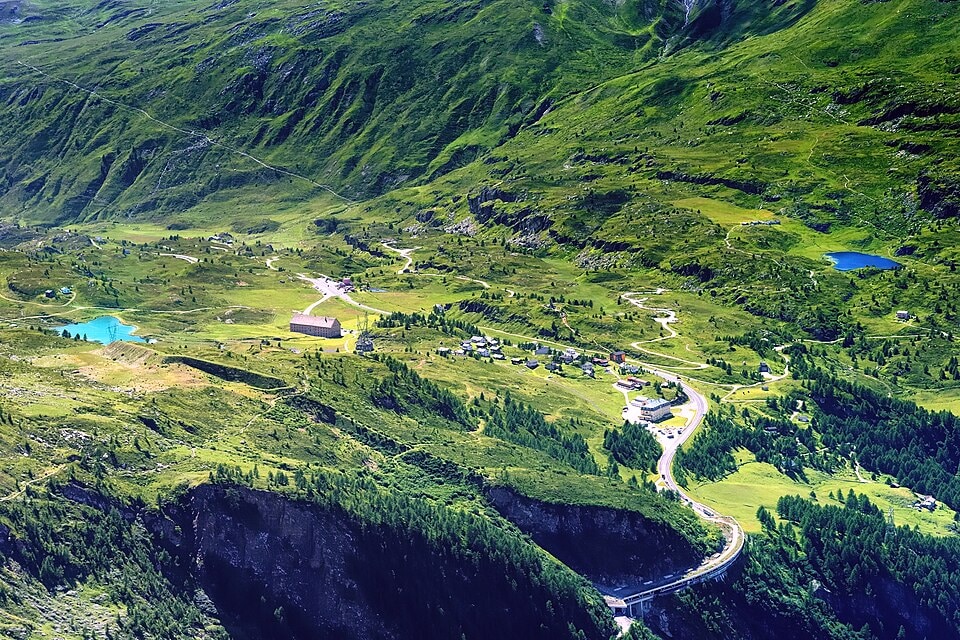
Simplon Tunnel, Simplon Road, Hospice Du Simplon, Rotelsee, Eagle Monument
Col Du Simplon, Simplonpass, Passo Del Sempione, Pass Del Sempion, Pass Dal Simplon
Napoleon Bonaparte, Nicolas CéArd, Erwin Friedrich Baumann
- Construction of the Simplon Road
- Opening of the Simplon Tunnel
- Use of the Simplon Route By the Orient Express
About Simplon Pass
The Simplon Pass is a significant high mountain pass situated in Switzerland, nestled between the Pennine Alps and the Lepontine Alps. It serves as a crucial link, connecting the Swiss town of Brig in the canton of Valais with Domodossola in the Piedmont region of Italy. The pass and the villages immediately flanking it, such as Gondo, are located within Switzerland.
Historical Significance and Development
While a locally used passage existed for centuries, the Simplon Pass rose to international prominence during the Napoleonic era. Between 1801 and 1805, the engineer Nicolas Céard directed the construction of the Simplon Road under Napoleon's orders. This road was specifically designed to facilitate the transport of artillery between the Rhône valley and Italy, and since its completion, the pass has been navigable by road vehicles, initially post carriages and later post buses.
Throughout the 20th century, the pass underwent continuous improvements. A notable initiative in 1950 by cantonal authorities aimed to keep the pass open year-round, a goal achieved through extensive avalanche shelters and the widening of road tunnels. These efforts transformed the Simplon Pass into one of the few major Alpine passes consistently kept open for traffic during winter, providing a vital alternative route between the upper Rhône valley and northern Italy when other crossings are impassable.
Infrastructure and Transport
Beyond road access, the Simplon Pass is also equipped with a vital rail link. The 20-kilometer-long Simplon Tunnel, a remarkable feat of engineering, was opened in 1906 beneath the pass. This tunnel has been instrumental in transalpine rail transport, historically serving routes such as the Orient Express between Istanbul and Paris. Despite the presence of the tunnel, the pass itself has maintained its importance as a strategic transport corridor.
Notable Structures and Surroundings
At the summit of the pass stands the Hospice du Simplon, an establishment owned by the Congregation of Canons Regular at Grand-Saint-Bernard. The surrounding area also features natural landmarks, including Rotelsee, a lake at an elevation of 2,028 meters. Two significant monuments mark the pass's history: an eagle monument, conceived during World War II and designed by Erwin Friedrich Baumann, and a memorial erected in 2005 to celebrate the 200th anniversary of the Napoleon Road.
The Simplon Pass continues to be a vital artery for both road and rail, playing a key role in the connectivity and economy of the Alpine region.
Source: Wikipedia ↗
Frequently Asked Questions
When did the Simplon Pass become internationally significant?
The Simplon Pass acquired international significance during the Napoleonic occupation. Between 1801 and 1805, the Simplon Road was constructed to facilitate the transport of artillery between the Rhône valley and Italy.
What is the significance of the Simplon Tunnel?
The Simplon Tunnel is a 20 km long railway tunnel built beneath the vicinity of the pass, opening in 1906. It was constructed to carry rail traffic between Switzerland and Italy and was historically used by trains like the Orient Express.
Can the Simplon Pass be used year-round?
Yes, the Simplon Pass has been improved to remain open throughout the year. Plans implemented in 1950 and further enhancements ensured it could be used safely by traffic even during winter months, unlike many other high Alpine passes.
What monuments are located at the Simplon Pass?
A stone monument depicting an eagle, the symbol of the Swiss Army's 11th Alpine Brigade, was inaugurated in September 1944. Additionally, a memorial was built in 2005 to commemorate the 200th anniversary of the construction of the 'Napoleon Road'.
What is the altitude of the Simplon Pass?
The Simplon Pass is situated at an altitude of 2,006 meters (6,581 feet). The lowest point of the col, on the watershed between the Rhone and Po basins, is slightly lower at 1,995 meters (6,545 feet).
Related Monasteries

All Saints Abbey
All Saints Abbey was a former Benedictine monastery located in Schaffhausen, Switzerland, founded in 1049 by Eberhard von Nellenburg. It played a significant role in the region's history and development, eventually becoming the site for the Museum zu Allerheiligen. The abbey church, Münster Allerheiligen, is the oldest building in Schaffhausen.

Augustinerkloster Zürich
The Augustinerkloster was a prominent monastery of the Augustinian Order within medieval Zurich, Switzerland. Founded around 1270, it played a role in the city's fortifications and religious life until its abolition during the Reformation in 1524. The Augustinian church, now known as the Augustinerkirche, remains on the site and is a parish church.

Basel
Basel, a significant city in northwestern Switzerland, boasts a rich history dating back to Roman times. It rose to prominence as the seat of a Prince-Bishopric and later joined the Swiss Confederacy in 1501. Renowned as a cultural and intellectual hub, Basel is celebrated for its early public art collection, oldest university in Switzerland, and as a historical sanctuary for scholars, becoming a vital center for humanism, commerce, and later, the chemical and pharmaceutical industries.