
Serrabone Priory
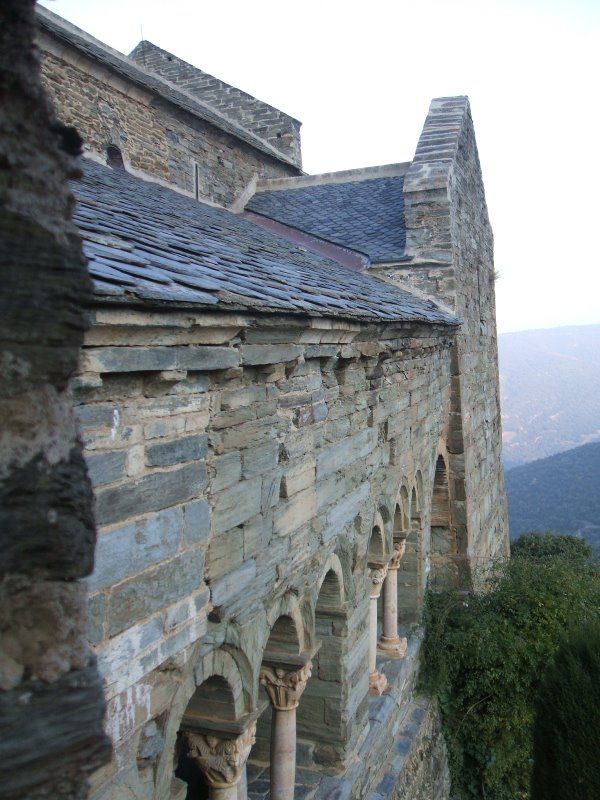
Serrabone Priory is a former monastery of Canons Regular located in the Pyrénées-Orientales region of France. Originally founded in the 10th or 11th century and re-established as an Augustinian priory in 1082, it is renowned for its exquisite 12th-century marble rostrum, considered a masterpiece of Romanesque art. The priory's architecture features a striking contrast between its schist walls and the pink marble detailing from the Conflent region.
Key Facts
- ›Re-established as an Augustinian priory in 1082.
- ›Famous for its 12th-century marble rostrum, a Romanesque masterpiece.
- ›Architecture includes a transept, three apses, a cloister, and a second nave.
- ›Constructed with local schist rubble stone and enhanced with pink marble from Conflent.
- ›The name derives from the Catalan 'serra bona', meaning 'good mountain'.
Romanesque
Marble Rostrum, Cloister
Prieuré De Serrabone, Santa Maria De Serrabona
About Serrabone Priory
Serrabone Priory, also known by its Catalan name Santa Maria de Serrabona, is a significant former monastery located in the commune of Boule-d'Amont, within the Pyrénées-Orientales department of France. Nestled in a picturesque setting amidst an oak forest in the valley of the Boulès, at the heart of the Aspres mountain range on the eastern slopes of Canigou, the priory holds a special place in the history of Romanesque art.
History and Foundation
The name 'Serrabone' itself is derived from the Catalan phrase 'serra bona,' meaning 'good mountain,' reflecting its scenic location. The monastery's origins trace back to the 10th or 11th century, with its initial foundation uncertain in terms of its specific order. However, historical records indicate a significant re-establishment in 1082 under the patronage of local lords and the Count of Conflent. This revitalization saw Serrabone Priory become an Augustinian priory, a canonical order known for its adherence to the Rule of Saint Augustine.
Architectural Significance
The architecture of Serrabone Priory is a notable example of Romanesque design, with key transformations occurring in the 12th century. The initial church featured a single nave with a pointed barrel vault. Subsequent extensive renovations introduced a transept and three apses, replacing the earlier chevet. The principal apse is complemented by two flanking absidoles integrated into the walls. Further additions included a second nave and bell tower on the north side, and a cloister along with a three-room building to the south. The priory's structures are characterized by thick walls built from local schist rubble stone. The second phase of construction employed more elaborate techniques, utilizing large blocks of carefully placed cut schist. A striking feature of the priory is the use of pink marble from the Conflent region for sculptures in the cloister, the main portal, the window of an apsidole, and the gallery. This pink marble provides a vivid contrast to the predominantly green-grey schist of the walls, making Serrabone Priory a visually distinctive monument.
Notable Features
The priory is particularly celebrated for its 12th-century marble rostrum, which is considered a masterpiece of Romanesque art. The intricate sculptures and the contrasting materials used in its construction highlight the craftsmanship of the era. The cloister, with its detailed marble work, is another significant architectural element that draws admiration from visitors and art historians alike.
Source: Wikipedia ↗
Frequently Asked Questions
When was Serrabone Priory founded?
The initial foundation on the site of Serrabone Priory is recorded in a document from 1069, suggesting a founding date in the 10th or 11th century. It was later re-established as an Augustinian priory in 1082.
What is Serrabone Priory most famous for?
Serrabone Priory is most famous for its splendid marble rostrum, dating from the 12th century. This rostrum is widely regarded as a masterpiece of Romanesque art.
What is the architectural style of Serrabone Priory?
The priory showcases Romanesque art, particularly evident in its 12th-century transformations. It features a transept, apses, cloister, and a nave constructed from local schist, with striking pink marble detailing from the Conflent region.
Where is Serrabone Priory located?
Serrabone Priory is situated in a wild and beautiful valley of the Boulès, within an oak forest in the Aspres mountain range, on the eastern foothills of Canigou, in the commune of Boule-d'Amont, Pyrénées-Orientales, France.
Related Monasteries

Corbie Abbey
Corbie Abbey was a significant Benedictine monastery in Corbie, France, founded in 661 by Queen Balthild. It gained renown for its scriptorium, which was instrumental in developing Carolingian minuscule and manuscript illumination, and for its extensive library that preserved classical texts. The abbey also held close ties to the Carolingian dynasty and played a role in intellectual life throughout the Middle Ages.

Abbey of La Chaise-Dieu
The Abbey of La Chaise-Dieu, established in 1043 by Robert de Turlande, is a former Benedictine abbey renowned for its Gothic architecture and significant historical associations, including a visit from Pope Urban II and the patronage of Pope Clement VI. It served as the headquarters of the Casadean order and is celebrated for its library, workshop for liturgical books, the Danse Macabre, and a music festival initiated in 1966.

Abbey of Saint-Acheul
The Abbey of Saint-Acheul was a monastery of Canons Regular located in Amiens, France, founded in the 11th century on the site of an ancient church. Suppressed during the French Revolution in 1790, its 18th-century buildings were later occupied by a college entrusted to the Jesuits and are now part of the private Lycée Saint-Riquier. The abbey church, which has a classical sober stone architecture, continues to function as a parish church and is protected as a historic monument.