
San José Charterhouse
Christian·Argentina·active·20th century
San José Charterhouse, also known as Cartuja San José, is a Carthusian monastery located near Deán Funes, Córdoba, Argentina. Established to allow Argentinians to pursue the Carthusian vocation domestically, it was the third Carthusian monastery in the Americas and the second in Latin America. Its construction was completed in 2004, and it currently houses an active community of over a dozen monks.
Key Facts
- ›It is the third Carthusian monastery established in the Americas.
- ›It is the second Carthusian monastery established in Latin America.
- ›The monastery was designed by architect Federico Shanahan.
- ›Construction was completed and the church consecrated on March 19, 2004.
- ›The monastery features 22 cells, several chapels, a refectory, a chapter house, and a guesthouse.
- ›It is currently inhabited by more than a dozen monks.

22 Cells, Several Chapels, Refectory, Chapter House, Guesthouse
Cartuja San José
Federico Shanahan
- General Chapter of the Carthusian Order Supported the Project
- Argentine Conference of Catholic Bishops Supported the Project
- Inauguration of A Small Part of the Hermitage
- Completion of the Building and Consecration of the Church
About San José Charterhouse
San José Charterhouse, officially known as Cartuja San José, is a significant Carthusian monastery situated in the province of Córdoba, Argentina. Its establishment was driven by the desire to provide a domestic setting for Argentinian men discerning the Carthusian vocation, eliminating the need for them to emigrate to other countries for their spiritual path. The project received crucial support in 1997 from both the General Chapter of the Carthusian Order and the Argentine Conference of Catholic Bishops. Following this endorsement, four Carthusian monks were dispatched from the Grand Chartreuse, the order's mother monastery, to Argentina to identify a suitable location.
Foundation and Construction
The ideal site was discovered in 'Campo de la Trinidad,' a secluded area near the city of Deán Funes. Architect Federico Shanahan was commissioned to design the charterhouse. The construction commenced with the inauguration of a small portion of the hermitage on October 15, 1998. The entire complex was completed, and its church was consecrated on March 19, 2004, coinciding with the feast day of Saint Joseph, to whom the monastery is dedicated.
Monastery Features and Community
The completed monastery is designed to support the contemplative life of its inhabitants and includes 22 individual cells for the monks, several chapels for prayer, a refectory for communal meals, a chapter house for governance, and a guesthouse. Today, San José Charterhouse is an active monastic community, housing more than a dozen monks who dedicate their lives to prayer and contemplation within its walls. It holds the distinction of being the third Carthusian monastery established in the Americas and the second in Latin America, marking an important presence for the order on the continent.
Source: Wikipedia ↗
Frequently Asked Questions
When was San José Charterhouse founded?
The idea for San José Charterhouse emerged in 1997, with four monks sent to find a location. A small part of the hermitage was inaugurated on October 15, 1998, and the entire building was completed and the church consecrated on March 19, 2004.
Where is San José Charterhouse located?
San José Charterhouse is situated in the secluded area known as 'Campo de la Trinidad,' near the city of Deán Funes in the province of Córdoba, Argentina.
What is the significance of San José Charterhouse?
Its establishment was significant as it provided a domestic option for Argentinians considering the Carthusian vocation, who previously had to emigrate. It is one of only a few Carthusian monasteries in the Americas.
Who designed San José Charterhouse?
The architecture of San José Charterhouse was designed by Federico Shanahan.
How many monks live at San José Charterhouse?
Currently, the monastery is inhabited by more than a dozen monks.
Related Monasteries
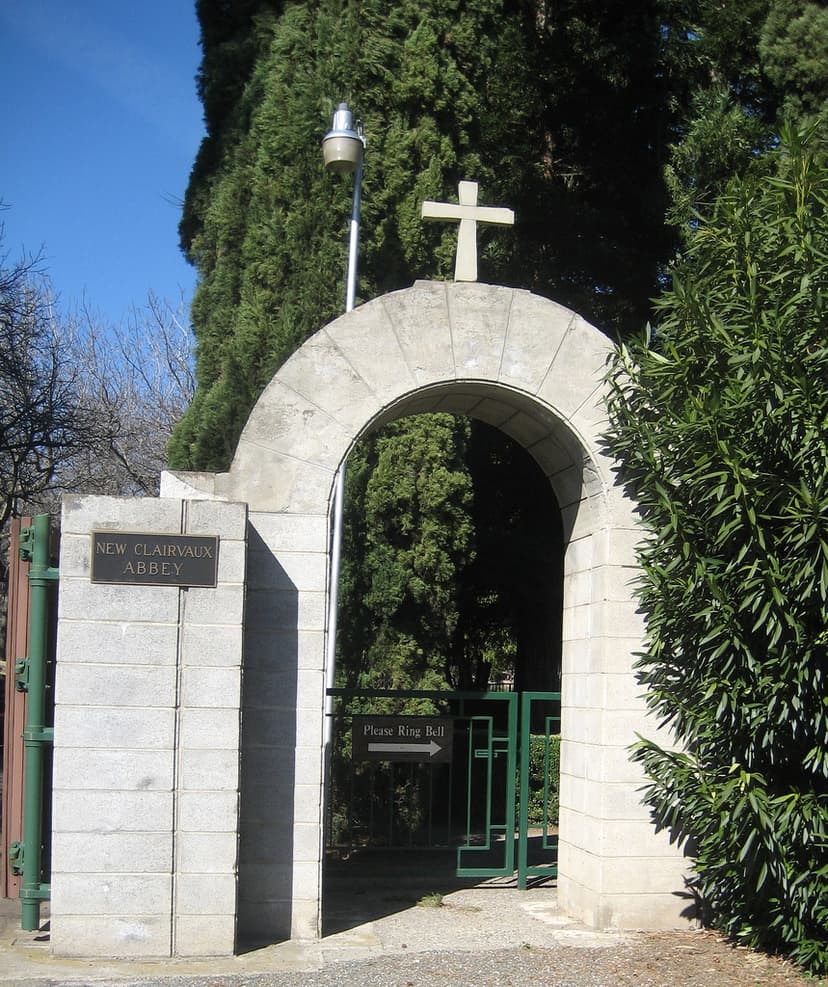
Abbey of New Clairvaux
The Abbey of New Clairvaux is a rural Trappist monastery established in 1955 by monks seeking a California foundation. Known for its austere contemplative life and the reconstruction of an 800-year-old Spanish chapter house, the abbey also cultivates prunes, walnuts, and grapes, and produces wine and Trappist-style beers. The community is part of the Cistercians of the Strict Observance.
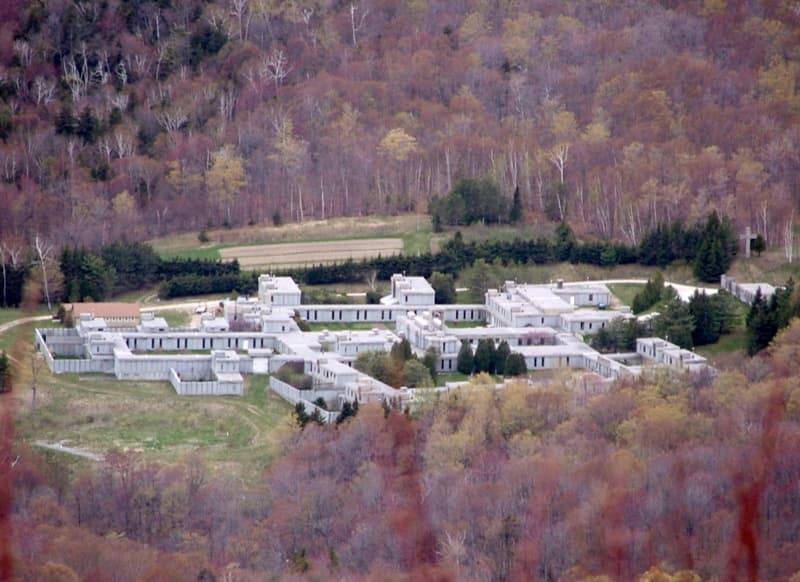
Charterhouse of the Transfiguration
The Charterhouse of the Transfiguration, located on Mt. Equinox in Sandgate, Vermont, is the sole Carthusian monastery in North America. Founded in 1960 and completed in 1970, it replaced earlier Carthusian foundations in Vermont. The monastery is situated on a significant land donation and was designed by Victor Christ-Janer & Associates, utilizing Vermont granite.

Mount Saviour Monastery
Mount Saviour Monastery is a historic farm and monastery campus situated near Pine City, New York, recognized as part of a national historic district. Founded in 1950, it operates a working farm that has been in continuous use since 1865. The monastery is owned by the Benedictine Foundation of New York State and has also served as a point of origin for other monastic communities, notably the Monastery of Christ in the Desert.